Research Scientist | Data Analyst | Policy Commentator
A Terrorist Group’s Backer Wants Proof of Support for the Crown Prince!
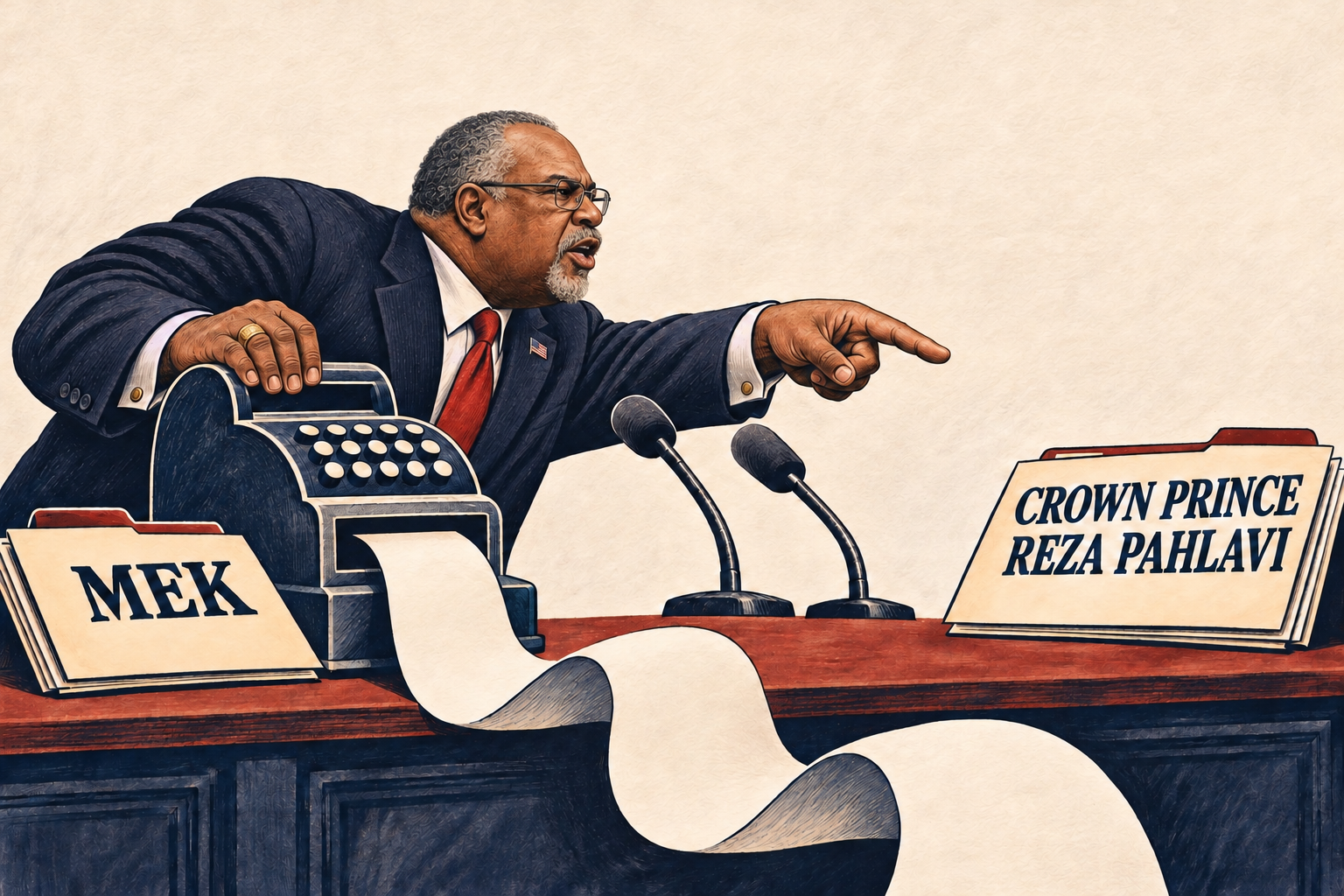
A Terrorist Group’s Backer Wants Proof of Support for the Crown Prince! Where Are His Receipts?
In a November 10 Washington Examiner op-ed, Ken Blackwell argued that there is little evidence of significant support for Crown Prince Reza Pahlavi inside Iran. Readers weighing that claim should know who Blackwell is and know that he has long and publicly backed the Mujahedin-e Khalq (National Council of Resistance of Iran), a group the United States designated as a foreign terrorist organization.
In June 2024, he spoke at the Free Iran World Summit at the headquarters of the National Council of Resistance of Iran. In an earlier essay, he described the Mujahedin-e Khalq as Iran’s principal opposition movement. What evidence did he offer for its reach inside Iran? Readers should expect the same scrutiny of that claim as they do of Pahlavi’s.
The MEK has a long and notorious record. For decades, multiple independent reports have described the group as having little organized presence and negligible popular support inside Iran. Its history of armed operations in the 1980s, its past alliance with Saddam Hussein during the Iran-Iraq war, and persistent accounts of its internal practices have left it widely rejected by Iranians across the political spectrum. Many Iranians regard the MEK as one of the most hated groups in the country, on a level comparable to the Islamic regime itself. The group has also maintained a long record of hostility toward Israel, consistent with its revolutionary ideology and past positions. Blackwell has repeatedly elevated this group. He has not supplied public, checkable evidence that it commands significant support inside the country.
It is reasonable to ask why a commentator with this record has chosen to focus on challenging public expressions of support for Crown Prince Reza Pahlavi. The MEK has a well-documented practice of paying large speaking fees to prominent American figures to appear at its events. Former National Security Advisor John Bolton, for example, has acknowledged receiving substantial payments for speeches at MEK gatherings, as have other former officials and politicians. These financial relationships are a matter of public record. Readers are entitled to know the full context when someone who has aligned himself with this group questions support for the Crown Prince.
Blackwell is right to ask how many of the more than 160,000 people Crown Prince Reza Pahlavi has said applied through an initiative for those seeking to break with the regime actually left their posts or refused orders. Pahlavi cited the figure in an interview with Hugh Hewitt and said many applicants came from the military, security forces, and civilian bureaucracy. The number counts applications. Independent verification of actual defections would require evidence of people who acted, not merely forms submitted. Blackwell correctly identifies the gap. He does not fill it with evidence of his own.
Crown Prince Reza Pahlavi’s ability to mobilize people abroad is visible. On February 14, police estimated that about 250,000 people demonstrated in Munich and 350,000 marched in Toronto after he called for a global day of action. Police also estimated that about 50,000 marched in Vancouver, 25,000 rallied in Sydney, and up to 4,000 attended a rally in Melbourne. Those crowds show the scale of mobilization abroad. His support inside Iran is a separate question. On that question, Blackwell suggests that some protest videos may contain dubbed pro-Pahlavi slogans. He identifies no clip and supplies no audio analysis readers can examine. Even a verified case would tell us what happened in one recording. A judgment about support across Iran requires evidence on that scale.
Blackwell has for years treated the MEK’s status as Iran’s principal opposition as established. In January 2026, Reuters reported that analysts saw little MEK presence inside Iran and that its reporters had seen no public sign of support for the group during the protests. MEK officials told Reuters their supporters were active across the country. The Congressional Research Service has noted how difficult it is to obtain reliable information about the group’s activities or support inside Iran. Blackwell applies a demanding standard to Pahlavi’s figures while offering no equivalent public accounting for the domestic reach of a group widely regarded as marginal and deeply unpopular. Readers are entitled to the same scrutiny.
On preparation for a transition, a public document exists that Blackwell’s readers can examine. The Iran Prosperity Project’s plan for the first 180 days addresses continuity of essential services, economic stabilization, a referendum on the form of government, and an elected constituent assembly. It is a specific proposal that can be judged on its contents, including who would exercise interim authority and under what limits. Blackwell’s piece does not engage it.
Blackwell has spent years promoting a designated terrorist group while now dismissing support for Crown Prince Reza Pahlavi without evidence. His claims about the Crown Prince’s lack of support rest on assertion, not demonstration. The same standard he demands of others must be applied to the group he has long elevated. Until he supplies specific, checkable evidence for his own judgments, those judgments remain unproven. Iran’s future will not be settled by commentators who have already chosen a side of terrorists. It will be settled by Iranians casting free votes and having those votes counted.
Related Topics
Related Posts