


A Tuesday with Maury
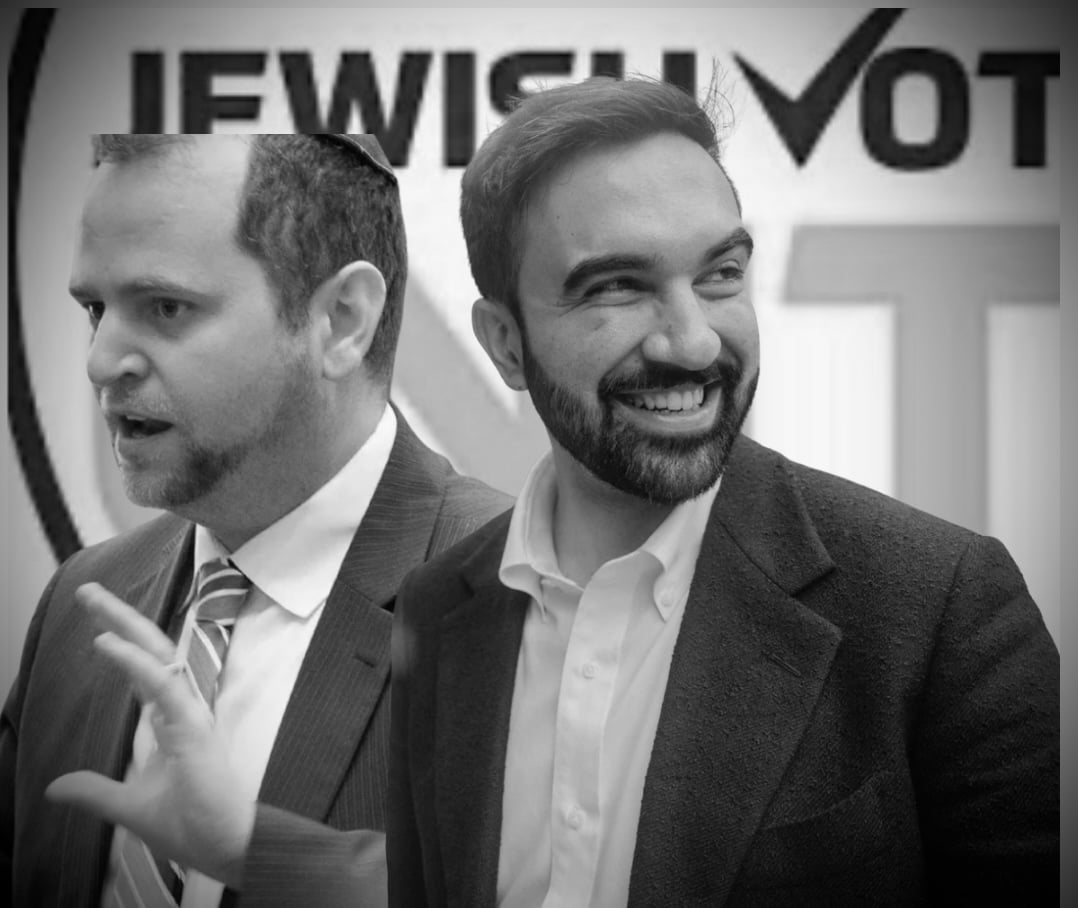
Things didn’t seem to be going Maury Litwack’s way.
It was Tuesday, June 24, 2025—primary day in New York City—and all signs pointed to mayoral candidate Zohran Mamdani winning the Democratic primary.
Litwack had raised alarm bells about Mamdani, the self-described socialist, from the start—a fact Litwack reminded his X followers of in May: “Told you all six months ago to take [Mamdani] seriously. Look where we are.”[1]
At the time, Litwack had a solution: “Simply have a majority of moderate voters show-up… not complicated.”
“Simple” may seem like an odd way to describe winning a highly-contested election, with ranked-choice voting, in which over a million people would participate in one of the largest cities in the world, but Litwack seems undaunted by tall tasks. Litwack founded the Teach Coalition, which “advocates for equitable government funding for nonpublic schools,” a top-of-mind issue for Yeshiva day school parents chasing thus-far-largely-elusive silver-bullet solutions for crushing tuition costs.
In recent years, Litwack has become what I would describe as something of a Jewish get-out-the-vote evangelist. On his LinkedIn profile, Litwack describes himself as a “Champion for Jewish Voting,”[2] and never hesitates to preach a gospel, best summarized by a catchy slogan used by Litwack’s new organization, Jewish Voters Unite: “Don’t Kvetch, Vote.”
So, with primary day upon him and Mamdani poised to win, Litwack took to his social media pulpit and began to sermonize.
On Monday, Litwack posted: “This is it…One of the most important elections of our lifetime takes place tomorrow. 100% turnout is possible in the [Jewish] community.”[3]
On Tuesday morning, Litwack posted: “This is by far the most important thing you can do today…Log off social media and rally 100 of your friends to TURN out to vote.”[4] Later in the day, he called on people to “Mobilize the Mishpacha [Jewish family]” to vote.
For good measure, Litwack even recorded a video of himself urging voters to “beat the heat.” He pleaded: “We need you to vote!”[5]
As the day drew to close, Litwack struck an optimistic—perhaps even bullish—tone, posting that “JEWISH VOTERS ARE A SLEEPING GIANT” and that “[t]oday we’ve seen the power of the Jewish community [turning out to vote]”[6].
But when the day was done, a very different picture emerged.
Mamdani won—handily. So much so that Andrew Cuomo did not even wait for the ranked-choice voting results to concede.
The truth is that New York City’s mayoral race was the latest in a string of political setbacks for the local Jewish community. New Jersey’s Orthodox Jewish community went all-in to support New Jersey Congressman Josh Gottheimer’s gubernatorial bid only to see Gottheimer get crushed in the primary (he finished fourth, failing to get even 100,000 votes; in his home base of Bergen County, he got only 37% of the vote). In New Jersey’s Legislative District 37, a slate of State Assembly challengers supported by Litwack got similarly squashed, despite heavy spending and endorsements.
So, is Maury wrong?
***
“Don’t Kvetch, Vote” is a great slogan, and it sounds like common sense. No one would disagree that the Jewish community is better served by engaging in the political process.
But where Litwack goes off track, in my opinion, is in what I believe he suggests Jewish political engagement achieves. That Jews on their own are—or at least, could be—a political powerhouse (a “sleeping giant”). And that if we all just come out and vote, we can achieve whatever we want.
We can’t.
We are not a “sleeping giant.” Not even close. We are a small community that does not have the votes to singularly carry anything more than local municipal races (if even that) in a handful of heavily-Jewish enclaves.[7] This election season—which featured far bigger races—proved that. Each time, the Jewish community turned out and got crushed.
It turns out that in the races that matter, “get all the Jews out to vote” is not a solution, but a delusion. Jewish votes—even all of them—are not enough.
What has, in my opinion, made Litwack so successful—in earning support, though not outcomes—is that we want his message to be true. We want to believe that traditionally powerless Jews are actually very powerful. We want to believe that salvation for financially strapped Yeshiva day school parents is not only achievable but just around the corner. And we want to believe that the communal problems we perpetually “kvetch” about have “not complicated” solutions. All we need to do is vote.
Therein lies the danger. Litwack’s message lulls us into a distorted sense of reality, and that distorted sense of reality actually prevents us from fixing our problems. Here is how.
- We overestimate our significance and influence. We assume that everyone knows everything about us, understands us, and that any opposition to what we want or believe stems from malevolence rather than ignorance. How can anyone not know, or be neutral to, a “sleeping giant”? Those not with us—entirely—must be against us.
- We are uncompromising in our positions, some of which non-community members would consider extreme and unlikely to succeed. And from our perspective, why should we compromise if we can get what we want by voting?
- We refrain from forging true partnerships with other communities. Our “partners” tend not to be credible advocates for their own communities, but tokens willing to support our interests (sometimes to the detriment of their own communities). Why partner with other communities if ours is politically self-sufficient?
- We ignore bigger and more sweeping societal issues in favor of narrow issues relevant only to our community, and fail to think more broadly than our community’s interests.
- We go all-in to support candidates who pander to the Jewish community but who (perhaps partly as a result) have little appeal to others.
These positions are not only wrong, they are destructive. They set us up to fail by torpedoing potential partnerships, leading us down dead ends, and, ultimately, costing us elections.
This election season is a warning. Our collective mindset needs to change.
Yes, we need to turn up, but we need to abandon any notion that we can “go it alone” and politically force our way as a community. We can’t. We need to forge partnerships with others, and those partnerships need to be real and serve those communities’ interests as much as our own. We need to think beyond ourselves. We need to win people over. And we need to be willing to be won over.
If we do that, this election cycle can be a teachable moment for our community, and ensure its voice is heard when it matters most.
***
In the days following Mamdani’s win, Litwack took what I would describe as a humbler tone.
Litwack wrote that “[m]y community, my family, and my Rabbis have always taught that the Jewish people must keep moving, keep building, and keep growing. In politics, that’s even more important. That’s why, starting today, we must commit to doing the work.”[8]
Litwack shared a list of “what [doing the work] means.” To his credit, his list included the following:
Build coalitions. We are not big enough to win alone. That’s reality. We must develop strong relationships with:
* African American voters
* Asian voters
* Hispanic voters
* Other moderate and values-aligned communities
Has the turnout apostle been converted?
Count me among the skeptics. Coalition-building was the last item on Litwack’s list—almost as an afterthought. It followed a whole list of get-out-the-vote classics like registering and re-registering voters and striving for 100% communal participation. Which begs the question: if “we are not big enough to win alone,” why are we still so focused on maximizing turnout? And is there not some inconsistency in embracing a bridge-building strategy while also pushing a strength-by-voting strategy?
Litwack might argue that maximizing turnout makes the Jewish community a more attractive partner, but I see things more cynically: partnership is a pill Litwack reluctantly swallows—not because he wants to but because he needs to. Because “[t]hat’s reality.” Litwack continues to not only push communal turnout, but prioritize it, because it minimizes the need for partnership. The more we turn out, the less we need others to get what we want. Which begs yet another question: is that a winning formula for forging partnerships? Who wants to partner with someone who does not really want to partner?
One thing is clear: the clock is ticking. If Litwack and his supporters are serious about defeating Mamdani, they need to get their act together quickly. November is just around the corner and the way things are looking, I’m not sure I want to spend that Tuesday with Maury.
—
[1] https://x.com/mlitwack/status/1924828866108944418
[2] https://www.linkedin.com/in/advocacy/
[3] https://www.linkedin.com/posts/advocacy_this-is-it-nothing-more-one-of-the-most-activity-7342902172474327044-hhYd?utm_source=share&utm_medium=member_desktop&rcm=ACoAABbwndMBp9FYhAoL0u4Q0TmwsfXsEYmpZmQ
[4] https://www.linkedin.com/posts/advocacy_this-is-by-far-the-most-powerful-thing-you-activity-7343253017741197312-KqI0?utm_source=share&utm_medium=member_desktop&rcm=ACoAABbwndMBp9FYhAoL0u4Q0TmwsfXsEYmpZmQ
[5] https://www.linkedin.com/posts/advocacy_few-hours-left-beat-the-heat-we-need-you-activity-7343371234660786176-Jjki?utm_source=share&utm_medium=member_desktop&rcm=ACoAABbwndMBp9FYhAoL0u4Q0TmwsfXsEYmpZmQ
[6] https://www.linkedin.com/posts/advocacy_jewish-voters-are-a-sleeping-giant-here-activity-7343431161311846400-roSk?utm_source=share&utm_medium=member_desktop&rcm=ACoAABbwndMBp9FYhAoL0u4Q0TmwsfXsEYmpZmQ
[7] Some may argue that being so candid and acknowledging that we are not a “sleeping giant,” could somehow harm the community’s position. I disagree. First, such criticism would be valid if our community’s strategy was working, but it is not. Second, I believe that the delusion that the Jewish community is a “sleeping giant” that could somehow carry significant political races on its own is not widely held outside of core parts of the Orthodox community. It’s our own delusion. Contemporary politicians are awash in data that will quickly disabuse them of any contrary notion. If we think we can somehow bluff our way to political power, the joke is on us. I do believe that the Jewish community can and should have extraordinary influence—and that such influence will be good for both the Jewish community and society as a whole—but only if we get real and change our strategy.
[8] https://www.linkedin.com/feed/update/urn:li:activity:7343678661297913857/