

Mathematics Teaching Professor, Author
A Vibrant Jewish Community: Congregation Kesser Israel of Portland, Oregon
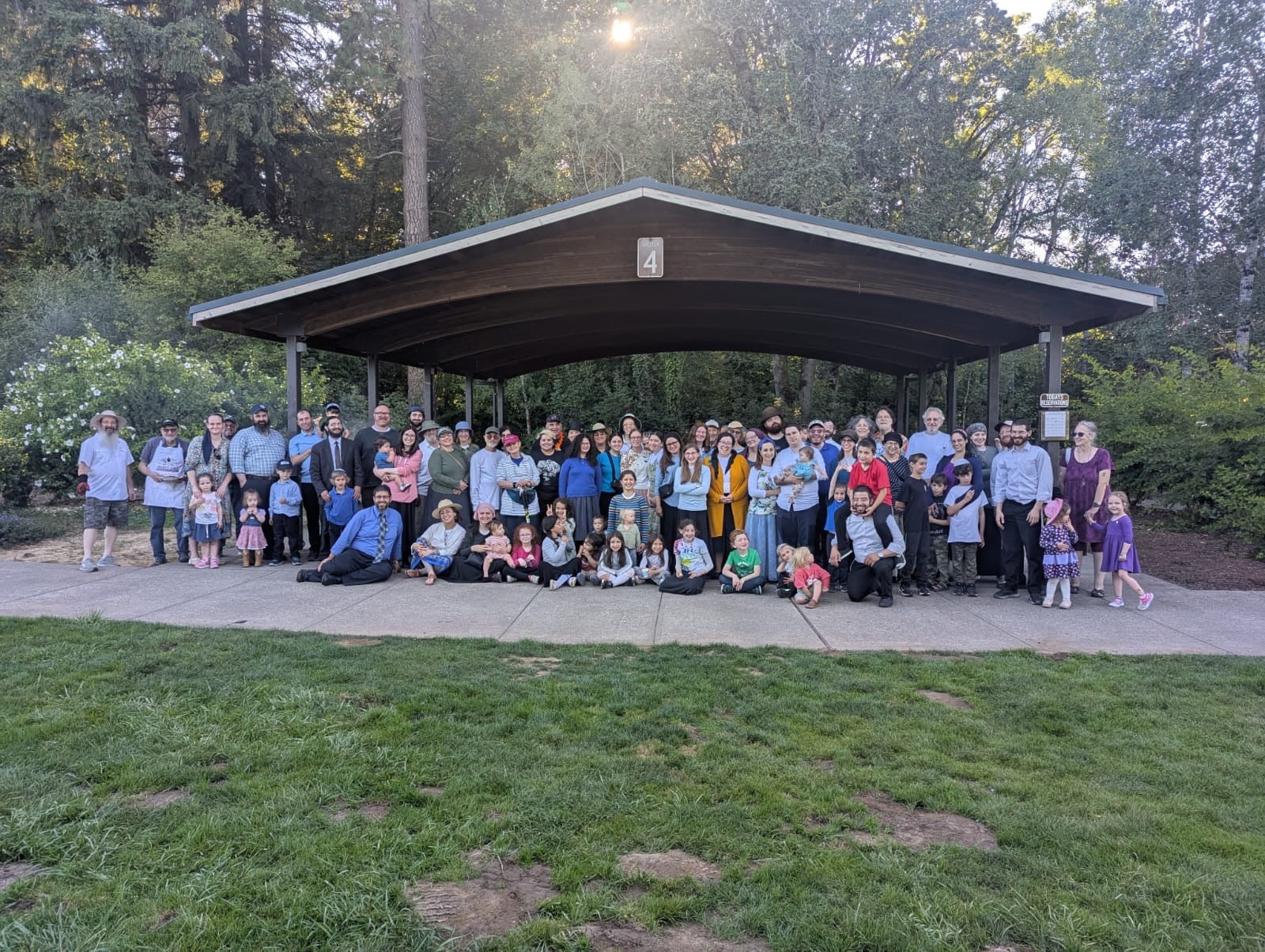
Kesser Summer Barbeque, August 2026 (Source: Congregation Kesser Israel of Portland Oregon)
Founded in 1915, Congregation Kesser Israel of Portland, Oregon, has played an important role in preserving and strengthening Orthodox Jewish life in the Pacific Northwest. Established by a small group of Jewish residents, the congregation has grown into a community dedicated to prayer, Torah study, Jewish education, and the observance of Jewish traditions. Its history is also reflected in its places of worship. The congregation’s longtime home was a former Baptist church located in Portland’s original Eastern European Jewish immigrant neighborhood, with an interior reminiscent of traditional Eastern European synagogues.
Today, Kesser Israel occupies a building whose most recent use before the congregation acquired it approximately 20 years ago was as a brewpub. Although the current building may not be architecturally significant, the congregation’s enduring value lies in its rich history, religious traditions, and continued commitment to Jewish community life in Portland.
Religious Events
Congregation Kesser Israel is dedicated to fostering a vibrant Jewish community through daily prayer services, Torah study, and meaningful opportunities for connection across generations. The congregation provides dependable morning and evening minyanim for Shacharit and Mincha/Maariv, 365 days a year, as well as Shabbat and holiday services throughout the Jewish calendar. Its educational offerings include Torah learning programs for all Jewish holidays, daily Daf Yomi study, and regular classes in Mishnah Berurah.
The congregation also hosts Shabbaton programs and classes featuring visiting scholars from Jewish communities around the world. Community life is enriched by weekly Shabbat kiddushim, seudah shlishit gatherings, social events and activities for all ages, In addition, Kesser Israel encourages the spirit of hospitality by welcoming opportunities for Shabbat guests to share meals and experience the warmth of its community. Through its commitment to prayer, learning, family programming, and hospitality, Congregation Kesser Israel continues to serve as a center for Jewish religious and communal life in Portland.
Life Cycle Events
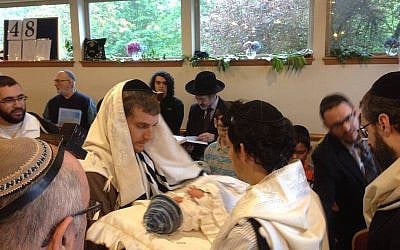
Congregation Kesser Israel is an extended family that celebrates life’s joys and provides support during times of sorrow. The congregation helps families mark important Jewish life cycle events, including bris (brit milah) and baby-naming ceremonies, Bar and Bat Mitzvahs, and weddings. It also offers prayers for healing and maintains a Refuah Shlemah list for those experiencing illness, ensuring members feel supported throughout every stage of life.
During times of bereavement, Kesser Israel assists families with funeral, burial, and shiva minyan arrangements and connects them with the Hevra Kaddisha of Portland. The congregation provides meaningful ways to honor departed loved ones through Yahrzeit plaques and the annual Yizkor Book. Members can also celebrate special occasions by sponsoring Shabbat kiddush or seudah shlishit and receive assistance with hanging a mezuzah. Through these traditions and services, Kesser Israel strengthens Jewish identity, community, and connection across generations.
Cemetery
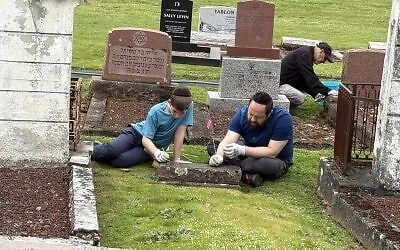
The cemetery was purchased in 1924, and the first burial took place in 1925. Although a few individuals buried in the Kesser cemetery could be considered “notable,” most were ordinary people whose lives reflect the broader story of Jewish immigration and settlement in Oregon. Many were immigrants from Poland and Russia who arrived during the great waves of Jewish immigration between approximately 1890 and 1924, seeking better opportunities and a brighter future for themselves and their families.
Their stories, in some cases marked by hardship and sorrow, offer a glimpse into the challenges and experiences of everyday Jewish life in Oregon. In this way, the cemetery preserves a “people’s history,” one that honors not only prominent individuals but also the lives, struggles, and contributions of ordinary people who helped shape Oregon’s Jewish community.
Community Service
Congregation Kesser Israel plays an active role in the greater Jewish community through both congregational initiatives and member involvement. Its activities include supporting Jewish education and day schools, helping ensure access to kosher food, promoting Israel solidarity, participating in the Hevra Kaddisha burial society, supporting NCSY and JSU youth programs, and organizing tzedakah and mitzvah projects such as an annual Passover food drive now under the umbrella of the Jewish Federation of Greater Portland. Through these and many other efforts, Kesser Israel strengthens Jewish life and community connections throughout Portland.
In cooperation with the Portland Kollel, Kesser Israel also supports the Portland Eruv, a nearly invisible boundary that allows Orthodox Jews to carry certain items outdoors on Shabbat within its designated area. The eruv uses existing utility poles, wires, private fences, and other structures, with minimal additions where needed. Blending into the surrounding landscape, it serves as an important resource for Orthodox Jewish families within its designated boundaries.
Kesser’s Rabbi Dovid Gleizer also serves on the Vaad HaKashrus of Oregon Kosher, a kosher certification agency that helps ensure food products meet Jewish dietary laws.
Maayan Torah Day School
Congregation Kesser Israel supports Jewish education in the community, including Maayan Torah Day School, founded in 2011 to meet the growing educational needs of Portland’s Jewish community. Affiliated with Torah Umesorah, the National Society for Hebrew Day Schools, Maayan provides a comprehensive Hebrew and secular education for students in kindergarten through eighth grade. Its student-centered, constructive learning approach emphasizes active participation, individualized instruction, and meaningful academic progress, fostering an engaging learning environment dedicated to excellence in both Judaic and General Studies.
Historical Backgrounds
Jewish settlers first arrived in the Oregon Territory in the late 1840s, many during the Gold Rush, migrating north from the California gold fields and primarily coming from German-speaking regions of Central Europe, including Germany, Prussia, and Bavaria. Most were young, unmarried men who had lived in other parts of the United States before heading west. The first Jews came to Portland around the same time, establishing the foundations of what would become a growing Jewish community in the state.
The community established Mt. Sinai Cemetery in 1856 and founded Congregation Beth Israel, Portland’s first synagogue, in 1858. Jewish pioneers soon became members of the city’s elite and tended to live in fashionable neighborhoods among other civic and business leaders. Their number included Aaron Meier, co-founder of Meier & Frank Co., at one time one of the most successful department store chains in the United States, and Bernard Goldsmith, an entrepreneur and civic benefactor who served as mayor from 1869 to 1871. Goldsmith was the first of five Jewish mayors who have led the city at various times since its founding in 1851.
From the 1880s into the 1920s, Portland’s Jewish community grew, and grew more diverse, as Eastern European and Sephardic immigrants arrived, particularly from the 1890s onward. Most of the new arrivals settled in South Portland, a densely populated neighborhood south of downtown. By the early 20th century, approximately 6,000 Jewish residents lived in the area, which served as a hub of Jewish religious, cultural, and communal life. Kosher butcher shops, Yiddish libraries, and other important resources for the immigrant community, helped residents maintain cultural traditions while adapting to life in Oregon. Neighborhood House, a settlement house established in 1897 by the Portland section of the National Council of Jewish Women, provided vital services and support to immigrant families.
With relatively few Jewish immigrants to the United States settling on the West Coast, Portland’s Jewish community developed its own distinctive character, sustaining religious traditions and cultural connections while building new lives far from the major Jewish population centers of the East Coast.
Congregation Kesser Israel Begins
There is the old saying, “Ask two Jews, you’ll get three opinions.” That may apply to Kesser Israel’s origins, the details of which have been lost to time.
What is clear, however, is that in 1915 a small group of men broke away from Congregation Shaarie Torah, an Orthodox shul established in 1905, to form Congregation Kesser Israel. One story is that Kesser’s founders were unhappy with a decision to remove Shaarie Torah’s center bima, or Torah reading platform, to accommodate more seating. Another is that the group objected to an increase in membership dues. Whatever the reason, the split was permanent.
This was also a time of significant change in the United States. By 1915, the U.S. had 48 states and was led by President Woodrow Wilson. The country was rapidly industrializing, although about half of its 100 million residents still lived in rural areas and nearly a third of workers were employed in agriculture. The nation was experiencing significant technological and social changes. More than half the population was under age 25, and life expectancy at birth was approximately 54.5 years. Modern conveniences remained uncommon, as fewer than one-third of households had electricity, indoor plumbing was limited, and many families relied on iceboxes to preserve food.
Oregon in 1915 also was experiencing significant modernization and social change. Construction had begun on the scenic Columbia River Highway, and Portland installed its first traffic signal at Southwest Third Avenue and Burnside Street. Katherine Clark became the first woman elected to the Oregon Senate, following Oregon’s adoption of women’s suffrage in 1912. Meanwhile, breweries and saloons, including the Henry Weinhard Brewery, began diversifying their products to include soda, ice, and vinegar in anticipation of statewide prohibition, which took effect in 1916.
Kesser Israel officially incorporated in 1921, and for many years operated under lay leadership. At one time during his long Portland tenure, Rabbi Joseph Fain, a noted Lithuanian scholar whose surname at birth was Faivusovitch, served three Orthodox congregations, his primary shul, Shaarie Torah, Linath HaTzedek, and Kesser Israel.
During those early years, Kesser was among a half dozen or so Orthodox or traditional shuls in South Portland. In the late 1950s, the city began an urban renewal project that claimed more than 50 blocks for “redevelopment,” displacing several synagogues as well as a Catholic church and school. Kesser Israel, located one block south of the urban renewal district, was the only shul spared. Today, it is the oldest continuously-operating Orthodox synagogue between Seattle and San Francisco.
1n 1994, the synagogue hired Rabbi Leonard Oppenheimer with the support of Torah Umesorh as its first full-time rabbi in recent times, marking an important development in the congregation’s leadership and religious life.
Rabbi Kenneth and Aviel Brodkin served the congregation from 2005-2022, and led Kesser Israel’s relocation from its South Portland building to a new home in the heart of the Southwest Portland Jewish community, close to a number of Jewish institutions, including the Mittleman Jewish Community Center and its kosher cafe, a longtime Sephardic synagogue, a Chabad synagogue and preschool, a large Conservative congregation, and the Portland Kollel, with which it has a close working relationship.
The Kollel was established in 2006 by Rabbi Tzvi and Esther Fischer and Rabbi Chanan and Meira Spivak, with the help of Torah Umesorah, and recently celebrated its 20th anniversary. Among other education and outreach initiatives, Meira Spivak expanded NCSY, then a small Portland youth group, into Oregon NCSY, which among other programs oversees more than 20 Jewish Student Union clubs in Portland-area public middle and high schools.
The Brodkins joined with the Fischers and Spivaks to establish Maayan Torah Day School, which now serves some 65 children from preschool through 8th grade. Currently, Rabbi Daniel Borsuk serves as principal.
Rabbi Dovid Gleizer, Kesser’s current rabbi, came to Portland with his wife, Rivka Malka (nee Swartz) in 2023 to serve as the Kollel’s Rosh Beit Medrash and Director of Advanced Torah Studies, overseeing the Torah learning activities of the Kollel. He became Kesser’s rabbi in 2025.
“My wife and I feel like we’re part of a very special group of individuals at Kesser,” he said. “We’re a tight-knit community of Jews from many backgrounds who are committed to Torah growth, and to each other.”
I would like to thank Sura Rubenstein, President, Kesser Israel Board of Directors.
Contact Information:
Congregation Kesser Israel, 6698 SW Capitol Hwy, Portland, Oregon 97219
Phone: (503) 222-1239
Email: info@kesserisrael.org
Website: https://www.kesserisrael.org/shul