


About peace
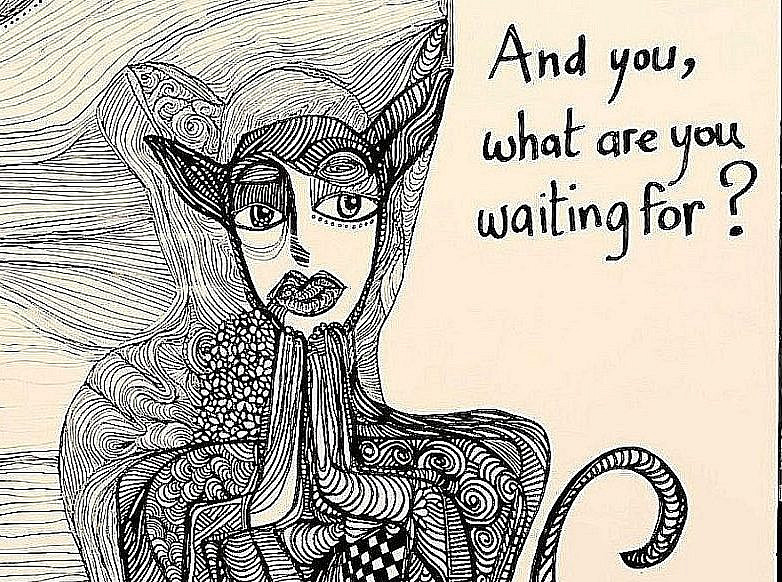
Pax sit. Paix, paz, pace, peace, chalom, salam, eiríni, frieden, khaghaghoutyoun, heping, heiwa, mir.
Shanti, shanti.
If there’s one overused concept in this world, it’s that of peace.
Throughout history and everywhere, today more than ever, everyone calls for it with deep sighs and claims to aspire to it, but I don’t know anyone, anyone, who, in one way or another, is not personally at war with something or someone.
The schoolyard, where rival factions already clash, sets the tone. Many of the ambassador’s children I knew in my small international school wanted to become arms dealers, and it’s not Amélie Nothomb who will contradict me. She recounts in Sabotage Amoureux the fierce war that opposed all the diplomats’ children in the San Li Tun ghetto in Beijing.
From north to south and from left to right, neighbors hate each other, and anyone who has never encountered divorced couples in open warfare doesn’t know what hatred is.
In fact, peace is a pure fantasy of the mind, and the little blue planet is generally in flames. Seventy-three highly sapiens conflicts are currently ongoing, the oldest of which began in 1948 and has been continuous for 75 years.
Which one is it? The Burmese armed conflict. Of course. The concerned world followed the path of the famous opponent of the military junta, Aung San Suu Kyi, who was placed under house arrest for 15 years, from 1990 to 2010, before finally coming to power in 2016, only to be overthrown by a military coup in 2021. She was subsequently imprisoned for something like 33 years without anyone being moved by it, nor did the UN pass any resolution.
Well, none until December 2022. In a courageous resolution, the first since 1948 that called Myanmar to order, the concert of nations demanded the release of political prisoners, and France expressed concern over the situation of the Rohingyas and its “mobilization in response to this crisis through voluntary contributions to the United Nations High Commissioner for Refugees and the International Red Cross Committee.”
As of the latest reports, the lady from Rangoon, Nobel Peace Prize laureate 1991, was “partially” pardoned, to use the term published by all the world’s news agencies, meaning that four of the 19 more or less fanciful charges against her were dropped and her sentence was reduced to 27 years in prison.
Aung San Suu Kyi thus spent much of her life imprisoned in the name of democracy and peace, but no one forgives her for not… going to war to defend the Rohingyas, “one of the most persecuted minorities in the world” (source: UN).
These former untouchable Bengalis, who converted to Islam in an attempt to escape their condition, after having suffered the most atrocious persecutions for centuries without ever acquiring any nationality or rights, eventually fled to Bangladesh and ended up crowded into Kutupalong, the largest refugee camp in the world.
So to help the Rohingyas, nations stripped Aung San Suu Kyi of all her distinctions, including the Nobel Prize and honorary citizenship of the city of Paris. After all, 27 years will pass quickly, especially at 78 years old.
The Rohingyas, meanwhile, remained at Kutupalong. They are now over a million, and since it’s getting crowded, they’ve been relocated to a nice little deserted island in the Bay of Bengal, 60 kilometers from the coast, without fresh water, ravaged by cyclones, and highly submergable without the need for any tsunami during the monsoon season. An unlikely muddy thing that just emerged from the waters not long ago. Hoping it will disappear as quickly as it appeared. (With the Rohingyas) (while we’re at it). The Rohingyas were forcibly taken there, and there were some rather pathetic scenes of family farewells and travelers who had to be beaten into boarding. Ungrateful people. But no new resolution has come. Silence doesn’t need to be deafening when the mute are already deaf.
Seventy-three conflicts are currently underway, including 50 minor ones with fewer than 1,000 deaths per year and 23 more serious and deadly conflicts, including about ten major wars causing over 10,000 deaths per year.
For all these listed conflicts, the death toll is given as a rough indication because, in times of war, not only do we have no idea of the actual death toll, but it’s also of little significance. It’s just to give a rough scale while keeping in mind the randomness of counting. For example, in the Panshir conflict in Afghanistan, which started in 2021, the Francophone online encyclopedia reports around ten deaths so far. When you consider the inventive Taliban’s warfare, it’s hard to believe this number is reliable, and thus, one learns to be wary of numbers. In any case, we should.
The United Nations notes in one of its reports that after the carnage of World War II, “at a global scale, the absolute number of victims of wars has steadily decreased since 1946.
However, today we are witnessing a resurgence of conflicts and violence. Most current conflicts involve non-state actors, such as political militias, criminal gangs, or international terrorist groups. Affirming the new disproportionality of modern warfare.”
While the new ugly wars rage, men march for peace. Every year, they award a prize initiated by the inventor of dynamite “to the personality who has contributed the most or best to the rapprochement of peoples, to the abolition or reduction of standing armies, to the gathering and spreading of congresses for peace.” Among the famous nominees are Benito Mussolini in 1935, Adolf Hitler in 1939, and Joseph Stalin in 1945 and 1948, but even though none of these names won the vote of the famous jury, one might still say that the concept remains fragile.
And yet… If only…
Pax sit.
Peace, paz, pace, peace, shalom, salam, eiríni, frieden, khaghaghoutyoun, heping, heiwa, mir. Shanti, shanti.