A Mermaid in Jerusalem
Achziv: Where tide and time conspire to reveal what’s been broken and made holy
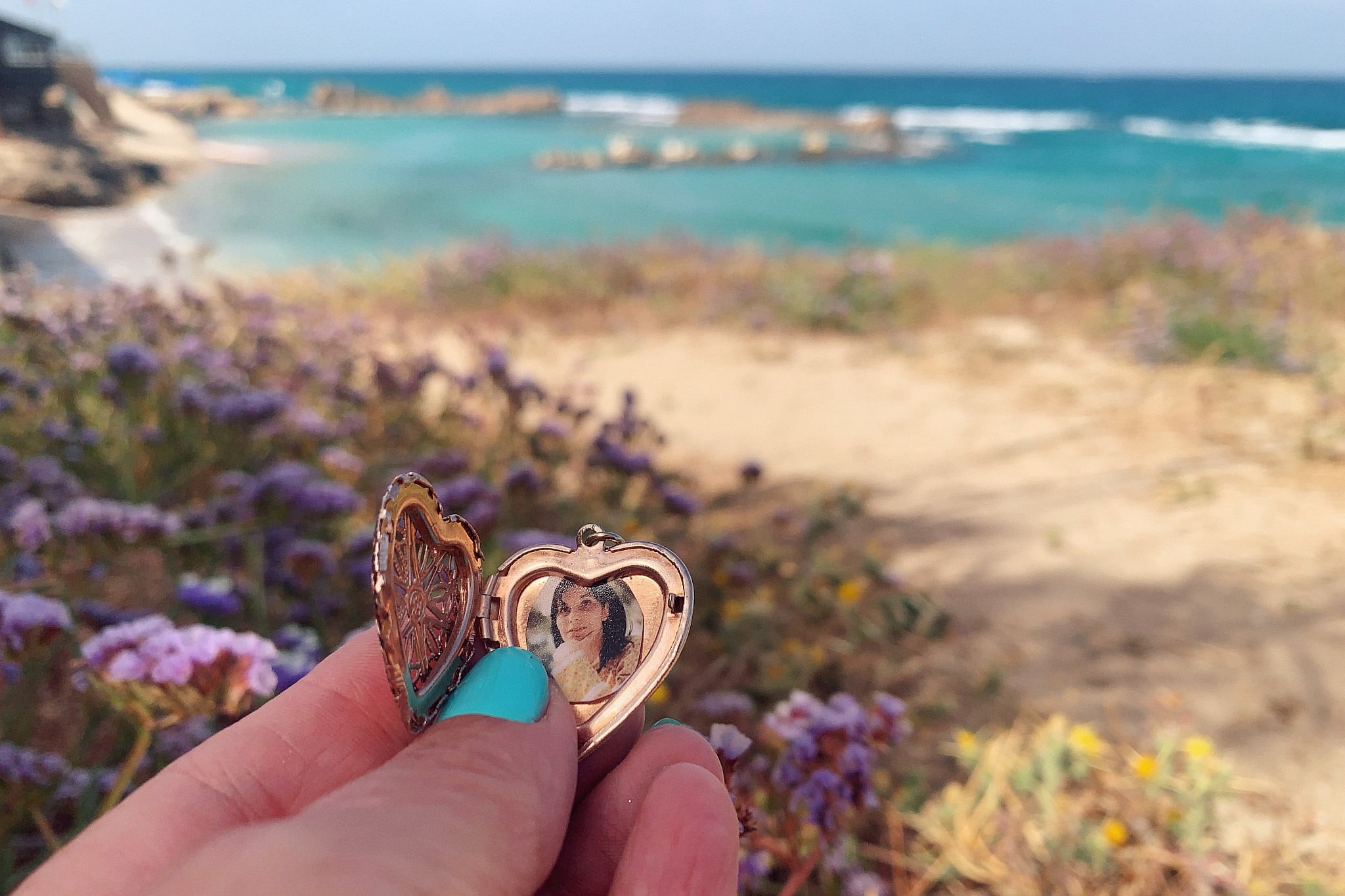
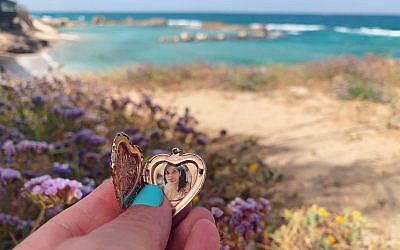
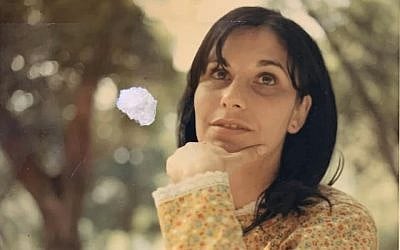
Before I was even a flicker of a dream, my mother lived by the sea in Achziv.
Achziv isn’t just a a village hewn from cliffs and ancient ruins, it’s a threshold – where tide and time conspire to reveal what’s been broken and made sacred.
My mom, a poet and dreamer , loved living there.
She used to tell me stories of swimming through the turquoise lagoon, climbing out over the sun-warmed rocks, her skin drying into salt crystals.
The place hasn’t changed much.
There’s still that little artist colony — just a few rooms, but it feels like a portal into another dimension. A doorway into the world where my mother was young and free. I’m pretty sure she knew the woman who runs it now — a juicy sea goddess in her teens back then, now radiant in her seventies, with platinum hair streaked green and blue like sea glass.
My daughter just turned seventeen.
This is her last year before the army — the same age I was when I came to Israel for the third time, when I was living on my own and trying to trace my mother’s footsteps in the dust.
So we went away together, for just one night.
We sat by the sea. Ate ripe cherries and watermelon and polished off a canister of Pringles with two women from a nearby village.
Then we waded into the silky waters of the lagoon. I searched for ripples my mother might have made. For the memory of her fingertips on the stone. For the seashells she might have touched — jagged, smooth, carried here on tides from distant shores.
She once told me about the purple flowers blooming on the hill.
They’re still there.
The old Roman wheel she spoke of — that’s still there, too.
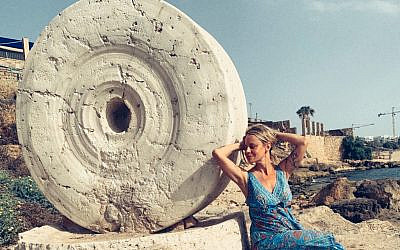
Stone, flowers, seashells — these things both move and remain.
Seashells carried from far flung lands on tides flowing from distant shores.
So , too, the stones shaped by the hands of crusaders and Romans, who came by sea and land and called this sweet little cove their home for a time.
And maybe one tiny purple seed caught the wind and bloomed into a garden.
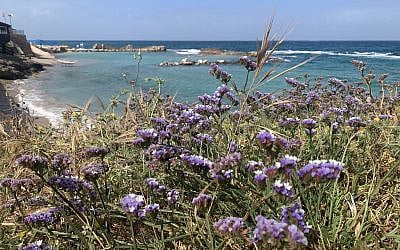
The shells become walls.
We abide.
And we become something else.
I think about broken things as I pick up sea-glass while my daughter swims out to a rock suns herself.
I hold a green jewel in my hand – mermaid contraband, I pretend.
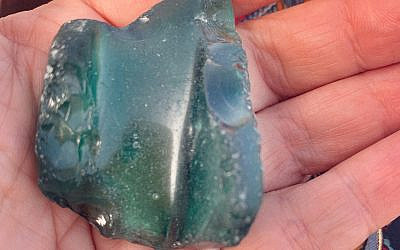
Tossed by storms and waves, what once cut deep becomes softened, frosted, its edges worn smooth by time. We find these pieces glinting in the sand and call them treasures, even though they began as something jagged and shattered.
And so it is with the hardest memories — the ones that once split us open. They don’t disappear, but they lose their sharp edges. We can hold them without bleeding. We can even choose to leave them be — or take them as a keepsake, but we find they no longer hurt in the same way. Just proof that we’ve lived. And healed. And softened into something beautiful.
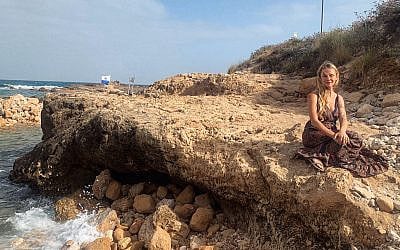
I think about the miracle of return as I think about ancient ruins.
And as I sit here in the spot, my mother loved, I am looking for her — with my daughter — somewhere tethered between the two. I saw myself more clearly through her. I felt the wounds I gave my mother echoed back to me through my daughter’s fierce light — and I know I deserve it, because this is what all mothers do to their daughters, if they’re lucky enough to have mothers they trust.
And when we argue over something I probably won’t even remember, I could can my mother’s voice answering her, and, faintly, the voice of my teenage self answering too — stubborn, wild, trying to understand love through anger.
Waves crash on the shore. The wind picks up.
History doesn’t move in straight lines. It spirals.
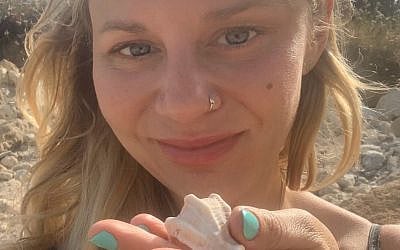
A Fibonacci sequence, like the seashell my daughter found this morning, the same shape she drew on my arm in henna while we sat on a rock in the lagoon where I’m sure my mother sat.
We never come full circle.
By the time we return to the place we think we’ve been before, we’ve lived, and grown, and grieved, and love —
so we see it from another vantage point.
I’m not seventeen anymore.
And the mother I once fought tooth and nail is gone .
And, here I am —
looking for her in the waves, in the salt air,
in the curved echo of a shell.
Each time the sea crashes forward and rolls backwards,
it softens the broken edges.
Rock becomes sand.
Broken glass becomes mermaid treasure
Salt crystals glisten on my skin.
Wounds become memory.
And memory — like the tide — always finds its way back to this shore.