Past President, Hadassah Oakland Ruach Chapter, Hadassah Writers' Circle
Acorn Squash with Vegetable and Date Pilaf for Rosh Hashanah
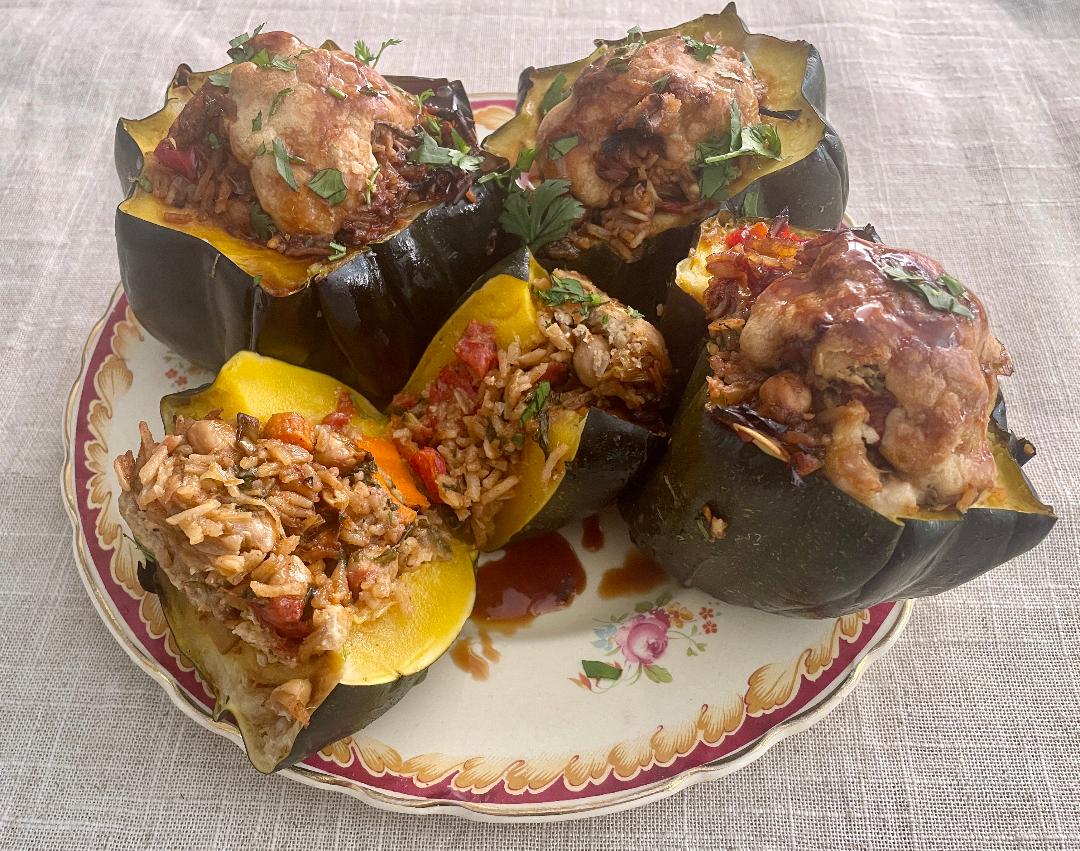
Acorn Squash recipe photo courtesy of the author.
There is something so special about Rosh Hashanah when it comes to food. That’s because our High Holiday meals often include symbolic foods that add to our entreaties for a sweet and prosperous new year. Often, the Hebrew words for these foods are soundalikes of Hebrew words that express what we pray for during the High Holidays. The Hebrew word for date, for instance, is tamar, which sounds similar to yitamu (May our enemies be removed).
This Acorn Squash with Vegetable and Date Pilaf adds prayer to our holiday plate and is an ideal option for the requests that I often get this time of year in my Hadassah workshops and other classes for vegetarian or vegan dishes to serve holiday guests.
The filled squash, packed with flavor, texture and protein, makes a striking vegan entrée or side dish, which even meat eaters will crave. The chopped dates in the pilaf provide a meaty chew when cooked. (Or, for a simple, colorful holiday side dish, make the pilaf by itself.)
The dates (and date syrup, also called silan or date molasses) are combined with other symbolic holiday foods such as carrots (the Hebrew word for carrot, gezer, is also the Hebrew verb for “to tear,” as in tearing up evil decrees). The Hebrew word for leek (karti) and winter squash or gourd (kraa) sounds like yikara, which asks that we be recognized by God for our good deeds. Chard (or sometimes beet leaves) are eaten because the Hebrew name selek sounds like lesalek, the Hebrew word for to remove; by eating these foods, we express hope that our enemies and our wrongdoings will be discarded as the old year ends.
Still other foods are included in holiday meals because of the qualities or virtues we ascribe to them. Sliced carrots, for example, are said to represent a wish for prosperity since they resemble gold coins. Chickpeas, a hearty and prolific crop, are said to represent abundance and fertility, their circular shape adding a wish for a well-rounded year.
Working with Hadassah has taught me that while honoring the symbolism in these foods is important, so is supporting the work of Hadassah and the Hadassah Medical Organization in Israel. This year, Hadassah’s Rosh Hashanah appeal is for contributions to its special memorial fund in honor of those who perished in the October 7, 2023, attacks and their aftermath.
Acorn Squash Stuffed with Vegetable and Date Pilaf
Makes 8 halves.
Make-ahead directions are included in the recipe. Date syrup and za’atar spice mix are available in specialty, Middle Eastern, kosher and online markets.
4 acorn squashes, each 1.5-2 lbs.
3 Tbsp. oil, divided, plus for baking dish
1 cup chopped onions (¼-inch pieces)
1 cup chopped leeks (¼-inch pieces)
1 Tbsp. finely chopped garlic
1 tsp. za’atar spice mix
½ tsp. ground cumin
¼ tsp. salt
¼ tsp. ground black pepper
¼ tsp. paprika
1/8 tsp. cayenne
1 cup sliced carrots (¼-inch rounds)
1 cup chopped red bell pepper (¼-inch pieces)
1 cup uncooked white long grain rice, rinsed and drained
1 can (13.5-14.5 oz.) diced tomatoes with liquid
2-3 cups vegetable broth or water
2 cups chopped fresh chard or spinach
1 can (14.5-16 oz.) can chickpeas, rinsed and drained
½ cup chopped pitted Deglet or other dates (¼-inch pieces)
2 Tbsp. lemon juice
Tahini sauce (see below)
¼ cup date syrup (silan)
¼ cup chopped cilantro or parsley
Heat oven to 350 degrees. Place squash on rimmed baking tray lined with parchment paper or foil. Prick each in 10-15 spots all over with a sharp skewer. Place in oven. Roast 45-55 minutes, turning every 15 minutes, until a fork easily slides through. Once cool enough to handle, slice in half around the squashes’ “waists.” Scoop out seeds and strings. Slice off tip and stem ends so halves are stable cut side up. Grease a large baking dish. Place cut side up in baking dish.
Heat 2 Tbsp. oil in a large skillet over medium-high heat. Add onions and leeks. Sauté until softened and beginning to color (7-10 minutes). Add garlic. Sauté 2 minutes until golden. Add za’atar, cumin, salt, pepper, paprika and cayenne. Sauté 1-2 minutes until sizzling. Add carrots. Sauté 5 minutes. Add bell peppers. Sauté 3-4 minutes until carrots are beginning to soften. Add 1 Tbsp. oil. Stir in rice. Sauté 2 minutes, coating rice in oil.
Stir in tomatoes with liquid. Bring to simmer, then lower heat to keep at simmer, stirring often. Once liquid is absorbed, add 1 cup broth, simmering until absorbed. Stir in chard, chickpeas and dates. Add second cup of broth, simmering and stirring occasionally until absorbed. Taste rice. Rice should be cooked through but not mushy. If necessary, add broth by the ½ cup and simmer until tender. Stir in lemon juice. Taste and add salt if needed.
Return oven to 350 degrees. Pack pilaf into squashes, mounding filling 1-2 inches above top. Spoon 1-2 Tbsp. tahini sauce over each squash. Bake for 40-50 minutes until tender and sizzling. Drizzle with date syrup and sprinkle with cilantro.
You can make and refrigerate the pilaf one day ahead. Roast, prep and refrigerate squashes up to two days in advance. Bring both to room temperature before continuing with the recipe. Add 5-10 minutes to final baking.
Tahini Sauce: Stir together ½ tsp. minced garlic, ⅛ tsp. salt, ½ Tbsp. lemon juice and 2 Tbsp. cold water. Stir in ¼ cup tahini. Continue stirring, adding cold water by the teaspoon until sauce is smooth and pourable. Add salt, tahini and or lemon juice as needed.
Faith is a member of the Hadassah Writers’ Circle, a dynamic and diverse writing group for leaders and members to express their thoughts and feelings about all the things Hadassah does to make the world a better place. It’s where they celebrate their personal Hadassah journeys and share their Jewish values, family traditions and interpretations of Jewish texts. Hadassah members are proud of their Zionist mission and their role as keepers of the flame of Jewish values, traditions and beliefs as well as advocating for women’s empowerment and health equity for all. Since 2019, the Hadassah Writers’ Circle has published nearly 650 columns in The Times of Israel Blogs and other Jewish media outlets. Interested? Please contact hwc@hadassah.org.
Related Topics
Related Posts