Exploring Jewish heritage through global travel and culture
Adath Israel: A Beacon of Jewish Faith in Post-Revolutionary Cuba

Adath Israel Synagogue, Havana — New York Jewish Travel Guide
Tucked away in the heart of Old Havana, amidst the lively streets and colonial architecture, stands Adath Israel, the city’s only Orthodox synagogue—a symbol of resilience, faith, and the enduring spirit of Cuba’s Jewish community. Founded in the early 20th century by Jewish immigrants seeking refuge and opportunity in this Caribbean haven, Adath Israel has served as a spiritual anchor for generations. With its modest façade and warm interior, the synagogue offers a sense of tradition and continuity, blending the rhythms of daily Cuban life with the timeless melodies of Jewish prayer.
Adath Israel is more than a place of worship—it’s a living testament to the resilience of Havana’s Orthodox Jewish community. Within its walls, ancient traditions are honored with deep reverence, from the lighting of Shabbat candles to the chanting of Torah readings, all set against the backdrop of a city rich in history and transformation. Despite the decline of Cuba’s Jewish population over the years, Adath Israel stands as a beacon of hope—welcoming worshippers, upholding kosher customs, and ensuring that Jewish life continues to thrive in Havana, one prayer at a time.
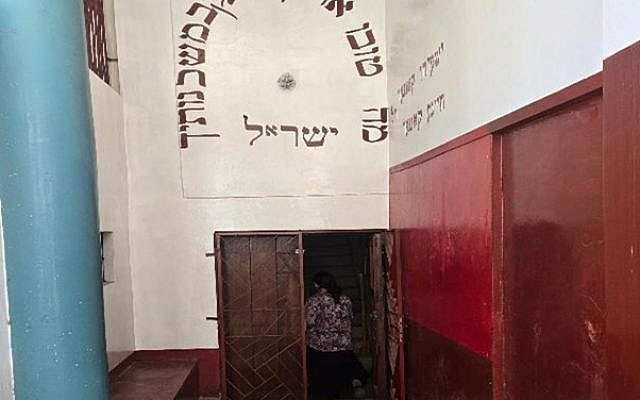
Jewish life in Cuba began in the 16th century with Sephardic Jews fleeing the Inquisition. A larger wave arrived in the late 1800s and early 1900s, as Eastern European Jews escaped pogroms and built a thriving community in Havana. By the 1930s, over 15,000 Jews lived in Cuba. But after the 1959 Revolution, religious life declined under atheist policies. Synagogues emptied, education stopped, and Judaism survived quietly—kept alive by a few devoted elders at Adath Israel.
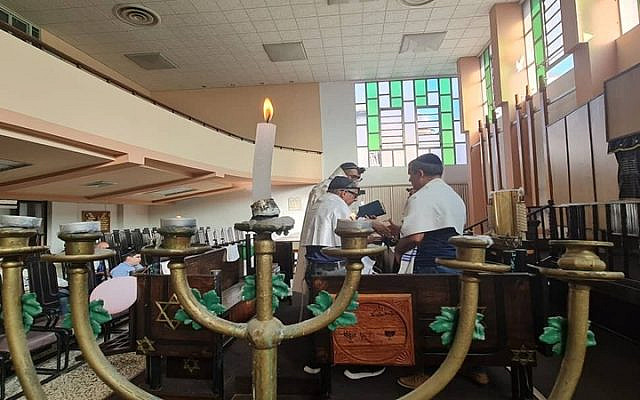
Today, Adath Israel is once again alive with prayer and purpose. Every day, they hold Shacharit at 8 a.m., followed by Mincha and Ma’ariv at 5 p.m. The synagogue is more than a house of worship; it’s a hub of community life, a place where Cuban Jews gather to learn, to eat, to celebrate—and, above all, to endure.
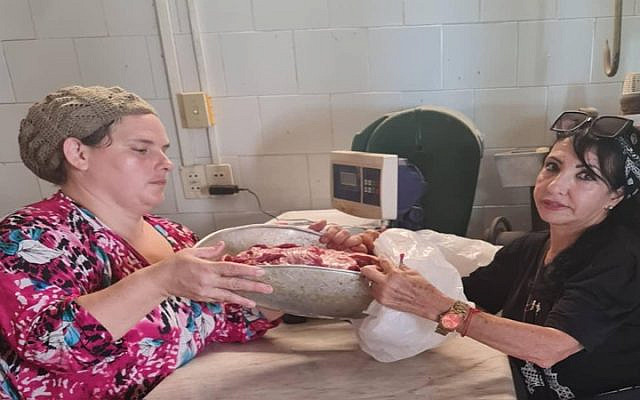
Just a few blocks from the synagogue, in a modest, unpretentious butcher shop, another vital piece of this story unfolds. This is Havana’s only kosher butcher shop, and at its center is Rabbi Yacob Berezniak—both the spiritual leader of Adath Israel and the community’s shohet, or ritual slaughterer. With precision and care, he ensures the community’s meat meets kosher standards, safeguarding a sacred practice passed down through generations.
Obtaining kosher meat in Cuba is no simple task. The country has not seen fresh kosher beef since 2025, and even then, acquiring a single cow requires navigating a labyrinth of government permissions, paperwork, and negotiations. When approval is finally granted, it is Rabbi Berezniak himself who travels to the slaughterhouse, selecting the animal and performing the shechita, the kosher slaughter. He inspects every organ to ensure the cow is healthy and fit for consumption. Only the front half of the animal—the portion permissible under Jewish law—is used. The meat is then divided and distributed among the families of the community, each portion a precious symbol of perseverance.
Kosher meat distribution in Havana operates through Cuba’s government-issued ration book system, a legacy of the policies established in 1963. Under this system, individuals are entitled to receive ¾ of a pound of kosher meat every nine days. Those with medically prescribed diets—documented in their ration books—may receive either half a pound or ¾ of a pound, depending on their specific dietary needs. Today, Havana’s Jewish community is the only population in all of Cuba that continues to receive kosher meat through this government-regulated system, a unique and enduring recognition of their religious dietary requirements.
Chicken, once a dietary staple, has become an even greater challenge. Live chickens, essential for performing our own shechita to ensure they are kosher, are increasingly scarce. Fish offers some small relief, as salmon and tuna—with their clearly identifiable scales and fins—can still be found in local markets. Additionally, canned sardines and tuna, often sent by supportive Jewish communities abroad, help supplement the limited supply.
Adath Israel in Havana offers free kosher Shabbat dinners and lunches, drawing 25–30 people weekly with traditional foods like Syrian rice, falafel, and cholent in winter. A play area creates a family-friendly space, and the synagogue also helps locals with medicine. Rooted in Halakhic tradition, it recognizes only those born to Jewish mothers or with Orthodox conversions abroad, guiding others to convert elsewhere. Despite decades of hardship, the community has preserved Jewish life, education, and global connections—making Adath Israel a vital spiritual and cultural center for Cuban Jewry.
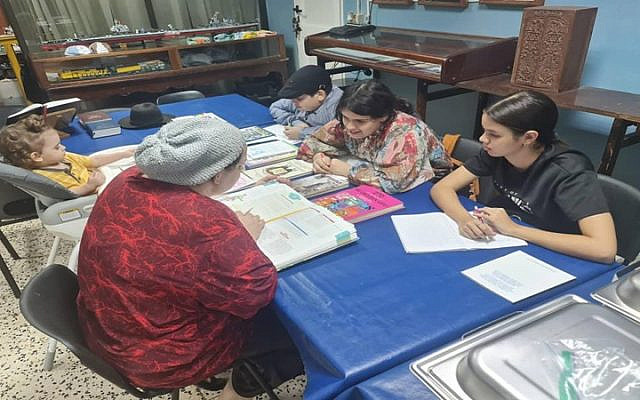
Jewish travelers are encouraged to visit Adath Israel during their stay in Havana to experience firsthand the warmth, history, and vibrant traditions of this remarkable community.
Adath Israel itself offers a surprising touch of comfort—air-conditioning hums quietly through the sanctuary, the social hall, and even the classrooms. Two small elevators, rare luxuries in Havana, ease the way for elderly congregants. And in the basement, the only functioning mikveh in Cuba offers a space for ritual purity, its waters replenished from a natural spring.
Rabbi Berezniak’s story is deeply tied to Adath Israel’s survival. His family fled Poland in 1925, settling in Cuba after failing to reach America. His grandfather, a shochet, opened a kosher butcher shop for the island’s growing Jewish community.
After the 1959 Revolution, the shop was seized, and most Jews fled to Miami—but the Berezniaks stayed. At his 1994 Bar Mitzvah, Rabbi Berezniak’s father urged him to remain and preserve the synagogue. When religious restrictions eased in the 1990s, Jews who had hidden their faith began to return—reviving a community that nearly vanished.
Rabbi Berezniak’s journey took him through Israel and Panama, where he trained as a shohet, mashgiach, and a member of the Hevra Kadisha, the burial society. In 2019, he was officially appointed rabbi of Adath Israel, a role recognized by both the Sephardic Chief Rabbi of Panama and the Cuban government.
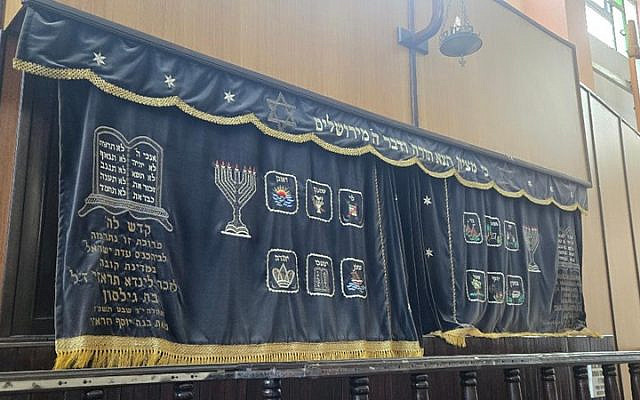
“In 2019, I was during my training in Panama, under the guidance and approval of the esteemed Rabbi David Perets. I trained in various areas, including Kashruth, the Hevra Kadisha, and prayers. Upon completing this process, I was granted a letter from Rabbi Perets to present to the Cuban authorities, officially recognizing my role and responsibilities,” Rabbi Berezniak shared.
Today, Adath Israel is more than a synagogue—it’s a fragile but resilient lifeline for its 127 mostly elderly members. While younger generations have moved abroad, many return for holidays or stay connected through messages and visits. Passover seders draw over 50 participants, Sukkot brings families under palm-covered balconies, and Simchat Torah fills the building with song. Remarkably, there are no security guards. “We’re in a tough neighborhood,” says Rabbi Berezniak, “but we’ve never had issues.” Decades of secularism left many Cubans unaware of religion. “If you don’t know what a Jew is,” he adds with a wry smile, “you have no reason to hate one.”
Rabbi Berezniak noted that the Adath Israel Synagogue in Cuba preserves a rich trove of historical records, including archives from the Hevra Kadisha, Maccabean Hebrew Cemetery, and United Hebrew Congregation. It also holds Bar Mitzvah and marriage registries, B’nai B’rith materials, Hebrew school records, and a library of publications, documents, and photographs.
The rabbi shared a heartfelt message, highlighting the resilience of Cuba’s Jewish community: “We are a kehila committed to preserving Judaism despite many challenges. With faith in Hakadosh Baruch Hu, we continue as a testament to strength and devotion. Visitors often leave with a deeper appreciation for their own freedom to practice. We warmly invite our Jewish brothers and sisters to visit, experience our spirit, and stand with us in solidarity.”
In the heart of Havana, where history and tradition intertwine, Adath Israel stands as a testament to the resilience, faith, and enduring spirit of Cuba’s Jewish community. Through decades of adversity—from the turbulent years of the Cuban Revolution to the challenges of today—the synagogue has been more than a place of worship; it has been a sanctuary of hope and a symbol of survival. Despite the hardships of preserving Jewish life in Cuba, Adath Israel continues to shine as a beacon of faith, bringing generations together to safeguard their heritage, uphold cherished traditions, and nurture a sense of community. More than just the story of a synagogue, Adath Israel embodies the story of a people who, against all odds, have kept their faith alive—one prayer at a time.
For more information:
By Meyer Harroch, New York Jewish Travel Guide & New York Jewish Guide
This unforgettable journey was hosted by The Jewish Heritage Travel, with heartfelt thanks to Luis Arteaga and Miriam Levinson for organizing such a remarkable and unique experience.
Special thanks to Vickie Prince for her knowledgeable and engaging guiding, bringing Havana’s hidden gems and history to life with her insights and enthusiasm.
For details on upcoming trips and to request a travel brochure, contact The Jewish Heritage Travel at https://jhtravel.org/ or call 1.845.256.0197.
Related Topics