

Where Jews and Judaism Meet the Political Road!
Adding Gravitas to a Movement: Reform Judaism’s Search for Depth & Identity
 Re-CHARGING Reform Judaism: Ritual, Learning, and the Search for Renewal
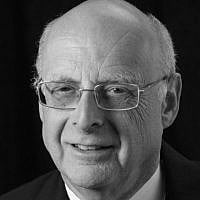
Few figures did more to reintroduce a sense of religious depth into Reform Judaism than Rabbi Richard Levy, ז״ל . During his tenure as president of the Central Conference of American Rabbis (CCAR), the Statement of Principles for Reform Judaism was released. Levy challenged Reform Jews to reconsider practices and sensibilities long associated with more traditional expressions of Judaism. He sought to reacquaint twentieth-century Reform Judaism with kippot, kashrut, tzitzit, Shabbat observance, and, most importantly, mitzvot—a renewed appreciation for meaningful religious obligation and the language of commandedness.
More than two decades later, many of Rabbi Levy’s themes resurfaced at the Third Re-CHARGING Reform Judaism Conference, held on May 27–28, 2026, at Stephen Wise Free Temple in New York. The gathering introduced resolutions organized around four broad priorities:
- Cultivating Jewish learning
- Invigorating spirituality, prayer, and Jewish practice
- Strengthening the centrality of Jewish peoplehood
- Innovating models of community, leadership, and Jewish life
Underlying these initiatives was a clear operating imperative:
“Reform Jews must be knowledgeable, capable, and inspired shaped by lifelong learning in sacred community and committed to applying that learning to Jewish life.”
The conference’s nearly thirty resolutions represented both continuity and change: reaffirming long-standing Reform principles while simultaneously breaking new ground in ritual practice, leadership formation, and communal expectations.
Spirituality, Prayer, and Jewish Practice
Among the most notable—and potentially controversial—proposals were efforts to strengthen ritual observance, deepen spiritual literacy, and reinforce the Zionist commitments of Jewish professionals.
The resolution on spirituality and Jewish practice called for reclaiming Shabbat as sacred communal time through the “diminishing of technology” and a renewed emphasis on Shabbat dinners and communal gatherings. It advocated teaching “kashrut literacy” while encouraging families and congregations to explore forms of biblical kashrut. The resolutions also sought to elevate the role of Hebrew in worship and Jewish education.
Considerable attention was devoted to strengthening religious leadership. The conference emphasized the professionalism and spiritual significance of the Shaliach Tzibbur (prayer leader), encouraging congregations to prioritize the hiring of ordained cantors. At the same time, it recognized the growing importance of well-trained lay leaders capable of serving as Shlichei Tzibbur with the spiritual depth and Jewish knowledge such leadership requires.
Running throughout these initiatives was a renewed emphasis on kavanah—intentionality and spiritual focus—as a cornerstone of Jewish religious life.
In many respects, these priorities reflected themes Richard Levy championed decades earlier through the CCAR: that Reform Judaism could embrace greater ritual seriousness without abandoning its commitments to autonomy, inclusivity, and modernity.
Community, Leadership, and Sacred Relationships
Another major focus involved reimagining community and leadership in an age increasingly shaped by individualism and social fragmentation.
The resolutions pushed back against the prevailing emphasis on the “sovereign self,” seeking instead to rebuild trust, connection, and communal responsibility. They envisioned a renaissance of Torah learning, revitalized worship, and the cultivation of sacred relationships.
Particularly significant was the call to strengthen the relationship between Israel and North American Jewry through education, dialogue, exchange programs, and shared service initiatives. The goal was to foster an enduring, honest, and loving partnership grounded in mutual responsibility.
The conference also advocated investing in an innovative leadership ecosystem capable of cultivating leaders at every level. This included leadership fellowships, support for experimentation, shared learning networks, and training individuals who can convene, teach, and inspire. Leadership, in this vision, is understood not merely as a title but as a practice.
Among the proposed pilot initiatives were:
- Torah Studios, where serious study serves as the central engine of community life.
- Leadership Fellowships designed to develop a new generation of conveners and educators.
- Spiritual Wellness Initiatives addressing contemporary needs for meaning and resilience.
- Mutual aid and care networks that strengthen communal responsibility and connection.
Taken together, these proposals represented a reassessment of existing institutional structures and a commitment to developing cost-effective, dynamic approaches for serving Reform Jews seeking meaning and purpose in an increasingly challenging era. Rather than preserving familiar models, the conference leadership appeared to choose a path of creativity, emphasizing depth, joy, and purpose.
The Centrality of Jewish Peoplehood
The conference also reaffirmed the centrality of Zionism, Jewish peoplehood, and the State of Israel within Reform Jewish identity.
One resolution called for embedding a “mature Reform Zionism” that understands Jewish sovereignty as a sacred responsibility “to build a Jewish state grounded in democracy, human dignity, justice, and the legitimacy of diverse expressions of Judaism.”
Participants emphasized that Jewish peoplehood must become more than an abstract ideal. It should be reflected in institutional practice. The movement’s organizations, schools, congregations, and leadership structures were encouraged to embody these commitments and translate them into measurable outcomes.
Jewish Learning as the Foundation
The emphasis on Jewish learning may ultimately prove to be the conference’s most consequential contribution. Across nearly every resolution, literacy, education, leadership development, and lifelong study emerged as foundational commitments.
This focus reflects a broader pattern found across many liberal religious movements. Such movements often oscillate between emphasizing individual autonomy while minimizing ritual obligations, and strengthening communal norms, ritual practice, and distinctive religious identity.
Reform Judaism offers one of the clearest examples of this dynamic.
From Ritual Minimization to Ritual Reappropriation
The movement emerged in nineteenth-century Europe during the Enlightenment and Jewish emancipation. Early Reform leaders argued that Judaism was primarily an ethical religion. Ritual practices such as dietary laws, traditional dress, and extensive liturgy were often viewed as no longer binding. Universal moral teachings took precedence over particularistic practices.
The 1885 Pittsburgh Platform represented perhaps the high-water mark of this approach, explicitly rejecting many traditional ritual obligations as incompatible with modern conditions.
By the mid-twentieth century, however, several developments prompted reassessment. The Holocaust, the establishment of the State of Israel, concerns about assimilation and intermarriage, and a growing desire for distinctly Jewish forms of spirituality led many Reform Jews to reconsider the near abandonment of ritual life. Ethics alone, many concluded, did not provide sufficient communal cohesion or spiritual depth.
As a result, contemporary Reform Judaism has increasingly embraced what scholars describe as a “reappropriation of ritual.” While remaining firmly committed to personal autonomy, gender equality, LGBTQ inclusion, and critical engagement with tradition, many Reform communities have strengthened their emphasis on:
- Hebrew in worship
- Traditional prayers
- Shabbat observance
- Jewish learning and text study
- Ritual practice and life-cycle observances
- Voluntary forms of kashrut
The crucial distinction is that these practices are generally understood as chosen commitments rather than universally binding commandments.
Why Liberal Movements Return to Ritual
Several recurring dynamics help explain this pattern.
First, rituals sustain identity. As communities become more integrated into broader society, members inevitably ask what distinguishes them from the surrounding culture. Rituals create visible boundaries and shared experiences that reinforce communal identity.
Second, rituals satisfy the human search for meaning. Ethical principles alone often fail to address the need for transcendence, sacred time, embodied practice, and communal belonging.
Third, generational change frequently produces reactions against earlier reforms. Descendants of those who removed traditional practices sometimes rediscover them precisely because they seem unfamiliar or lost.
Fourth, communities facing increasing competition for members often discover that stronger religious identities generate greater commitment than highly diluted forms of religious expression.
Finally, modern scholarship has reshaped attitudes toward ritual. Twentieth-century thinkers increasingly came to understand rituals not as archaic remnants but as powerful instruments for creating meaning, identity, and community.
A New Synthesis:
Religious movements rarely move in a straight line. Rather, they continually navigate enduring tensions:
| Pole A | Pole B |
| Universalism | Particularism |
| Individual autonomy | Communal obligation |
| Ethics | Ritual |
| Adaptation to society | Distinctiveness from society |
| Flexibility | Structure |
Many liberal religious movements spend decades moving toward the first pole, only to discover corresponding losses in identity, cohesion, and spirituality. They then move back toward the second—not by abandoning their liberal commitments but by seeking a more durable synthesis.
The resolutions emerging from the Third Re-CHARGING Reform Judaism Conference suggest that Reform Judaism may be continuing along this trajectory. The participants and organizers argue that Reform Judaism need not choose between autonomy and obligation, modernity and tradition, or innovation and inherited practice. Instead, they seek to construct a richer religious framework capable of sustaining Jewish learning, spiritual depth, communal belonging, and a renewed sense of purpose.
Context
This was the third Re-CHARGING gathering, and notably, none of these conferences has been organized or sponsored by the official institutions of Reform Judaism. This has been an initiative involving committed “outsiders” who believe the Reform Movement must honestly assess where it stands and where it needs to go if it is to remain vibrant and meaningful in the decades ahead.
The Questions Before Us
Important questions remain unanswered. How will these initiatives attract the next generation of Reform Jews? Which elements are likely to resonate with the growing population of religiously unaffiliated “Nones”?
Will younger liberal Jews embrace a renewed emphasis on ritual and religious practice? Can Reform Judaism reintroduce ritual in ways that cultivate meaning, deepen connection, and enrich Jewish life without compromising the values of openness and personal autonomy that have long defined the movement?
The answers to these questions may determine whether the Re-CHARGING initiative becomes merely an interesting conference series or the beginning of Reform Judaism’s next significant and transformative chapter.