
After the Sirens Came the AP Exams
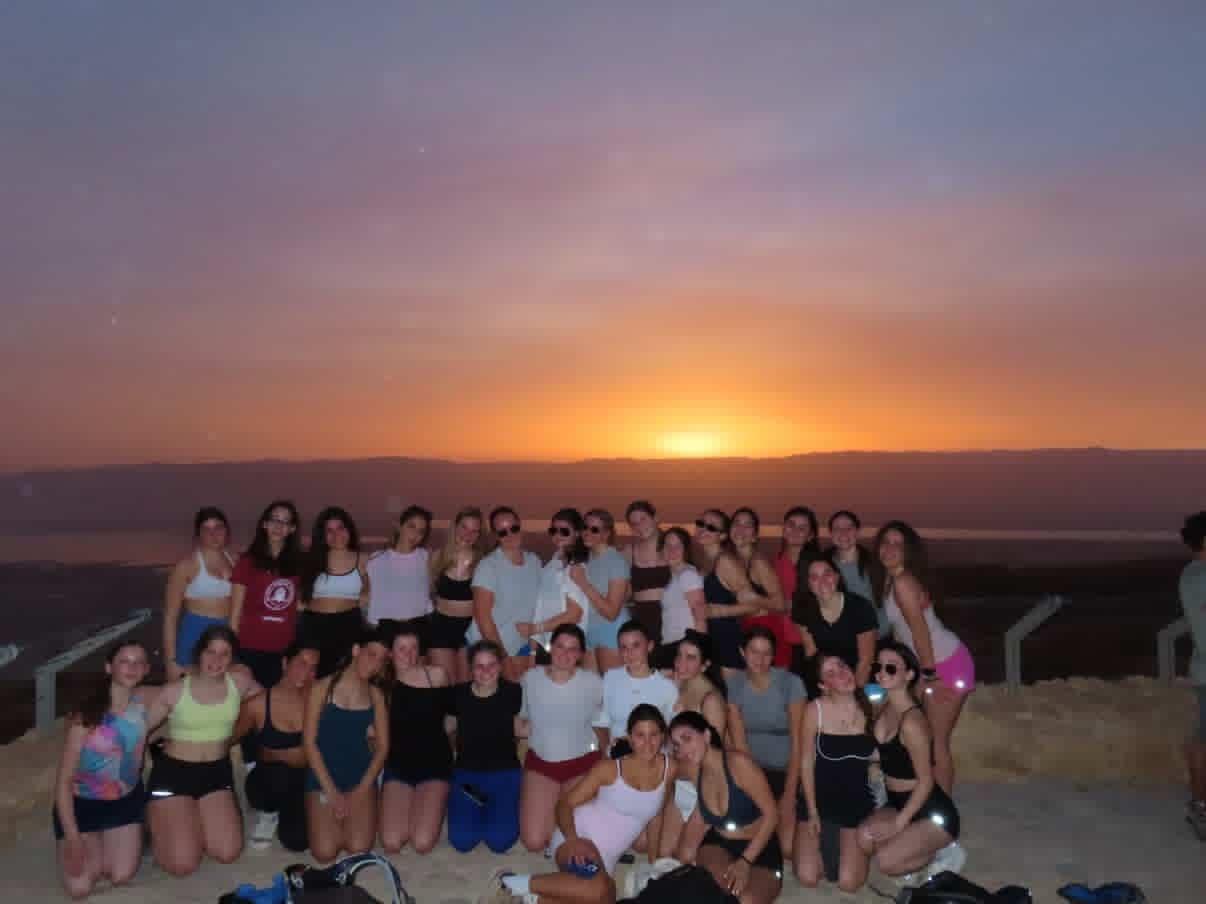
Looking back at the nearly six weeks of missile alerts, sleepless nights, and bomb shelters in Israel, the greatest visible anxiety many of our students displayed this spring was not over the war. It was over AP exams.
High school students, mostly from American public schools in cities and towns across the US had made the lifechanging decision to enroll in a study abroad experience at our Alexander Muss High School in Israel.
These same teenagers had calmly slept in reinforced shelters, checked missile alert apps in the middle of the night, and listened to the distant booms of interceptions overhead. Yet weeks later, many appeared more distressed over AP exams than incoming missiles.
At first, I laughed at the irony. Then I realized what I was watching revealed far more about the culture that shaped these students than the students themselves. The missiles taught them perspective. The AP exam schedule revealed the culture they came from.
As Head of School at The Alexander Muss High School in Israel (Muss), I spent much of this spring watching sixty-seven American teenagers adapt to wartime reality with striking composure. When the latest fighting with Iran began, we moved students into protected shelters overnight, making it easier to manage their whereabouts. It was less disruptive than forcing teenagers to stumble half-awake from their rooms every time sirens shattered the calm of night.
From February 28 through the ceasefire on April 8, as Israel and the United States confronted Iran and its proxies across multiple fronts, our semester abroad program was effectively confined to campus. Students slept lightly. Staff members kept phones inches from their faces through the night. Parents reached out from thousands of miles away, trying to sound calmer than they felt. Sometimes the strain broke through. I reassured them that we were keeping their children safe.
Even amid the routines of campus life – classes, meals, late-night conversations – we remained on alert for the next interruption. And yet, despite the uncertainty and fear, ninety-five percent of the students remained in the program.
The students demonstrated remarkable poise. They steadied one another while the adults around them worked quietly to ensure their own anxieties never became the students’ burden. Teenagers joked in bomb shelters moments after sirens sounded. They checked food delivery apps to see whether late-night orders would still make it to campus. They huddled around oversized tubs of ice cream, plastic spoons in hand, balancing terror, exhaustion, and adolescent absurdity all at once.
A few weeks after the ceasefire began, students were once again traveling the country, hiking, learning, and reclaiming some version of normalcy.
Then Advanced Placement exams arrived, and the atmosphere changed immediately.
Students who had calmly walked into shelters during missile alerts were now unravelling over APUSH details, physics formulas, and whether a score lower than a 4 might derail their futures. Sleep schedules deteriorated. Conversations became consumed with fears about disappointing colleges, parents, and themselves. There were tears over the possibility of falling short.
This was not hypocrisy or immaturity. It was conditioning.
American teenagers are raised in a culture that tells them, relentlessly and often implicitly, that academic performance is existential. That every exam is a referendum on their future. That falling behind is catastrophic. We tell young people, in a thousand subtle ways, that there is always another benchmark approaching and that the consequences of failure are permanent.
Missiles, despite being an existential threat, lacked the psychological architecture of AP exams. The danger was real, but it was shared. During a siren, nobody was competing. Nobody’s identity depended on outperforming a standardized benchmark created thousands of miles away from bomb shelters in Israel. Fear during wartime became communal, and because it was communal, the students instinctively leaned on one another.
What stood out was that the students responded to both crises in fundamentally the same way: together.
During the war, they rallied around one another with patience and emotional generosity. During AP exams, they transformed the office building into an improvised study hall. Whiteboards and glass walls filled with formulas, timelines, and handwritten notes. Students quizzed one another late into the night and reassured classmates convinced they were unprepared. At some point, a collective theory emerged: if they believed hard enough in earning a five, maybe they could manifest it into existence.
Gone were the tubs of ice cream. Now the tables were covered with study guides, snacks, and scribbled notes.
But the instinct underneath it all remained the same.
They moved toward one another.
Their anxiety reflected the culture around them. Their emotional maturity reflected something far more enduring.
If this generation is often criticized as fragile or unable to cope, I witnessed something very different this spring. I watched teenagers endure uncertainty, disrupted routines, fear, isolation from home, and relentless academic pressure. More importantly, I watched them care for one another through it.
Faced with both external danger and internal pressure, these students responded with resilience, compassion, and unity.
The students will probably forget much of what they memorized for those AP exams. They will not forget the nights spent together in the shelters.
But what I hope stays with them longest is neither the war nor the tests. It is the realization that in moments of fear, whatever its source, they instinctively turned toward one another.
Stephen Kutno is Head of School at Alexander Muss High School in Israel .
To experience a life changing high school semester abroad in Israel, visit amhsi.org