A writer conversant in grief, seeking virtue.
After Tragedy: Ours is the Best Possible World?
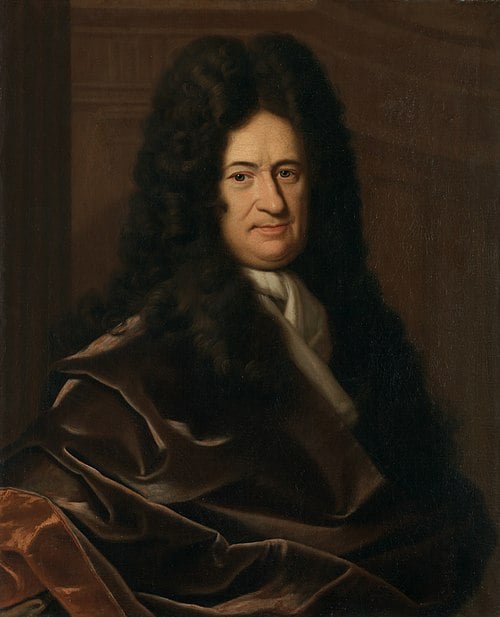
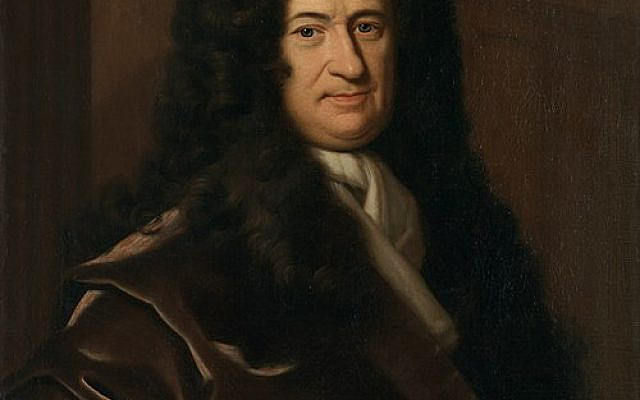
Gottfried Wilhelm Leibniz (painting by Christoph Francke). Source: Wikimedia Commons (Public Domain Image)
Gottfried Wilhelm Leibniz (1646–1716) built one of philosophy’s boldest ideas challenging great thinkers of every faith: if G-d is all-powerful, all-knowing, and perfectly good, then G-d would not create an ugly reality. For Leibniz, a devout Lutheran as well as a genius logician, this was not mere abstraction but a way to reconcile reason and a caring G d.
In his Theodicy (1710), Leibniz argues that G-d surveys infinite possible worlds and chooses the one with the greatest balance of goodness, order, and variety. The slogan that sticks to him is “the best of all possible worlds.” He does not mean every event looks good up close. He means that when you take the whole system together, no other world would be better.
Despite Leibniz being the co-inventor of calculus and an undeniable polymath, his view requires scrutiny. Leibniz says evil is real but compatible with a world that is still best overall. He separates moral evil (what people choose), physical evil (pain, illness, disaster), and metaphysical limitation (the finitude of created things).
Some goods require risk: free will allows love and virtue, but also cruelty; courage needs danger; mercy needs harm. He insists nothing happens without a reason, even if unseen. The world may look chaotic, brutish even, but Leibniz claims it has hidden order.
Remarkably, his metaphysics tries to make this all work. In the Monadology (1714), he describes reality as made of “monads,” simple substances that do not interact but unfold together through G-d’s harmony. Critics worry that this picture makes our experience of suffering and causation feel like a mere appearance within a prearranged faux script. Leibniz thinks he is preserving both divine care and human freedom without turning the world into a machine.
The 18th century tested this optimism. The Lisbon catastrophe of November 1, 1755, combined earthquake, tsunami, and fire into a nightmare that shook Europe. Voltaire responded with moral anger. In his Poem on the Lisbon Disaster (1756) and Candide (1759), he attacked the habit of explaining tragedy too quickly, as if a system could swallow whole the screams of the innocent. His character, Pangloss, repeats “all is for the best” while disaster piles up. Voltaire’s satire still works because it names a real temptation: using meaning as anesthesia.
Today, that temptation returns with every new atrocity. On December 14th, 2025, according to early reports, a mass shooting at Bondi Beach in Sydney during a Hanukkah event killed at least 11 people and injured many more. If we place that tragedy in Leibniz’s framework, he would say the shooting does not disprove his thesis. It shows the cost of a world with freedom. If G-d creates beings who can choose, some will choose hate.
The question is whether that freedom makes possible a greater good than any safer alternative. Voltaire would counter: this is where the theory becomes obscene. A child crushed in Lisbon and a family shattered at Bondi Beach do not look like costs in a calculation. They look like ― they are ― savagery, unequivocally so.
A Jewish lens sharpens the discomfort with some answers while refusing despair. Judaism carries a long memory of oppression, exile, and violence. It trains the reflex that explanation is never enough. Ecclesiastes says wickedness appears “in the place of justice,” which refuses to romanticize institutions. Rabbinic tradition names the yetzer hara, the evil inclination, as a human force, no cosmic accident.
Jewish thought can acknowledge philosophical accounts of evil, but it inclines toward obligation: you do not solve suffering; you respond to it. You bury the dead. You visit the wounded. You strengthen the vulnerable. You feel evil. You pursue justice. You repair.
That pivot helps us read Leibniz more carefully. If “best possible world” becomes a way to stop acting, it deserves Voltaire’s ridicule. If it becomes a way to keep acting, it can function as a refusal to allow hate to have the final word. Optimism does not deny tragedy. It insists that tragedy does not exhaust meaning. The test is what we do.
Hanukkah offers a model because it ritualizes defiance without fantasy. The candles do not claim darkness is an illusion. They claim light is a practice. Memory can generate action. A Jewish reading does not refute Leibniz; it tames him. It keeps his optimism from morphing into absurd abstraction. It demands that any “best possible world” worth saying aloud must make room for grief, anger, protection, and gradual repair.
So the question remains: after tragedy, is ours the best possible world? Leibniz invites a metaphysical “yes,” but only if we refuse Pangloss. Voltaire teaches the necessary protest that prevents cheap meaning. Jewish tradition adds the next move: mourn, then mend.
If there is a best possible world, it will not reveal itself through explanation or mathematics. It will reveal itself through the decision to light candles even when the world tries to snuff them out.
Related Topics