

post-denominational inter-spiritual rabbi, mikveh specialist, spiritual counselor, author
Agency at the Mikveh: reality not dream
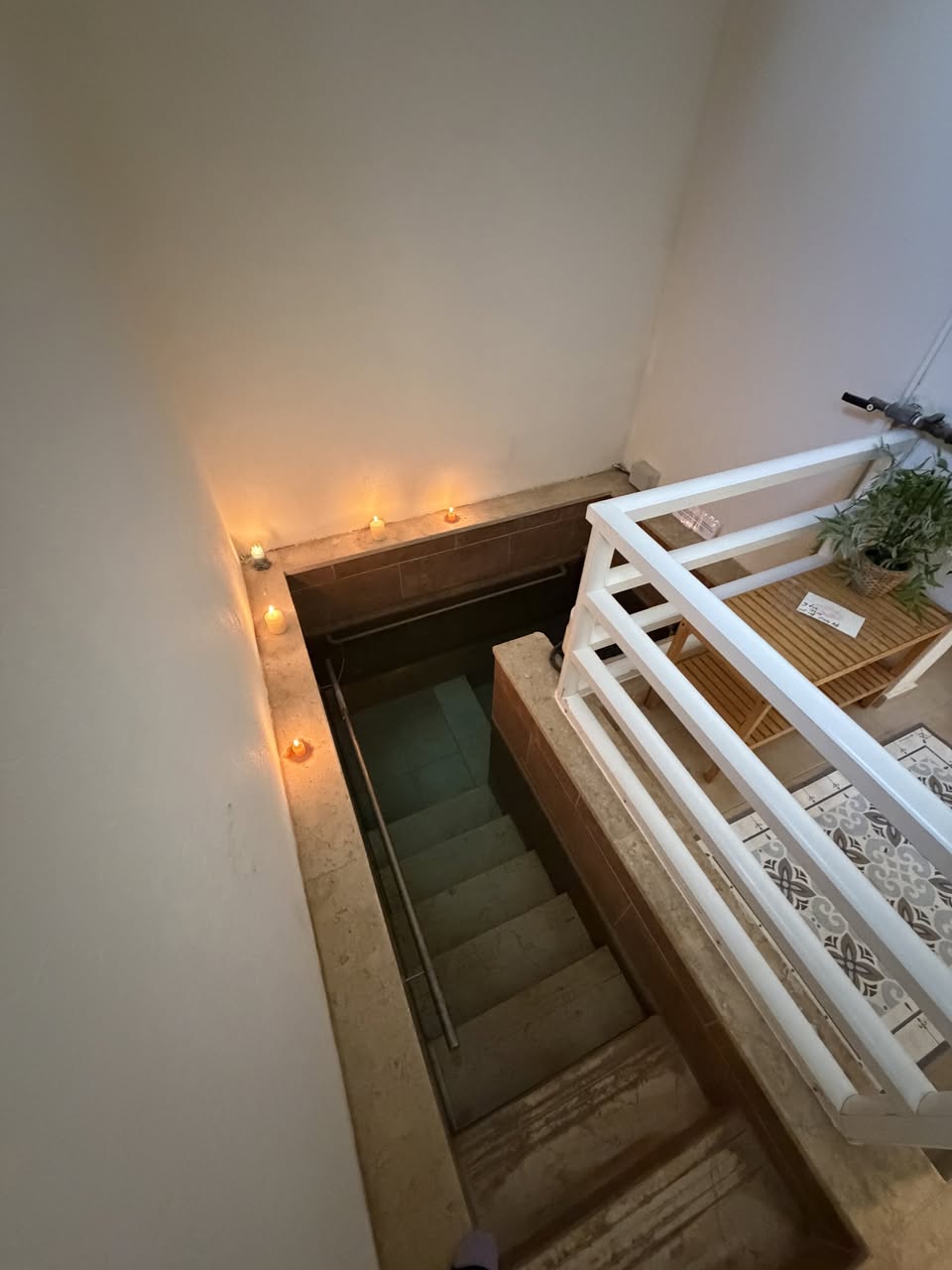
Shmaya: A Mikveh for Mind, Body, and Soul. Photo credit: Mayer Adelberg
Last week, Israeli Sephardic Chief Rabbi David Yosef spoke at a conference of mikveh attendants, the women who work at women’s mikvaot in Israel that are run by the Chief Rabbinate, the women whose role should be to guide and support women who come to immerse in the mikveh, but who instead sometimes act as (or are used as) gatekeepers of the mikveh.
He told these mikveh attendants to publicly humiliate a woman who asks to immerse alone, as is her legal right per a Supreme Court ruling in 2016, saying that any woman who asks to immerse without an attendant in the room must be granted that option.
The Chief Rabbi was saying, in essence, that the attendant should do all she can to avoid having to honor this Supreme Court ruling, even go so far as to shame the woman in public for even asking – despite the fact that the practice of having a witness in the room is a traditional preference but not a halakhic requirement. And he should yell at her loudly so all the women waiting in line hear, he said, to discourage them, too, from requesting what is their legal right.
Of course, this is about political, religious, and gender power struggles and grabs. Even the fact that this sacred spiritual space should be run by a governmental body at all, especially one that is monopolized by one stream of Judaism only – and the most backward, extreme, and strict one at that – is unacceptable.
On a deeper level, it is also about people stealing our agency over our own spiritual lives, our bodies, our minds, and our souls.
There is another option. And it already exists. It only need be expanded to all mikvaot in the country.
At our mikveh, Shmaya: A Mikveh for Mind, Body, and Soul, in Kibbutz Hannaton, it is a given that the immersion belongs to the person who is immersing. We do not have a gatekeeper. We have a key in a safe box with a code at the door, so that people can come and go on their own, by appointment.
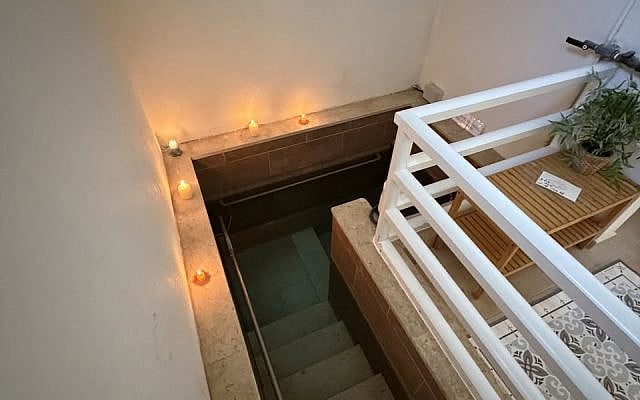
Our mikveh is the only one in Israel that is not overseen by the Chief Rabbinate. We are uniquely blessed that we do receive help from our regional religious council (the Jezreel Valley), but not from the national office of religious affairs, which is directly associated with the Chief Rabbinate.
Therefore, we do not appear on the Chief Rabbinate’s list of mikvaot, and they do not tell us what to do. But we do have regular checks to make sure the mikveh pool itself meets their halakhic standards. In fact, in the last check, just a few weeks ago, we were told our mikveh pool meets the highest halakhic standards of any mikveh in our regional council.
And so, at Shmaya, people (yes, at Shmaya we welcome people of all genders, sexual orientations, and religious and other affiliations) coming to immerse can choose to come alone, or with a companion to watch them immerse or sit in the gathering room outside the immersion room for moral support, or they can ask us for our services in guiding them in their immersion (even helping them create a personalized ceremony if they so wish). But only if they request. It is equally fine for them to come and go without meeting another human being at all.
In fact, because of our good relationship with our regional religious council, which offers us help but not interference, as is our policy at our mikveh vis-à-vis those who come to immerse, they even send people to us who are looking for a more open mikveh.
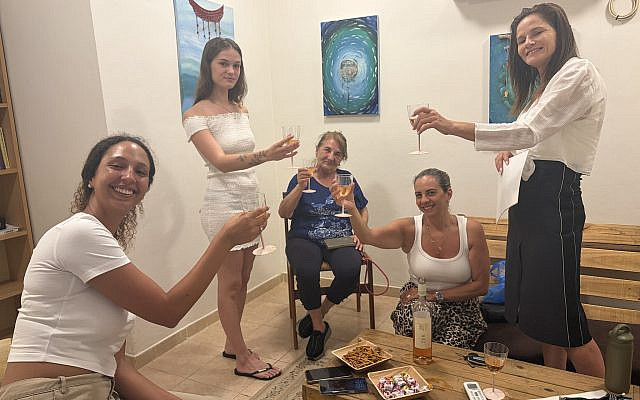
Here are some examples just from this past month (remember, June is a popular time for weddings, as you will see below) of some of the types of ceremonies that happened in our mikveh and who was with the immerser in the room when they immersed:
A bride who chose to be completely alone in the immersion room with no attendant; another bride who chose to have friends and family bless her in a blessing circle in the outer gathering room and then for her mother to be with her in the mikveh room during her immersion; a woman converting who chose to have her husband with her in the room while she immersed and no attendant; a woman who came to immerse as a way to transition out of a mourning period for her husband and specifically wanted an attendant in the room while she immersed; a lesbian couple who came on their own to immerse together before their wedding, with no one else present; a lesbian bride coming with her mother, also on their own, to immerse before her wedding; a mother and her two children who had all converted a year ago and came to immerse to mark the anniversary and the mother’s decision to take on a Hebrew name; many people of all genders coming on their own to immerse at all times of day and night; and more…
Just last week, a woman who is getting married in a few months contacted me to help her create a corrective mikveh experience before her wedding. I will, of course, let her decide who, if anyone, she wants in the room with her when she immerses.
And not as a last resort or compromise, but as part of our ideology and mission at Shmaya: that the immersion is in the hands of the one who is immersing. Not an attendant and not the Chief Rabbinate. Mikveh is between the immerser and the water, the immerser and God/the Universe/the Mystery/The One/ The All – or whatever word one uses to express the inexpressible.
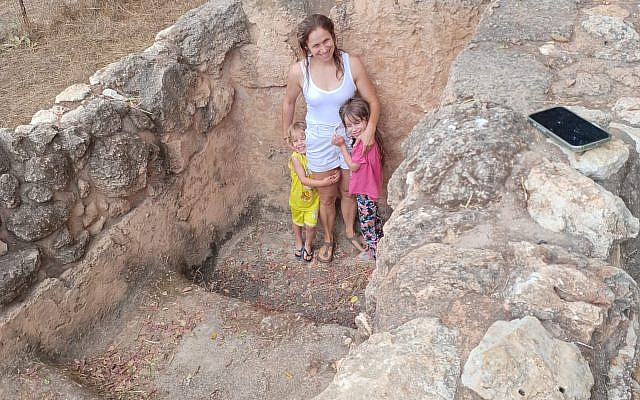
At Shmaya, we even have groups visit our two mikvaot that sit side-by-side – our modern mikveh for immersion, and our ancient 2,000-year-old mikveh for a time warp back to the Second Temple period – sometimes just learning about mikveh, sometimes also immersing.
One such group this month was staff from a Reform synagogue in Jerusalem, Kol Haneshama. I showed the group both mikvaot and what makes them so unique on the Israel scene, we talked about mikveh in general and its deeper spiritual meaning, and some people chose to immerse.
One woman who chose to immerse had tears in her eyes when she emerged. She then shared that she had had a traumatic mikveh experience when she converted through the Chief Rabbinate when she was in the army. Her experience immersing at Shmaya was a corrective of that experience. This time, it was just her and the water. She had chosen to go in alone, with no one standing over her watching or checking. Which is the way she would have wanted her first experience to be.
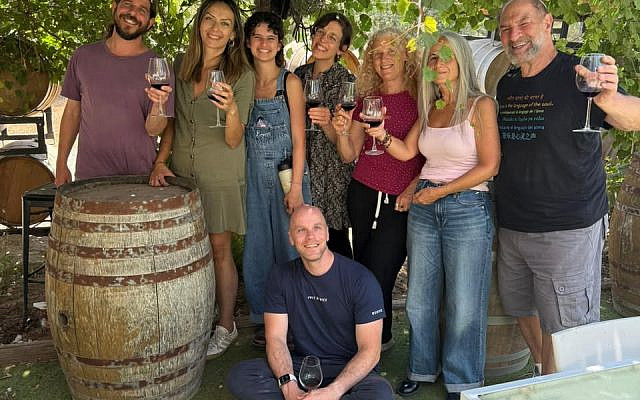
Another group this month was from Nes Amim, a village north of Hannaton near Nahariya, founded and inhabited by a Christian community of European volunteers who live and work together with their Jewish and Arab neighbors.
I met with the group, spoke with them about mikveh, and some in the group chose to immerse. Yes, at Shmaya, as I said above, all humans are invited to immerse, just as all humans are given the agency to choose how and when they want to immerse.
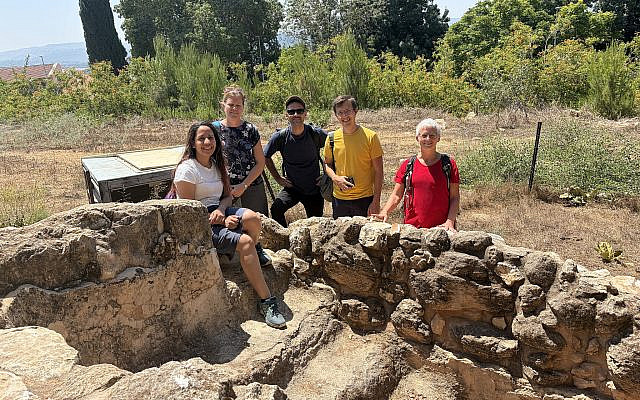
Just as the ocean, the first mikveh ever (as per the first verses of Breishit, Genesis), is there for all to immerse as they choose, so is our mikveh. And so should be all mikvaot in Israel.