
Aging Parents & the Chagim: Making It Meaningful
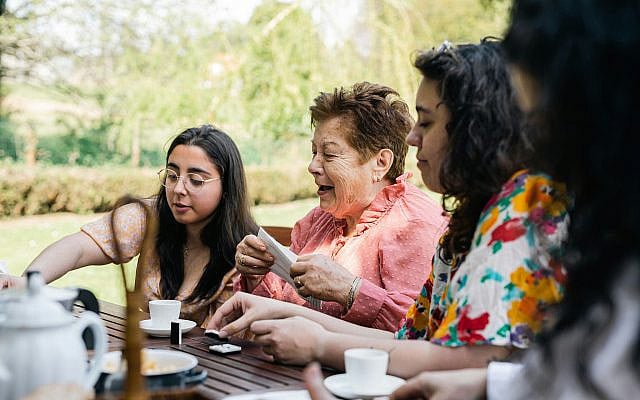
At almost every large Chag gathering, there comes a moment when you notice that the oldest people at the table have gone quiet. They are smiling, watching their grandchildren fill the room with noise and life. But no one has really spoken to them in an hour.
This shift happens gradually, and it is nobody’s fault. For years, the holidays revolved around our parents: their house, their recipes, their traditions, their say over who sat where and when everyone arrived. As families grow, host homes change hands, grandchildren become adults, and new spouses and great-grandchildren join the table. The center of gravity naturally moves elsewhere, and our parents shift from the center of the celebration to its edges. Not excluded. Not unloved. Just watching more than participating.
Holiday gatherings are complex for nearly everyone at the table, from the host racing to get dinner out, to the sibling who flew in for a week trying to catch up with everyone at once, to the teenagers reconnecting with cousins they haven’t seen all year. But our expertise is older adults. So this piece is about them: why the Chagim often get harder as parents age, and some practical, field-tested ways to make sure they are not just present at the celebration, but truly part of it. Often, it takes surprisingly little.
Why holiday gatherings get harder as parents age
Some of what makes the Chagim more challenging for older adults is visible. Much of it is not.
Hearing loss is often one of the biggest challenges. A parent who chats easily over coffee can become completely lost at a table of 15. A hearing aid that works beautifully in a quiet room is no match for overlapping conversations, clattering dishes, and everyone talking at once. What looks like withdrawal is often simply exhaustion from trying to keep up.
For a parent living with dementia, the very things that make a chag feel festive, the crowds, the late hours, the break in routine, can quickly become overwhelming or disorienting. Knowing that in advance helps families adjust their expectations and plan a celebration that sets everyone up for success.
Then there are the quieter challenges that are easier to miss. Mobility limitations can make simply getting to the table stressful. Fatigue means an evening that begins with excitement may end much sooner than anyone anticipated. Beneath it all is often an undercurrent of fear of being a burden. “Don’t worry about me” is rarely the whole truth.
And in more and more families, there is another question at the door: the live-in caregiver who arrives as well, far from her own family, on a holiday that is not hers. How does she fit into the celebration?
Understanding these challenges doesn’t mean changing everything about the holiday. It just means recognizing that what feels joyful to one person can feel overwhelming to another. Once you see that, small changes make a real difference.
The invisible cost of releasing our parents from their roles
For most of our married life, the holiday meal was at my mother-in-law’s house, and she cooked it. Then, as happens in so many families, the table moved to one of her children’s houses. At first, she still arrived carrying her famous dishes. Later, even that became too difficult. So we did what loving families everywhere do. We told her to rest.
“Don’t worry about cooking.” “You’ve done enough.”
It was an act of love. And it took me a long time to see what that kindness had quietly taken away.
When we release our parents from the work of the holiday, we often release them from the sense of purpose that came with it. The cooking was never just about the food, and setting the table was never just about the plates. These were expressions of identity, generosity, and love.
The answer is not to pretend nothing has changed. It is to adapt the role rather than retire it. And that is true for far more than cooking.
So here is the practical part.
Practical ways to include aging parents in the holiday celebration
None of this requires grand gestures. In the families we work with, the holiday gatherings that go best are the ones where someone has made a few small, deliberate choices before the chag rather than improvising during it. Here are a few ideas, some from our clients’ tables, and some from our own.
- Give them a role. Match the role to the person’s abilities. They might prepare one special dish, arrange the flowers, set the table, greet guests at the door, help a grandchild with a family recipe, or choose which songs everyone will sing. The task itself matters less than the feeling that they are still contributing.
- Tell them what to expect. If there will be 20 guests, singing, games, or children running in and out all afternoon, let them know beforehand. Predictability reduces anxiety, especially for someone managing hearing loss, fatigue, or memory changes.
- Make them the experts. Bring out old family photographs. Ask about childhood holidays, family traditions, or the stories behind familiar recipes. If your family enjoys games or trivia, include questions that only the grandparents can answer, about their childhood neighborhoods, their weddings, their first jobs. Suddenly everyone wants Saba on their team. For a few minutes, let everyone else be the audience.
- Think about the practical details. Large-print song sheets, with a grandchild seated beside each grandparent to share a page. A comfortable chair with arms. Easy access to the bathroom. A place to rest if the evening becomes overwhelming. These are the kinds of details that are easy to overlook until someone needs them.
- Remember the caregiver. If a live-in caregiver is spending the holiday with your family, there is no single right answer to how they fit into the celebration. Every family finds its own balance. There is, however, one wrong answer: pretending they are not there. Introduce them by name. Make sure there is food they enjoy. Give them a real place at the table if they are joining the meal. They are caring for someone you love every day of the year. Feeling welcomed matters.
- Include family who cannot be there. If relatives are joining from abroad, resist the temptation to leave a laptop open for the entire evening. Choose one special moment to connect when everyone can gather around the screen. A short, planned video call is often far more meaningful than trying to include someone in every moment.
What the Chagim are really about
After the planning, cooking, and logistics, what matters most isn’t whether the evening is perfect. It’s whether everyone around the table feels they have a place in it.
Our parents love seeing their tribe in its loud and happy glory, grandchildren draped over each other, the inside jokes, the continuity of everything they started. But they also want to be inside it, rather than beside it. Not managed. Not accommodated. Not seated safely out of the way. Included.
At B’Lev Shalem, the weeks before the Chagim are some of our busiest. Our care managers, and the team behind them, help families think through exactly these questions: how the caregiver’s day off falls during the chag, how to safely get a parent with a walker up three flights of stairs, how a parent with dementia will handle the change in routine, or whether this year the holiday meal needs to come to them.
It is the same work we do all year: holding the whole picture, so that no one in the family has to hold it alone.
Because that’s what this season is for. We take care of the complexity behind the scenes so that, around the table, you get to be a daughter, a son, a grandchild, simply family again.
And your parents get to be what they have always been: the reason everyone came home.