

Tour Guide
All Sevenths Are Forever Beloved
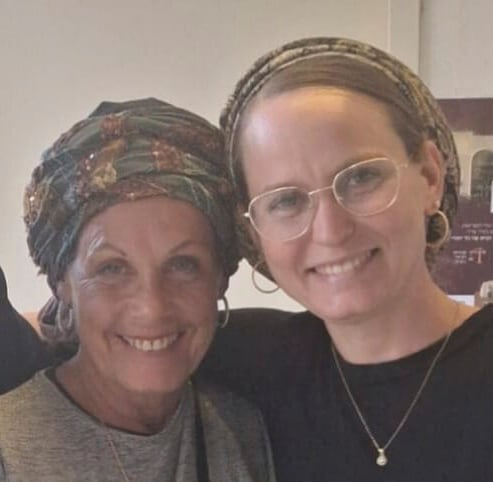
Mom with our #7
If you live in the United States and are considering Aliyah, but have concerns about your 11-year-old acclimating to life in Israel, these words are written for you.
In Midrash Rabbah (Leviticus Rabbah 29:11), we learn that G-d endows the seventh item in a series with special holiness and affection. Some examples include our Forefathers (“And Moses went up unto G-d”), King David (the seventh son of Jesse), and the Sabbath Day (“And G-d blessed the seventh day and sanctified it”).
This idea highlights that holiness in the Torah framework often comes through a process of completion. Rather than primacy belonging solely to the firstborn, the seventh represents the culmination of a full cycle—elevating the physical realm into something sanctified.
With that in mind, I would like to tell you about my seventh child.
When she was born, my wife and I had no pre-planned name for her. On the spot, we named her Bat-Sheva (“daughter of seven”). In our family of twelve, she is one of our middle children.
With the great assistance of Nefesh B’Nefesh, we made Aliyah directly to Mitzpe Yericho during the summer of 2003. Bat-Sheva was entering sixth grade. The first few months in school were extremely difficult. The classes in our community were quite small, and while Bat-Sheva was a natural social butterfly, not a single one of her classmates (or her teacher) understood English, and Bat-Sheva did not yet speak Hebrew. There were many tears during those early months.
Then, after three months, an amazing transformation took place—the power of total language immersion. Suddenly, Bat-Sheva became a native Israeli, speaking Hebrew better than her parents and older siblings.
Challenges remained, of course. Finding the right high school for her was difficult, and we breathed a sigh of relief when her high school years were complete.
Eventually, she met a lovely young man, Michoel Ben-David, from a wonderful family. He happens to be the seventh child in his family as well. They married, lived in Mitzpe Yericho for a time, then Jerusalem, then Yerucham in the Negev, and today own a home in Arad with their seven beautiful children. They also reverted back to the original family name: Weiss.
When a 990-pound Iranian missile landed across the street from their home this past year, their property suffered damage—but thanks to the government’s restoration funds, their home now has brand-new windows, courtesy of the State of Israel. Michoel serves full-time as a police officer in Arad.
And Bat-Sheva?
After her youngest child was ready to attend preschool, Bat-Sheva went to work running a daycare center while spending long hours earning her Bachelor’s degree in Education and Society.
In Israel, after graduating high school, young adults serve in the military. However, for roughly 20,000 Israelis each year, a vital alternative exists: Sherut Leumi (Civil National Service).
For individuals who do not serve in the military—whether due to religious exemptions, medical conditions, or conscience—Sherut Leumi offers an alternative path to fulfill civic duty through community-based volunteering. Participants serve for one or two years, working 30 to 40 hours per week in roles across hospitals, rehabilitation centers, emergency response services (such as Magen David Adom), public schools, youth centers, special education, immigrant integration, at-risk youth support, elderly care, crisis centers, security assistance, museum guiding, forestry, and legal aid.
Placements are coordinated through government-authorized organizations. One such organization is Shiloh, which places and supports young women in National Service across various sectors, including defense agencies, government ministries, healthcare, education, social welfare, and the judicial system (such as the Knesset and Ministry of Defense). Shiloh provides complete logistical and spiritual support, including dedicated housing, personal coordinators, and guidance throughout their service.
Until recently, Bat-Sheva served as a personal coordinator for dozens of volunteers in the Be’er Sheva area. Some of her volunteers were serving at Soroka Hospital when it was hit by an Iranian ballistic missile in June of 2025.
Recently, Bat-Sheva was promoted to Southern District Administrator. She is now responsible for overseeing all Shiloh National Service volunteers across the entire southern region of Israel.
As a parent, I am immensely proud. Bat-Sheva is a remarkably capable woman who runs a household of nine while carrying this vital national responsibility. She has joined the ranks of countless Israeli women who balance family and public service with extraordinary dedication every single day.
Make Aliyah today. One day soon, your children will make you just as proud—raising vibrant families in Israel and building the future of the Jewish homeland.
Related Topics
Related Posts

Comments