Jacobs is a public affairs consultant in NYC.
America and Israel: The Big Brother Is Gone
Way back in July, I had lunch with one of my closest friends, Mark (who, incidentally, looked glorious). He was visiting from Israel, where he has lived since high school. As seems to happen with anyone, anywhere, anytime these days, the conversation turned to politics, and specifically to Mark saying that he thinks most Democrats are sane but, like a lot of Israelis, sees a Democratic Party taken over by leftist lunatics who hate Israel.
To complicate it even more, I told him something I knew would stun him: plenty of our friends’ kids in New York City, raised in pro-Israel homes and pro-Israel themselves, enthusiastically voted for Zohran Mamdani. His pause lasted long enough that I worried I’d caused an aneurysm. For them, as for many voters, the cost of living mattered more than Mamdani’s views on Israel. As the conversation continued, at some point Mark said: “You need to explain this to Israelis.” This is my overdue attempt.
On September 1, a few weeks after that lunch, Amit Segal wrote the cleanest version I’ve seen of what many Israelis believe. Even in Israel’s best-case 2028 scenario, Segal argued, Josh Shapiro beats AOC for the nomination and still gets dragged by his party to a “sensible middle” far to the left of Obama (who in Segal’s eyes betrayed Israel). Therefore, “regardless of who’s on the ticket in 2028 or in Israel’s prime minister’s office, Israel is voting Republican.”
Segal may even be right about 2028. That doesn’t make the Republican Party a safe bet, or the Democratic Party a lost cause. Since Nixon’s airlift in 1973, America has been Israel’s protective big brother, the one who shows up for the fight and rarely asks many questions afterward. That big brother is gone, and the two parties are drifting in different directions. The Republican drift is toward leaving: America First neo-isolationism, no more fights that aren’t ours, and shrinking foreign aid budgets. The Democratic drift is toward conditions: still there when it counts, with a growing list of terms attached. Segal says Israel should prefer the former.
What Israelis haven’t absorbed is that the American-Israeli relationship is going to look very different from the one they grew up with, regardless of who’s in power here, or in Israel.

Israelis see the Democratic Party’s internal fight and mistake the volume for the vote
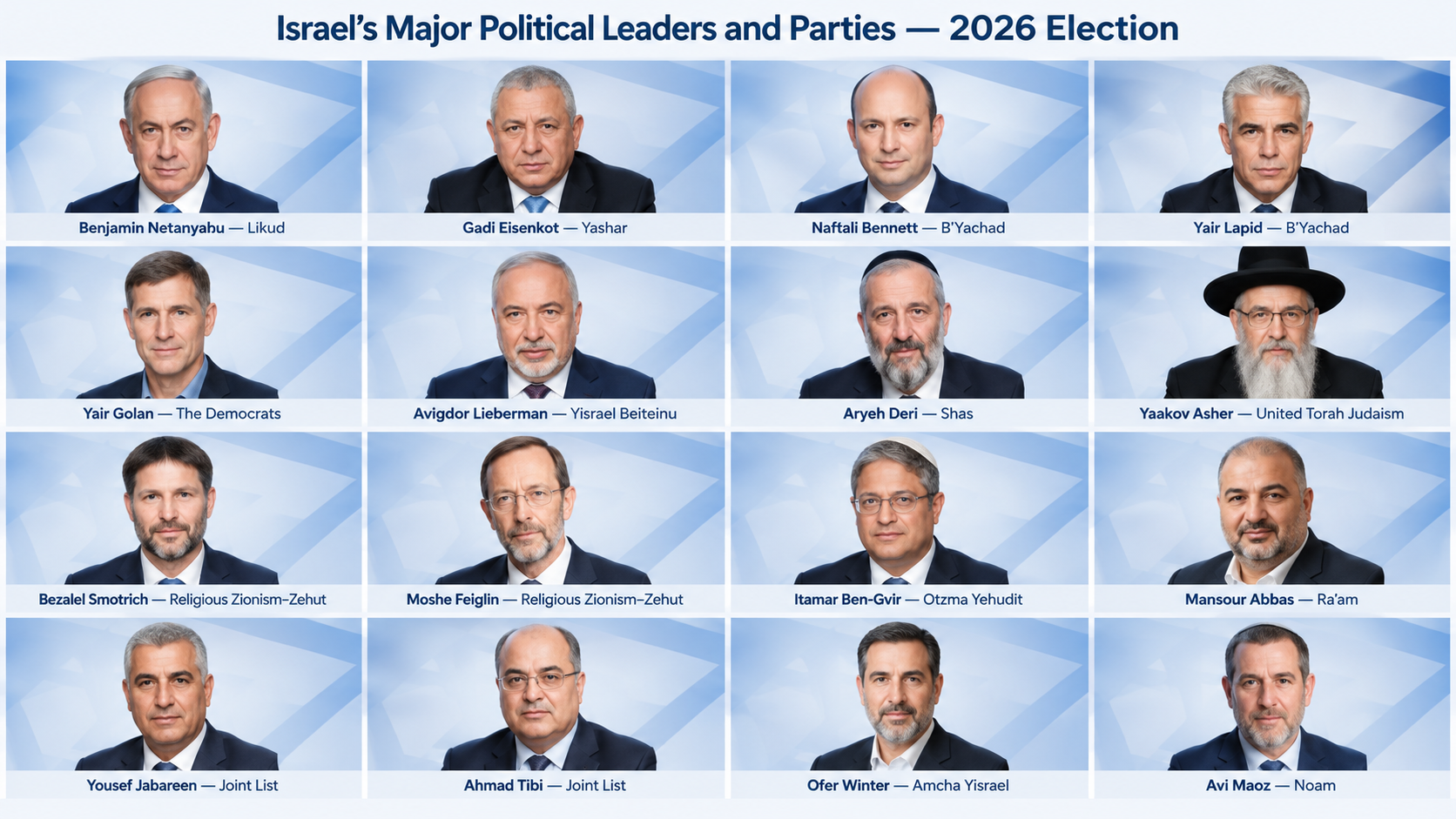
Ben-Gvir and Smotrich have become familiar names to Americans who follow the news, because nothing gets clicks like an Israeli minister saying something unhinged. When Chris Coons (D-Del.), who will either be chair or ranking member of the Senate Foreign Relations Committee next year, went on CNN in October to explain why he wants to reexamine the relationship, he named them both. America has its loud minority too. Ours mostly sit in safe House seats and occupy backbenches. In Israel they sit in the cabinet.
The same distortion runs the other way. Israelis who follow American politics know Abdul El-Sayed, the Democratic nominee for Senate in Michigan, who won his primary by fewer than 15,000 votes while 51.6% of voters chose someone else. Almost no Israeli could pick Roy Cooper out of a lineup, even though the former two-term governor may flip North Carolina. From afar, it’s easy to mistake visibility for power.
Israelis aren’t entirely making up the “power on the left” thing, but it’s not the whole story. Sixty-nine percent of self-identified liberal Democrats told the Chicago Council in 2025 the United States gives Israel too much support. Only 29 percent of self-identified moderate and conservative Democrats agree. Mamdani is who Israelis think he is, but New York’s mayor does not negotiate aid packages or decide whether the United States sells Israel weapons. AOC pledged at the end of March to vote against all military aid to Israel, Iron Dome included, and that pledge is exactly the kind of thing that keeps Israelis up at night. But maybe it shouldn’t. In July 2025, the last time anyone in the House actually tried to cut Iron Dome money, it failed 422 to 6. AOC was one of the 422.
Israelis also miss why most people voted for these left-wing candidates. Mamdani’s voters were voting on rent, and housing and the cost of living dominated the exit polls. In September the New York Times ran a long feature on some of the angriest young left-wing candidates in the country: a democratic socialist lawyer in Denver, a smokejumper in Montana, an ironworker in Ohio. They’re furious about health insurance, layoffs, and “sellout Democrats.” Israel didn’t come up. A week later the Times published an interview with AOC in which she thinks out loud about running for president. She talked about her gender, her age, her fundraising, and her fear of corruption. Israel never came up there either.
When Pew asked Americans to rank their foreign-policy priorities in the middle of the Gaza war, the Israeli-Palestinian conflict came in 14th out of 22, a few spots ahead of leading the world in space exploration. Yet ask an American about Slovenia and you’ll get a blank stare, or a guess that it’s the country the Avengers blew up. Ask about Israel, and everybody has an answer: Start-Up Nation, “Free Palestine,” or the version in which Israel runs American foreign policy and dragged the U.S. into Iraq and now Iran. That last one has moved into the mainstream. The Secretary of State (a possible future Republican nominee) explained the first strikes on Iran this way: “We knew that there was going to be an Israeli action. We knew that that would precipitate an attack against American forces.” By March a plurality of voters said Israel has too much influence over American foreign policy. Being famous in America means every American walks in with a take on you, and a take is a lot harder to change than a vote.
Yet, it’s true that the Democratic party is moving, and so are some of the people who will run it. Coons is still close to AIPAC, and in April he voted against two Sanders resolutions to block arms sales to Israel. He also now wants a “thorough reexamination” of the relationship, has introduced legislation to sanction those building settlements in E1, and says he is open to sanctioning Ben-Gvir, Smotrich, and Netanyahu too, “if the Netanyahu government continues on its current path.” Coons is as mainstream a pro-Israel Democrat as the Senate has.
This is a fight inside the party, it’s still being decided, and right now Israel is stepping on every rake it can find.
On the right, the loudest voices are the ones already in charge
Segal calls Vance “Israel-skeptical” and still anoints him the safe bet. In July, Vance told Joe Rogan that elements of the Israeli government were “manipulating and trying to change American public opinion.” In a closed-door speech to the Republican Jewish Coalition in August, he said the old case for Israel doesn’t have “the same purchase” it had 30 or 40 years ago (I really don’t like agreeing with this veep). Two weeks later he said America can’t let its Middle East policy be “subservient to the State of Israel.” On October 18, Trump endorsed Netanyahu. The next day, Vance declined: “I’m not getting involved in Israeli elections.” But the Hungarian elections made sense? He is the sitting Vice President and the favorite for his party’s nomination.
Then there’s Tucker Carlson, who helped get Vance the job. National Review’s James Kirchick calls him “America’s leading purveyor of antisemitic ideas.” Tucker’s standing with Republicans has collapsed since he broke with Trump over Iran, and in June he quit the party. Vance still calls him “a friend.” The idea that Israel secretly runs both American parties plays as well at a DSA meeting as it does on Tucker’s show.
Some of this is bigger than any prime minister. For the first time since Gallup started asking in 2001, Americans no longer sympathize more with Israelis: 41 percent now side with Palestinians and 36 with Israelis. Americans under 35 side with Palestinians 53 to 23.
The “unconditional support” Mark and I grew up with is gone. Israelis don’t want to hear that. Plenty of American Jews don’t either.
Bibi bet Israel’s American future on one party
A great deal of this has to be blamed on Bibi, and this isn’t new. After their first meeting in 1996 (30 years ago!!), Bill Clinton came out asking who Bibi thought “the [expletive] superpower was.” In 2011 Bibi lectured Obama in the Oval Office, with the cameras rolling. In 2015 he managed to get Speaker Boehner to invite him to address Congress over the President’s head. In 2021, his former ambassador, Ron Dermer, said evangelicals are “the backbone” of Israel’s support in America. A Marquette survey in December found 70 percent support for Israel among evangelicals over 60 and 39 percent among those under 30. That’s a backbone made out of wet noodles. The party Bibi bet on, whose future looks a lot more MAGA than Reagan, isn’t holding up much better. “I detest Netanyahu,” Steve Bannon told Politico this week. “The only future for Israel is to have some sort of coalition government that he’s out of.”
Netanyahu has been prime minister for nearly two-thirds of the last thirty years, all the while claiming that no other Israeli politician understands America better. When he returned to office in 2009, 63 percent of Americans viewed Israel favorably, according to Gallup. By February 2026 it was 46 percent.
A country of ten million that depends on American weapons, American vetoes at the UN and American interceptors in its skies should treat losing that support as an existential threat, and the current Knesset campaigns have mostly ignored it. Nor are they talking about the billions spent on hasbara, between the government’s years-long campaigns and an alphabet soup of American organizations, or how Netanyahu’s habit of calling any criticism of Israel antisemitism has backfired. It’s shocking he and Barbra Streisand don’t get along.
Bibi knows that Sparta fell
Bibi’s new strategy is Super-Sparta: an Israel that builds its own weapons, runs a more self-sufficient economy, and stops counting on anyone else.
For some context, the Obama administration signed the $38 billion aid agreement Israel still lives on two years before the old one expired. The current deal runs through fiscal 2028, yet formal talks only began in June, and by July the Jerusalem Post was calling a deal before the next Congress “a long shot.” Meanwhile the prime minister has spent the year talking about tapering American aid to zero within a decade. If I thought a fractured Congress might hand me a humiliating fight over renewal, I’d start talking about not needing it too.
When Iran fired hundreds of missiles and drones at Israel in April 2024, a Democratic president sent American jets and warships to help shoot them down, and later a THAAD battery and about 100 American soldiers to run it. In June 2025, it took American B-2s to reach Fordow. “Sparta” says more about how Bibi has misread America than about what Israel can do on its own. Given how its standing has collapsed worldwide, Israel needs America, probably more than it ever has.
If nothing changes, both roads end in the same place. America is unlikely to declare Israel an enemy. The likelier outcome is worse: Israel becomes a country America helps only reluctantly, arms only conditionally, defends only selectively. First come sanctions on settlers who torch villages. Then the towns they live in, then the entire country. Israelis tend to assume a shift like that would take a generation. It can happen in an election cycle. In a single year, the share of Republicans under 50 with an unfavorable view of Israel jumped from 50 to 57 percent. The floor drops faster than anyone expects, and it doesn’t come back up on its own.
Getting America back means changing the conversation, too. For decades the pitch has been shared values: the only democracy in the region, the start-up nation, the Judeo-Christian heritage. Americans still hear it. Then they open their phones and see Gaza, and the two don’t connect. Americans are watching Israel hunt down the October 7 terrorists one name at a time. They’ve also watched the same government fail to stop what its own ambassador in Washington calls “a handful of a few hundred people.”
Israel’s leaders can keep treating every disagreement as betrayal and every partisan ally as permanent. Or they can rebuild a relationship that neither party sees as belonging to the other.
In the paraphrased words of my Poetry 101 professor, “ABBA”: anyone but Bibi again. Another Israeli government won’t restore the old relationship. BUT, it could stop making an already-fraying relationship impossible to defend. The ministers every American can name should lose their microphones, and whoever forms the next government should start a new conversation with Washington. Chris Coons has already told them where it starts.
Ironically, Segal understands this…when he looks somewhere else. A couple of weeks after that September 1 piece, writing about Saudi Arabia hedging its bets, he noted that “the Saudi fear has never been that the US military couldn’t protect them, but that the US political class wouldn’t.” He’s describing Israel’s problem. He just hasn’t pointed the lens at home.
Things are never going back to the way they were. The protective big brother isn’t coming back. Whether Israel ends up with an America that leaves or an America that sets conditions, and how many, is still an open question. On October 27, Israelis get a say in the answer.