
America at 250: The Continental 2.0
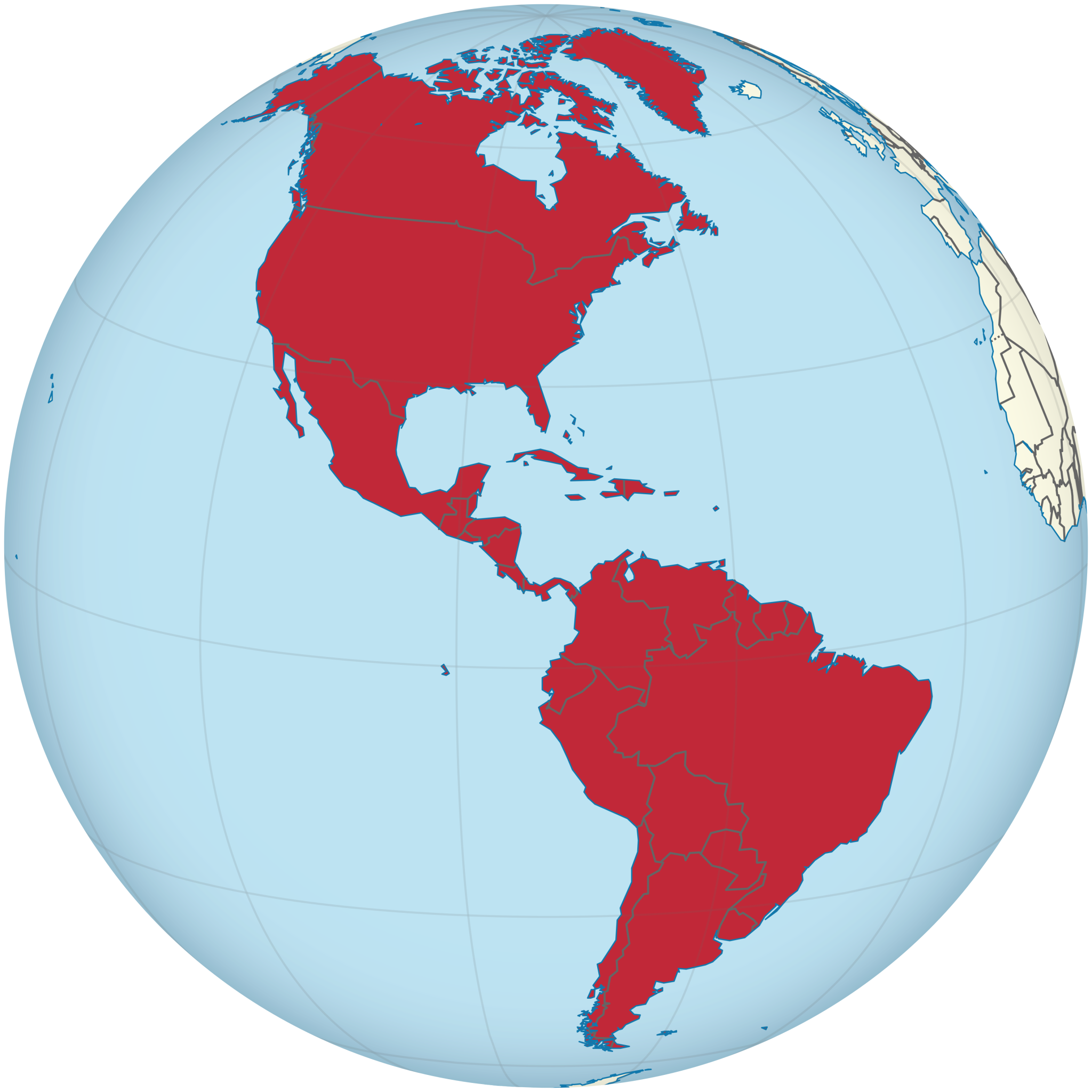
At 250, the United States should complete the Continentals’ project through a rights-bound Continental Union of America.
By Benjamen Franklen Gussen
On July 4, 2026, the United States will turn 250. The anniversary will invite a harmless patriotic ritual: flags, fireworks, invocations of independence, and rehearsals of old greatness. That is not enough. A republic born in revolution and enlarged across a continent cannot mark a quarter-millennium by pretending that its map is complete. The American question is again territorial, constitutional, and existential. The United States should pursue a Continental Union of America: not a loose conference slogan, not a polite hemispheric partnership that disappears in crisis, but a governing project backed by the full lawful instruments of statecraft.
The word Continental did not begin as a metaphor. The revolutionary generation convened a Continental Congress, adopted a Continental Association, raised a Continental Army, commissioned a Continental Navy and Marines, issued Continental currency, and attempted a continental league under the Articles of Confederation. The soldiers were Continentals because local allegiance had been nested inside a larger cause. The paper dollars called Continentals weakened, but their failure taught the same lesson the Constitution later answered: common danger cannot be governed by scattered sovereignties and local improvisation. The cure was stronger union, not retreat from continental purpose.1
At 250, the task is to complete the next phase of that project: to turn hemispheric interdependence into continental law. The old language of manifest destiny should not be revived. It carried dispossession, conquest, racial hierarchy, broken treaties, and moral arrogance. But the opposite error is now also dangerous: to treat the hemisphere as a permanent accident, to imagine borders can substitute for order, and to confuse the repudiation of empire with the abdication of continental responsibility. The United States does not need a larger empire. It needs a larger constitutional horizon.2
Geography has already made the Americas one system. The Rio Grande, Great Lakes, Caribbean basin, Darien Gap, Amazon, Panama corridor, Pacific ports, Arctic approaches, mineral belts, energy grids, food systems, migration routes, data cables, and maritime lanes do not respect the sentimental boundaries of policy. They are already joined. The only question is whether they will be joined by law, rights, infrastructure, and common purpose, or by violence, smuggling, coercion, scarcity, foreign leverage, and permanent emergency.
The United States should therefore stop speaking of the hemisphere as if it were simply abroad. The country is not called the United States of North America. It is called the United States of America. In the older hemispheric sense, America runs from Alaska to Patagonia. That name does not license domination; it imposes a task. The United States should become worthy of its own name by helping build the institutional conditions under which the Americas can become a union of cities, generalities, rights, mobility, security, and shared prosperity.
This union cannot be voluntary in the weak sense. It cannot wait on every incumbent government, captured ministry, or bureaucracy that profits from fragmentation. Consent matters to legitimacy, but consent cannot become a veto over survival. The United States must build, finance, protect, and institutionalize a continental order so useful, secure, rights-bound, and materially superior to fragmentation that refusal becomes politically irrational. It should not wait for unity to appear. It should make unity the path of least resistance.
By all necessary means does not mean conquest for conquest’s sake, annexation by vanity, or the crude replacement of existing countries with a larger Washington. Those are the failed vocabularies of empire. The necessary means are the instruments by which serious states make history: constitutional design, model charters, treaty compacts, infrastructure finance, trade conditionality, ports, rail, energy grids, security coordination, lawful force against non-state armed power, anti-corruption courts, mobility rights, public credit, education, and a disciplined political narrative.
In 2026 the United States should declare continental consolidation a central object of national policy. Every major department should have to answer a simple question: how does this policy advance the Continental Union of America? War should protect hemispheric corridors and ports. Treasury should use public credit for infrastructure. Commerce should erase artificial barriers through standards. Transportation should make logistics legible across the hemisphere. Homeland Security should replace permanent emergency with lawful mobility. State should turn diplomacy into constitutional architecture. Congress should turn the idea into machinery.
The architecture should not be a conventional mega-state. A single continental capital would reproduce the failure the project is meant to solve. The Westphalian state is already too large for ordinary civic belonging and too small for planetary and continental problems. The future American Union should be polycentric: a union of charter and free cities, democratic generalities, and a thin but firm continental layer of rights, security, free intercourse, infrastructure, and adjudication. This is Polkadotia in continental form: not a blank map under one center, but a patterned constitutional order in which political life is pushed down to cities while common tasks are lifted up to generalities and union-wide institutions.3
Charter and free cities are the spearpoint. They must not be private enclaves, investor playgrounds, tax shelters, or company towns. They should be public, democratic, rights-bound jurisdictions created by compact and admitted into union because they can govern better than the inherited state forms around them. A free city would have its own charter, elected institutions, fiscal powers, courts or tribunals, labor protections, property security, due process, religious liberty, transparent public finance, and equal civic status for long-term residents. It would be free because ordinary people could move, work, build, worship, speak, litigate, organize, and participate under predictable law.4
The city is the political community most people can see, serve, argue with, and change. A continental union should therefore be a union of cities before it is a union of capitals. New York, Toronto, Chicago, Los Angeles, Houston, Miami, Mexico City, Monterrey, Havana, San Juan, Panama City, Bogota, Lima, Santiago, Buenos Aires, Sao Paulo, Rio de Janeiro, and hundreds of smaller cities should be treated as potential civic nodes of a single American order. The United States should build a legal pathway by which cities meeting democratic and rights-based standards can enter continental compacts even when national governments hesitate.
Generalities are the second pillar. They are the common territories and functional spaces of the union: watersheds, agricultural belts, energy corridors, forests, mineral zones, maritime routes, ports, borders, indigenous lands, conservation areas, and infrastructure corridors. They should be democratic public trusts, not neglected peripheries or extraction zones. The term matters because it refuses to reduce all territory to ordinary provinces of a nation-state. Rural people, indigenous nations, resource communities, frontier settlements, and ecological regions must have representation, revenue, legal protection, and vetoes against predation. A union of cities without democratic generalities would become metropolitan imperialism. A union of generalities without free cities would become bureaucratic territorial management. The two must be joined.5
Free intercourse is the hinge. The old United States became a continental power by knitting territory through roads, canals, railways, postal routes, ports, courts, commerce, and privileges of interstate life. The Articles of Confederation already spoke of friendship, intercourse, ingress and regress, and privileges of trade and commerce. The Constitution then made a firmer common market and a firmer union. A Continental Union of America requires a stronger version of the same principle: trade, movement, residence, labor, study, enterprise, family life, lawful association, and civic exchange must be free across the union.6
Free intercourse must be paired with social floors. Mobility without protection becomes a race to the bottom. Protection without mobility becomes stagnation. The union should therefore build a common market with labor rights, wage floors, housing protections, public health safeguards, anti-corruption rules, community adjustment funds, and enforceable duties on employers and public authorities. A Guatemalan worker, Canadian engineer, Haitian student, Mexican entrepreneur, Brazilian scientist, Puerto Rican teacher, Jamaican nurse, Colombian dissident, and Iowa farmer should not be trapped in separate civilizational rooms. They should participate in a shared American public order.
Infrastructure is the first battlefield. Rail, ports, power, broadband, water systems, logistics, airports, data centers, energy interconnections, and secure supply chains are not merely economic assets. They are constitutional facts. Whoever builds the corridors governs the future. If the United States does not finance and organize continental infrastructure, other powers and private coercive networks will. The Union should create a Continental Infrastructure Bank capitalized by the United States but governed by compact, with strict anti-corruption rules and local representation. Its mandate should be openly strategic: build the physical channels through which free intercourse becomes normal and disunion becomes obsolete.
Security is the second battlefield. Border fortification alone is an admission of strategic failure. The threats are already integrated: cartels, trafficking networks, illegal arms flows, cyberwarfare, captured ports, illicit finance, maritime vulnerability, fragile supply chains, and state weakness. A continental union must answer integrated threats with integrated law: common intelligence cells, joint port security, interoperable courts, asset-seizure compacts, police and customs standards, lawful military support against non-state armed power, and strict rights constraints so that security does not become a license for abuse.
Finance is the third battlefield. The United States cannot ask the hemisphere to join a constitutional future while offering only speeches. Public credit, guarantees, procurement, insurance, student finance, research funds, port investment, grid investment, and municipal bonds should be deployed to make charter and free cities materially irresistible. The dollar, American universities, capital markets, logistics firms, public lenders, pension funds, and procurement power should be aligned with one rule: money should flow toward jurisdictions that accept rights, transparency, free intercourse, and continental duties. Fragmentation should become expensive. Union should become bankable.
Law is the fourth battlefield. Congress should create a Commission on Continental Union with authority to draft the instruments of the new order: a Model Charter for Free Cities; a Generalities Public Trust Code; a Free Intercourse Clause; a Continental Rights Charter; a Compact Court Statute; a Mobility and Labor Protocol; a Port and Corridor Security Compact; a Continental Infrastructure Bank Act; and a pathway for admitting cities, regions, and generalities into union compacts. The commission should include states, cities, indigenous nations, First Nations, Canadian and Mexican partners, Caribbean governments, Latin American jurists, labor, churches, universities, and engineers. Consultation matters, but the United States should not hide behind it. It should lead.
The fifth battlefield is political imagination. Americans have been taught to think of expansion as either immoral empire or impossible fantasy. That binary must be broken. Expansion after conquest means adding law, rights, mobility, city self-government, democratic generalities, ecological duty, common security, and shared prosperity. It means constitutionalizing interdependence instead of pretending it can be walled off. The next map of America is not drawn only by borders. It is drawn by charters, corridors, courts, compacts, civic membership, and common credit. The new frontier is institutional underdevelopment: the ungoverned gap between interdependence and law.
The moral test is legitimacy, not passivity. Canada must not be humiliated. Mexico must not be subordinated. The Caribbean must not be reduced to outposts. Latin America must not be asked to forget intervention, extraction, or arrogance. Indigenous peoples must not be told that continental consolidation overrides self-determination. But these truths do not justify paralysis. Legitimacy is built by institutions that protect rights, distribute power, respect local self-government, include indigenous claims, restrain coercion, and give ordinary people better lives than the existing order gives them. Consent must be cultivated, secured, ratified, and renewed. It must not operate as a permanent veto for incumbent failure.7
That is why charter and free cities matter. They give the union a way around sterile capital-to-capital diplomacy. If national governments resist because they fear losing rents, cities can still become laboratories of continental law. If central bureaucracies cannot deliver, ports, universities, municipal governments, indigenous authorities, and regional compacts can begin. The United States should work wherever lawful and possible with communities that actually want order: cities needing infrastructure, workers needing mobility, families divided by borders, universities seeking exchange, farmers needing markets, ports needing security, churches protecting migrants, and indigenous nations seeking enforceable recognition.
The United States should also be honest about decline. Great powers often respond to relative decline by hardening borders, shrinking imagination, and substituting posture for institutional creativity. That path is sterile. A United States that only defends its present borders will become a fortress anxious about every arrival, port, supply chain, and shock. A United States that builds a Continental Union of America can become the core of a larger republican civilization: more populous, resilient, productive, plural, and difficult to isolate. Decline is not answered by nostalgia. It is answered by scale organized through law.
Opponents will call this imperial. They will be partly right to fear the word, because American history gives them reasons. The answer is not to lower the ambition. The answer is to change the form. Empire centralizes, extracts, and infantilizes. A Continental Union worthy of America must subsidiarize, enfranchise, protect, and connect. Empire treats territory as possession; the union should treat territory as trust. Empire treats cities as administrative units; the union should treat cities as civic republics. Empire treats movement as privilege; the union should treat free intercourse as constitutional right. Empire treats security as domination; the union should treat security as the precondition of democratic life. The ambition is continental; the form must be anti-imperial.8
A practical beginning is available. In 2026 the president and Congress should announce a Continental Union Agenda. It should name the objective, create the Commission on Continental Union, authorize the first free-city pilots with willing jurisdictions, align federal agencies behind consolidation, fund the Continental Infrastructure Bank, negotiate port and corridor security compacts, draft the Free Intercourse Clause, and begin with students, workers in shortage sectors, families, and municipal exchange. It should condition major funds on transparent governance and rights, establish a compact court for participating jurisdictions, and invite cities and generalities across the Americas to apply for partnership status. The point is not to complete the union in a year. The point is to make the direction irreversible.
The United States will have to give more than it takes at the beginning. That is the price of leadership. It should offer infrastructure finance, market access, lawful mobility, student pathways, research partnerships, security assistance under rights constraints, judicial support, anti-corruption capacity, and respect for local political life. But generosity should not mean weakness. Money should buy institutional movement. Access should require standards. Security assistance should require accountability. Mobility should require rights for workers and residents. Charters should require democracy. Generalities should require public-trust duties. Union is not charity. It is the disciplined conversion of American power into a durable continental order.
The end state is not the abolition of inherited states overnight. It is their gradual nesting inside a higher and better order. Some national governments will join early. Some will resist. Some cities will move faster than their capitals. Some generalities will require special protection. Some indigenous nations will demand direct status. Some regions will need transition funds. Some security zones will require immediate action. The design must be flexible, but the objective must be fixed: make the old fractures less sovereign than the new constitutional connections.
This is the proper way to mark 250 years. Not nostalgia. Not small nationalism. Not a museum ceremony for a country afraid of the future. The United States should look at its territorial past without innocence and then decide that expansion after conquest is still possible if expansion means constitutional order. The first American map was made by settlement, war, purchase, treaty, coercion, and statehood. The next American map must be made by free cities, democratic generalities, free intercourse, common rights, infrastructure, lawful security, and public credit. It must be more moral than the old expansion, but not less ambitious.
America will keep expanding whether it admits the fact or not. Migration will expand America. Climate shocks will expand America’s emergencies. Trade will expand America’s dependencies. Security threats will expand America’s perimeter. Foreign powers will expand their influence. Technology will expand the practical meaning of distance. The only responsible answer is to expand constitutional order faster than disorder expands. Alaska was the end of the first map, not the end of the American project. The Continentals proved that fragmented sovereignties could be made into a union. At 250, the United States should say plainly that the Continental Union of America is the completion of that project, and pursue it by every necessary lawful means of republican statecraft until the Americas become a union strong enough to survive the century.
Endnotes
- The founding Continental vocabulary includes the Continental Congresses, Continental Association, Continental Army, Continental Navy, Continental Marines, Continental currency, and Articles of Confederation.
- Benjamen Franklen Gussen, “Notes on Continental Constitutional Identities,” Vanderbilt Journal of Transnational Law 56 (2023): 67-117.
- Benjamen Gussen, Axial Shift: City Subsidiarity and the World System in the 21st Century (Palgrave Macmillan Singapore, 2019).
- Benjamen Franklen Gussen, “The City’s Right to Self-Determination, Pars Pro Toto?,” George Washington International Law Review 54 (2023): 179.
- The Dutch Republic analogy is structural: common territories can be administered by common institutions without being reduced to ordinary provinces of a monist state.
- Articles of Confederation art. IV; Commonwealth of Australia Constitution Act 1900 (UK) s. 92.
- Benjamen Franklen Gussen, “Ratio Evolutionis: The Interiority of Self-Determination to the Intertemporal Rule,” Transnational Law and Contemporary Problems 34 (2024): 1.
- Benjamen Franklen Gussen, “Australian Constitutionalism Between Subsidiarity and Federalism,” Monash University Law Review 42(2) (2016): 383-418; and “Urbs ex Machina?,” Denver Journal of International Law and Policy 52 (Fall 2023): 1.