
American History Through Yetzirah: Part 1
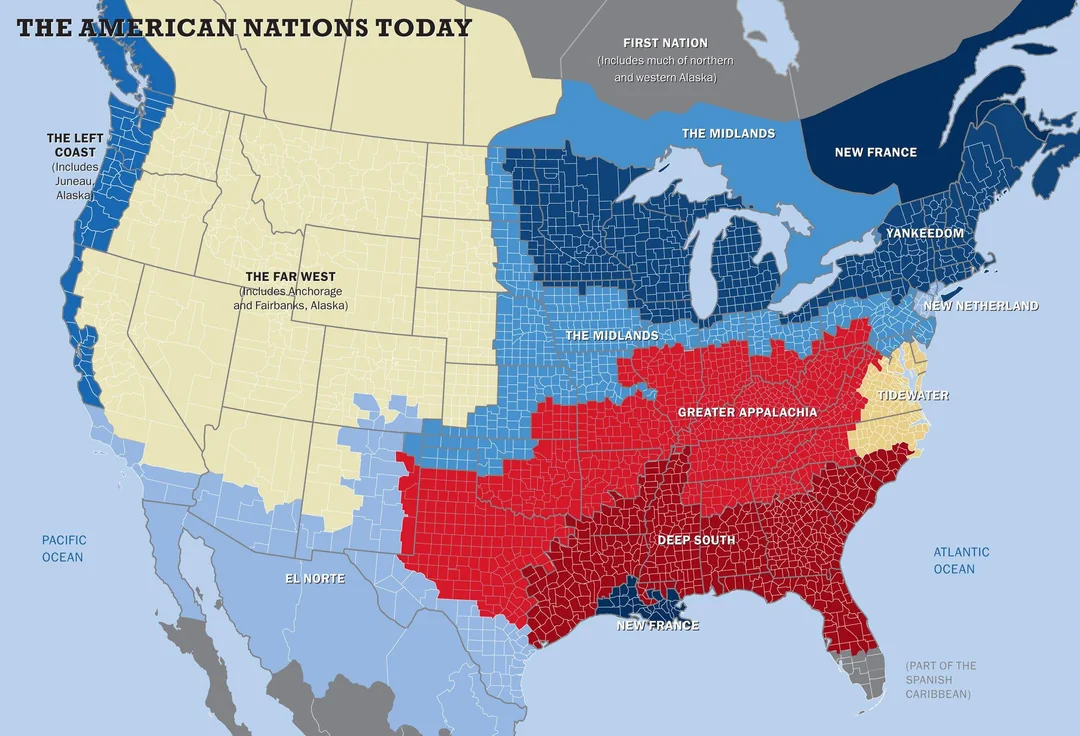
16 million Jews inhabit this world, nearly 7 million in Israel and America. In Israel, Jews form the majority, woven into the state itself. In America, Jewish identity remains precarious; as a diaspora people, our footing is never fixed, and history shows how quickly the ground can shift. To understand the forces shaping that reality, this article interprets American history through Jewish mysticism. I treat history not just as events among real people but as conflicts between symbolic, collective “Beings.”
Kabbalah teaches that we experience the world on more than one level. The physical, measurable world is called Asiyah, the realm of action. That’s where history happens: dates, laws, wars, and migrations. Above Asiyah lies Yetzirah, the world of formation, where emotions, symbols, and shared meanings take shape. If Asiyah tells us what happened, Yetzirah helps explain the stories nations tell, the myths they embody, the emotional identities that outlast any single election.
I’m using that second layer, Yetzirah, as a tool to understand American history. Each American culture has its own personality, values, and emotional logic. Colin Woodard’s American Nations maps these cultures through history; Kabbalah gives us a vocabulary for their symbolic, collective Beings. Think of what follows as American history interpreted through both layers: Asiyah for individual actors and Yetzirah for the collective Beings they unconsciously serve.
Tidewater America (1760-1828)
Tufts Magazine
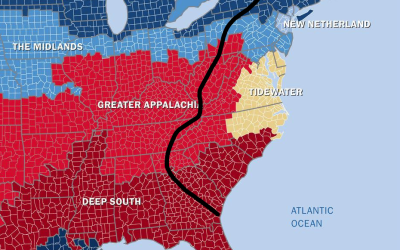
America began not as one unified people but as a collision of six founding cultures: Tidewater, Yankeedom, the Deep South, Appalachia, New Netherland, and the Midlands, each with its own Being in Yetzirah. “The Declaration must be written by a Virginian,” echoes the self-evident reality of Tidewater’s rulership. Four of the first six presidents (Washington, Jefferson, Madison, Monroe) served Tidewater; only Yankeedom’s John Adams and his son, interrupted its reign and both lost reelection. Aristocratic and orderly defined Tidewater’s culture, convinced that liberty meant the right to govern well. Its Being carried a cross and scepter: gentry propriety made manifest. Yet the Appalachian mountain precluded Tidewater’s expansion, foretelling their extinction.
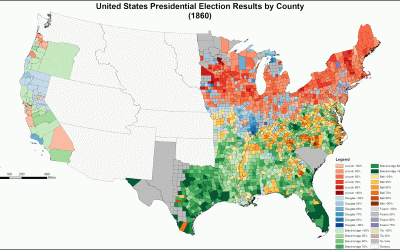
Yankeedom – Lincoln
Midlands – Douglas
Appalachia – Bell
Deep South – Breckenridge
The Great Migration (1828-1861)
Then the frontier opened, and new Beings pushed west. Yankeedom, seeing themselves as the new chosen people, pushed forward on a self-declared moral mission, holding a cross while carrying the Book of Abolition. The Midlands followed as religious outsiders, their Being holding a lamp and a scale, seeking consensus and coexistence. Appalachia came behind, fierce and wary, gripping a flag in one hand and a musket in the other. The Deep South spread like a shadow, its Being holding a cross and an enslaved black figure, gospel fused with bondage. And as those borders hardened, the continent itself seemed to brace for the collision that would decide which Being would rule America next.
The US Civil War (1861-1865)
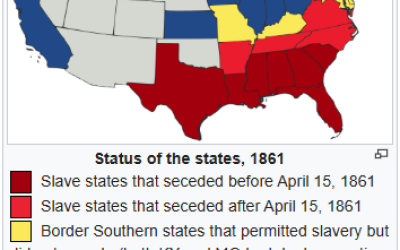
The frontier’s two leading Beings (Yankeedom and the Deep South) could no longer share a continent. The Deep South’s cannons struck first at Fort Sumter. Shocked by the brazen attack, all of the Beings turned north and Yankeedom, armed with faith and factories, turned righteous. The war broke the Deep South’s chains who responded by reducing their creed to law and custom. From the fire, Yankeedom rose, their moral empire stretching from sea to shining sea. Yankeedom celebrated, as they finally supplanted Tidewater as America’s superior Being. But victory only ended one struggle. With the Deep South broken and Tidewater eclipsed, Yankeedom stood alone. Their unity eventually fractured into the rival Beings whose battles would shape America’s next 150 years.
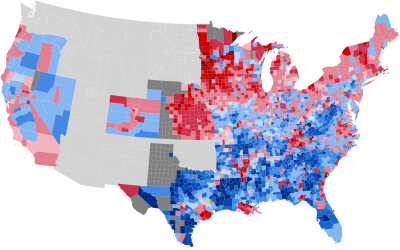
East Yankeedom: Book of Industry (1865-1932)
After victory, Yankeedom completed the Book of Abolition and begun the Book of Industry. Power shifted from the Capitol to the mill, from scripture to steam. The old Puritan conscience found new prophets (Carnegie, Rockefeller, Morgan) men who forged morality into machinery and called their empires virtue. Industry became theology, efficiency its creed. The republic they built gleamed with iron order, convinced that progress itself was divine. But as the furnaces lit the continent, their smoke dimmed the light that once guided them.
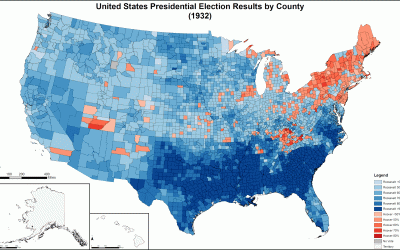
Central Yankeedom: Book of Progress (1932-1968)
When the furnaces cooled, soot settled thick on the Book of Industry until its pages crumbled. In the great Midwestern cities, the children of Eastern Yankees met the children of immigrants and birthed a new Being: procedural, patient, polite. The empire of iron birthed an empire of paper, managed in offices instead of mills. Central Yankeedom forged broad coalitions bound by a quiet faith in steady improvement promised by the Book of Progress. Armed with ballots, bureaucracy, and the legitimacy of reform—Central Yankeedom consumed their own East Yankee parent. But beneath the ledgers, the bonds that once held began to weaken, and a sibling plotted their revenge.
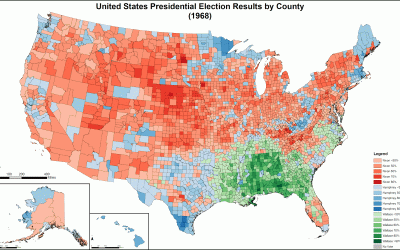
Birth of Great Appalachia
After losing the Civil War, the Deep South dropped the broken chains and picked up the pen, smothering the black figure under Jim Crow paperwork until the other Beings finally took the pen away. Deprived of someone to dominate, the Deep South lost their identity. With no story of its own, they borrowed Appalachia’s. Plantation states like Mississippi, Georgia, and North Carolina now celebrate the Day of the Cowboy despite having no true cowboy past. A hollowed-out Deep South fused with Appalachia, trading the musket for the revolver to create a new hybrid identity: Greater Appalachia.
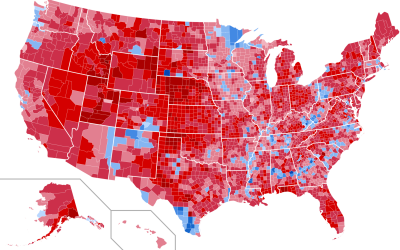
Western Yankeedom: Book of Freedom (1968-2014)
Seeing this opening, West Yankeedom seized their moment. Born of a covenant-bound East Yankee mother and a rugged Appalachian father, they carried a lingering grievance over their sibling, Central Yankeedom, consuming their East Yankee mother. Avenging their parent, they cast themselves as the natural vanguard to lead Greater Appalachia against the progressive Central Yankee coalition. Through the late 20th century and into the early 21st, these two Yankee-dominated factions fought until their crosses withered. By the end, only two aged camps swung weathered books at one another, oblivious to the changes afoot.
Conclusion
America’s story, seen through Yetzirah, is the story of Beings rising, clashing, and fading as the nation shifts beneath them. Tidewater’s scepter ruled first, then gave way to Yankeedom’s secession of books (Abolition, Industry, Progress, and Freedom) each convinced they would define the republic forever. Yet every one of these forms was eventually exhausted, replaced by a new emotional logic and a new symbolic personality. By 2014, even the last Yankee book had lost its power, leaving the country in a moment of transition whose outcome remains unsettled. Understanding these Beings and the worlds they built is the first step to understanding where America should go next.