An Aliyah to the Torah and Tears of Joy
From Papilė to Zurich, l’dor v’dor
Nearly fifty years ago, on November 13, 1976, my grandfather Samuel Gochin was called to the Torah at my bar mitzvah in South Africa. He was 75 years old.
Next weekend, in Zurich, I will be called to the Torah at the bar mitzvah of Liam, the great-grandson of my cousin Sarah Gochin. I am 62.
I will not stand at the same bimah at which my grandfather stood. I will occupy the place in our family that he once occupied: an older generation rising before the Torah to welcome the next.
Sam carried Papilė with him when he made his aliyah at my bar mitzvah. He carried the memories of the Lithuanian Jewish world into which he had been born, the hunger and displacement of his childhood, the family he had lost and the life he had rebuilt in South Africa.
When I rise in Zurich, I will carry Sam with me. I will also carry Mones, Sarah, her murdered sister Tsile and every branch of our family that history attempted to sever.
I will stand there because Lithuania failed to destroy us.
We are the tattered remnants.
We are also the victory.
What Sam carried
My grandfather was born into a Jewish family rooted in Papilė, where generations of our ancestors had lived, prayed, married, raised children and buried their dead.
His childhood was torn apart by the First World War. In 1915, his family was deported eastward into Ukraine. Sam later told me of searching through garbage for scraps of food. His father, a brother and a sister died during those years of hunger and displacement.
He returned to Lithuania with what remained of his family. He and his mother registered as Lithuanian citizens. Sam served in the Lithuanian military. Photographs showed him in uniform and later in a military hospital, where he told me he had learned to play musical instruments.
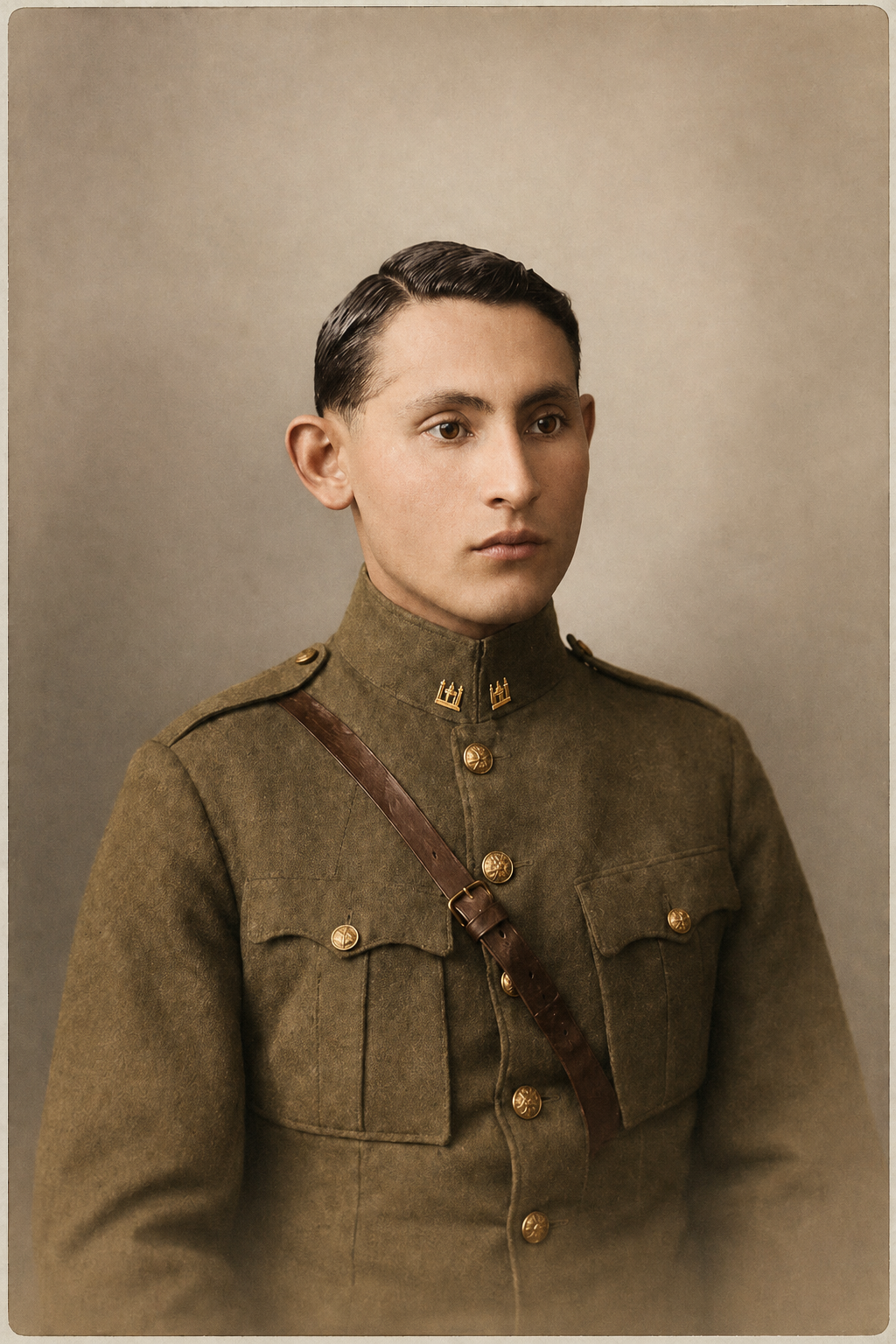
In 1926, shortly after completing his military service, he left for South Africa. There he built a new life and became the gentle, deeply loved patriarch of our family.
As a child, I sat at his feet while he told me stories of the “Old Country.” I adored him. I did not yet understand that I was listening to fragments of a Jewish civilization that existed only in memory.
At my bar mitzvah, Sam’s aliyah appeared to be an ordinary family honor: a grandfather called to the Torah beside his grandson.
It was not ordinary.
The Jewish child who had searched for food during deportation was standing before the Torah at his grandson’s bar mitzvah in South Africa. The boy from Papilė had lived to see his family take root on another continent.
I was 13. I could not yet comprehend the full weight of what I was witnessing.
At 62, I do.
The branches that ended in 1941
After Sam’s death, I began reconstructing the family history he had carried within him.
The archives revealed the destruction of the branch that had remained in Papilė. Mones lived there with his family, including his daughters Tsile and Sarah. They belonged to the same town, the same family and the same Jewish world that Sam carried to South Africa.
Many lines on our family tree end in 1941 in Lithuanian killing fields.
Our family tree bears the wounds of murder, starvation, displacement and silence. Entire branches were cut away.
By the end of 1941, before the Wannsee Conference met in January 1942, nearly 80 percent of Lithuania’s Jews had already been murdered. Many were slaughtered near their own towns by Lithuanian police, officials and neighbors.
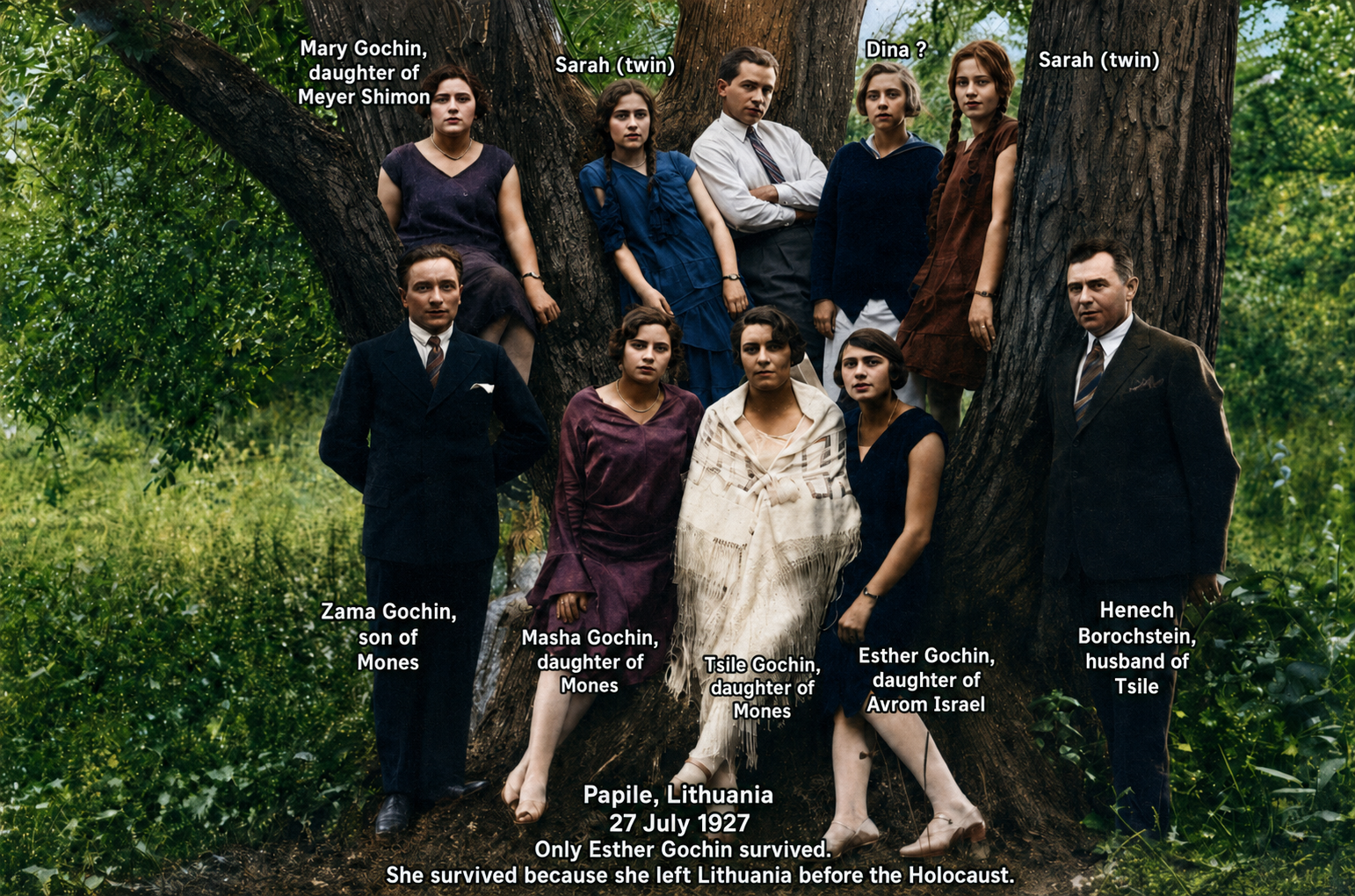
Photo colorized and restored by ChatGPT.
Jonas Noreika governed the Šiauliai district in which Papilė lay. He signed orders for the confinement of the district’s Jews and the seizure and distribution of their property. The remaining members of my family were murdered within the system he administered. Tsile was among them. Noreika bears responsibility for her murder.
Lithuania later awarded Noreika one of its highest state honors and has spent years defending him as a national hero, although his administration helped slaughter Papilė’s Jewish families, including mine.
For my family, official Lithuania has come to represent antisemitism, death, destruction, betrayal, dispossession, historical erasure, perpetrator glorification and state-sponsored Holocaust revisionism. It protects the reputation of the man responsible for our destruction while demanding that his victims’ descendants prove that we belong to one another.
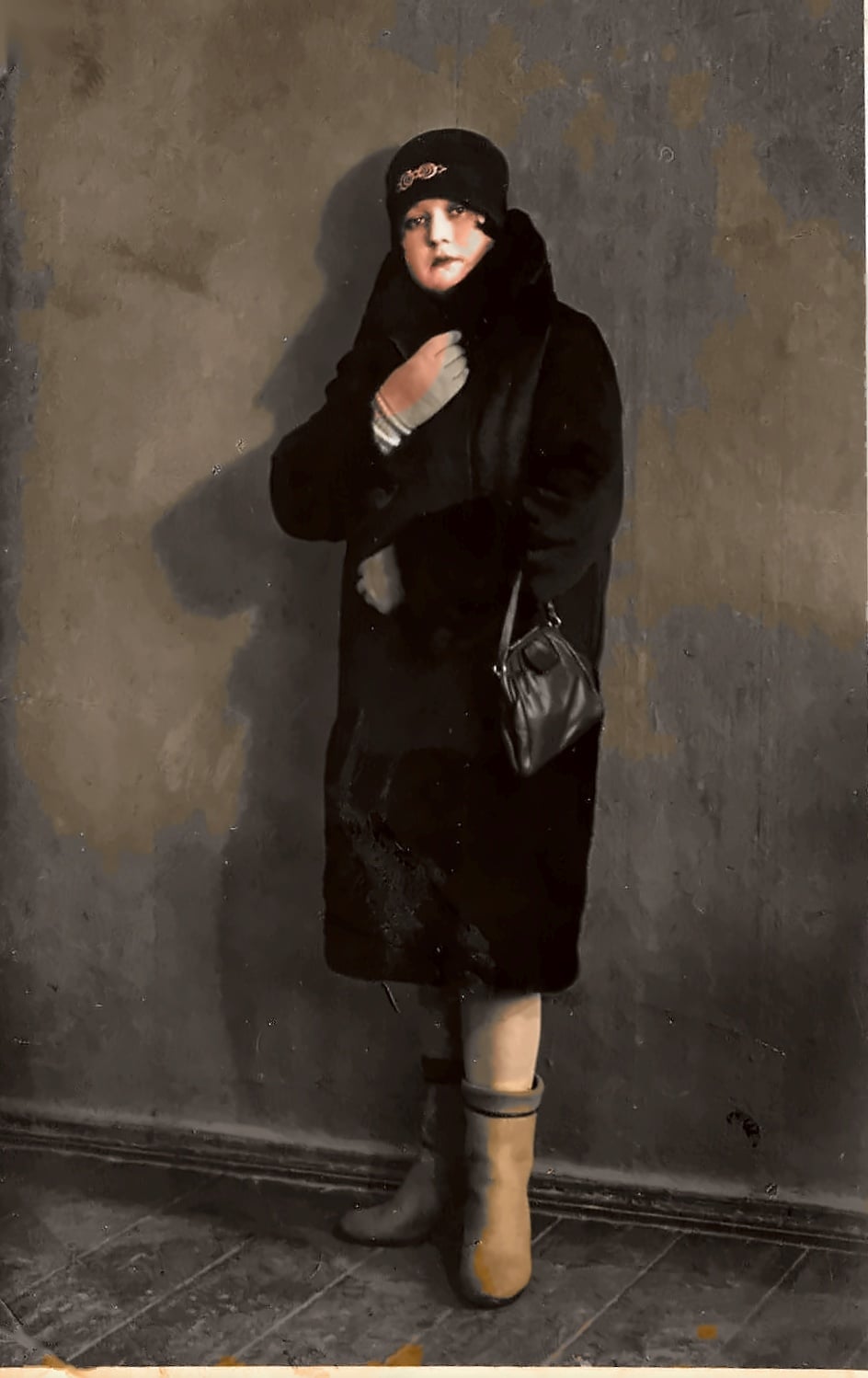
One surviving object was a 1922 postcard to my grandfather bearing a young woman’s photograph and signed, “Your loving sister, Tsila.” Research eventually established that she was Tsile, my grandfather’s first cousin and Sarah’s sister.
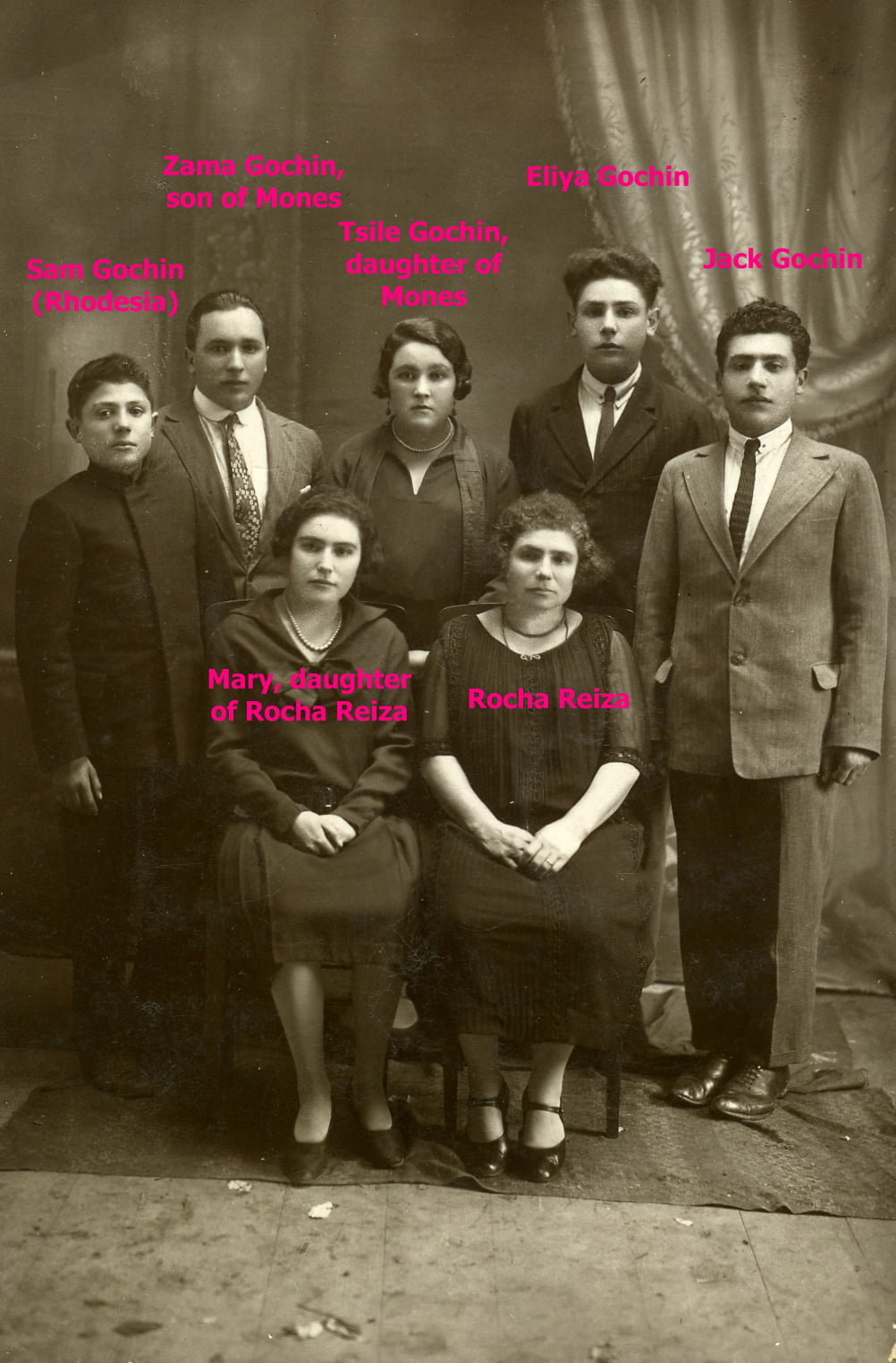
Almost every name in that branch of the family led toward murder.
One did not.
Sarah escaped into the forests, made her way through Russia and survived the war in Kazakhstan.
After the war, she and her husband moved to Tehran, where they founded the first Ashkenazi synagogue in Iran. A family hunted through forests and driven across continents once again built a Jewish house of prayer.
From Tehran, they moved to Switzerland.
Sarah was alive in Zurich.
Finding her became my mission.
“That’s my sister”
When I travelled to Zurich to meet Sarah, I brought the 1922 postcard with me. It was protected inside a transparent plastic folder.
Sarah was elderly. Her family was understandably protective of her. No one knew what effect the sudden return of a face from her murdered childhood might have.
I began taking the postcard out of its folder.
Before I could remove it, Sarah saw the photograph through the plastic.
“That’s my sister!” she cried. “That’s my sister!”
She had recognized Tsile immediately.
No archive had to authenticate the face. No court had to adjudicate the relationship.
Sarah knew her sister.
In that instant, more than half a century disappeared. Tsile ceased to be merely a name or an archival entry among six million murdered Jews.
She was Sarah’s sister.
The photograph had found its way back to the person who had loved the young woman within it.
I found Sarah shortly before she died. Meeting her felt like reconnecting with my grandfather. The branch of the family we had believed destroyed had reached across the decades and taken hold of us again.
The Holocaust had separated us. Love reunited us.
We did not merely recover information.
We recovered one another.
Now I am travelling to Zurich for Liam’s bar mitzvah.
The state invents another Samuel
My search through Lithuania’s archives uncovered overwhelming documentation of Sam’s life: his citizenship, military service, passports and connection to Papilė. South African records documented the family he built there.
I believed Lithuanian citizenship could become a tangible inheritance connecting my son to his great-grandfather.
Lithuania responded by trying to sever the relationship on paper.
Officials first claimed that I had not proved Samuel Gochin was Lithuanian. Then they claimed that I had not proved he was my grandfather.
One court recognized Samuel as a Lithuanian citizen. Another refused to recognize me as his grandson, despite the chain of birth certificates linking us. It entertained the possibility of another Samuel Gochin: an invisible, hypothetical man who shared the same identity but was somehow not my grandfather.
There was no property to reclaim and no financial reward. The struggle was for dignity, memory and the right of a Jewish family to name its own patriarch.
A government may control archives, certificates and official seals. It does not control kinship.
A Lithuanian court may invent an imaginary Samuel Gochin. It cannot make my grandfather disappear.
Our family does not exist by Lithuania’s permission. Had Lithuania’s murderous project succeeded, not a single Jew would have remained alive to seek it.
The family they could not erase
Triumph does not mean that our family emerged intact.
It did not.
Our tree remains scarred by branches that end in 1941. People who should have grown old surrounded by descendants were murdered beside pits. Their lives survive in documents, photographs and the memories of the few who escaped.
Our victory does not undo their deaths. It denies their murderers the final word.
Those who tried to destroy us intended the extinction of Jewish families: no children carrying the names, no grandchildren telling the stories and no great-grandchildren standing before the Torah.
Liam’s bar mitzvah is the answer.
Lithuania represents death. Liam’s bar mitzvah affirms life.
It affirms continuity, covenant, memory, renewal, fidelity, family and love. It declares that there is another generation and that the Jewish future cannot be cancelled by a murderer, a ministry, a court or a national lie.
Sarah survived the forests, Russia and Kazakhstan. She and her husband built a synagogue in Tehran and rebuilt their family in Switzerland. Their great-grandson will now be called to the Torah in Zurich.
I will stand with him.
I will wear the tallit Sam gave me at my own bar mitzvah.
Nearly fifty years ago, he placed that inheritance in my hands. When I wrap myself in his tallit in Zurich, I will be wrapped in his love. The boy who once stood beside his grandfather will have become the older man standing beside the next generation.
The Torah scroll in Zurich will not be the same scroll before which Sam stood in 1976.
The words will be the same.
The covenant will be the same.
The family will still be ours.
L’dor v’dor
Our path has crossed continents.
It began in Papilė, where Sam, Mones, Tsile and Sarah lived and where our ancestors had built their lives for generations.
One branch reached South Africa and later Los Angeles. Another escaped through forests and across Russia, survived in Kazakhstan, built a synagogue in Tehran and established a new life in Zurich.
War separated us. Murder diminished us. Geography and silence kept us apart.
Love brought us home to one another.
When I recite the blessings over the Torah, I will remember the postcard inside its transparent folder and the instant Sarah saw her sister through the plastic. I will think of Tsile, whose killers intended that she disappear, and of Liam, whose presence proves that the family continued.
Lithuanians murdered branches of our family.
They did not destroy the tree.
Lithuania honors Noreika. We honor his victims by living.
Sam stood beside me in 1976. In Zurich, he will stand with me again. He will be present in the tallit he gave me, in the blessings I will recite, in the family he rebuilt and in the love he placed into my life.
I will stand beside Liam in 2026.
Sarah, his great-grandmother, will stand with him. She will be present in the family she preserved, in the Jewish life she rebuilt, in the synagogue she and her husband founded and in every descendant who carries her courage forward.
There will be tears at the bimah.
They will be tears of joy.
One day, may Liam stand beside another child who carries our inheritance forward. May he be granted an aliyah at his own grandson’s bar mitzvah. May he wrap himself in memory and love, and may he carry Sam and Sarah with him as I will carry them in Zurich.
May he know, as I know now, that a family survives when love is handed forward.
The circle is not merely closing.
It is expanding.
From Papilė to South Africa, from South Africa to Los Angeles, from Kazakhstan to Tehran and from Tehran to Zurich, the bond remains.
L’dor v’dor. From generation to generation.
We are still here.
Am Yisrael Chai.