An American rabbi’s letter to Senator-elect Abdul El-Sayed
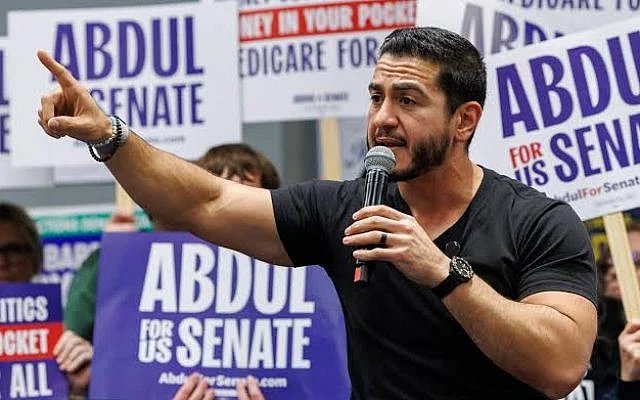
Dear Senator-elect El-Sayed,
Congratulations on your election to the United States Senate.
The people of Michigan have spoken, and you have prevailed in a hard-fought election. I sincerely wish you success as you prepare to take on the enormous responsibility of representing your state.
But I also want to speak to you from the heart.
I write as an American rabbi, a proud Jew, and someone who has spent his life teaching that words matter, character matters, and how we treat those who disagree with us matters.
I watched your victory speech with mixed emotions. I recognize the historic significance of your election, and I understand your pride in your Muslim faith and heritage. As a rabbi, I respect that pride. I know what it means to cherish one’s religious identity.
But several things you said deeply troubled me.
You spoke about Palestinian children growing up in the land of their forefathers. I believe Palestinians deserve to live in dignity and safety. Of course they do.
But then you declared, “We don’t want our money sent to do apartheid or genocide or war.”
Senator-elect, those words stopped me cold.
Genocide. Apartheid.
Two of the most damning accusations imaginable, delivered to a cheering crowd as though there could be no question that Israel was guilty of both.
I reject those characterizations of Israel. And I am deeply disturbed by the ease with which you use them.
I have spent my life teaching Jewish history, the horrors of the Holocaust, and the Jewish people’s ancient and unbroken connection to Israel. To hear a newly elected United States senator invoke such accusations without acknowledging the profound disagreement surrounding them is painful.
You have every right to criticize Israel’s government. But criticizing a government’s policies is one thing. Accusing the Jewish state of genocide and apartheid is quite another. For many Jews, hearing those accusations is deeply painful, especially given our people’s history of persecution. Renowned scholars have forcefully challenged these accusations, yet you speak of them as though Israel’s guilt were an established fact.
You are entitled to your opinions, Senator-elect. But you are not entitled to treat accusations of genocide and apartheid as harmless political slogans. They are not. Words have consequences, especially when spoken by someone entrusted with public office.
Then there were your remarks about Mike Rogers.
You told him to enjoy retirement in Florida with his two yachts and concluded, “May we never have to see the likes of you in this state again.”
Really, Senator-elect?
You spoke about inclusion, compassion, and an America big enough for everyone. Yet on the very night of your victory, you dismissed your defeated opponent with contempt.
I have criticized President Trump for insulting and belittling his political opponents. I will not excuse the same behavior from you simply because you belong to a different political party.
If it is wrong when Trump does it, it is just as wrong when you do it.
Two other matters deserve your serious attention.
First, Hasan Piker.
Your campaign appearances alongside Hasan Piker raised serious concerns because of his hateful statements about Jews and Israel. I acknowledge that you later distanced yourself from some of those remarks.
But Senator-elect, that is not enough. If you believe Piker’s rhetoric is antisemitic, say so plainly. Condemn it publicly and without excuses. Jewish Americans deserve to know that you will stand up against Jew-hatred, even when it means confronting your own political allies.
Second, Temple Israel.
When a terrorist drove a vehicle into a Michigan synagogue housing a preschool, Jewish families were terrified.
Your response that “hurt people hurt people” was deeply upsetting.
Yes, you later apologized. I acknowledge that.
But Senator-elect, when Jewish children are threatened, their parents should not have to wonder whether their elected leaders understand the evil of what has happened.
They should hear an immediate, unequivocal condemnation.
Imagine being one of those parents. Imagine the fear. Imagine the anguish. And then imagine hearing those words from the man who would soon represent you in Washington.
I hope you understand why the pain has not simply disappeared.
And that brings me to something I believe you, of all people, should understand.
You are a physician. You have devoted your professional life to healing people.
A good doctor does not dismiss a patient’s pain simply because he cannot see the wound. He listens. He asks questions. He tries to understand.
Above all, he takes seriously the suffering of the person sitting before him.
I ask you to bring that same compassion to your new responsibility as a United States senator.
There are Jewish Americans who have been deeply wounded by your words. You may not agree with them. You may not understand why your words have caused such pain. But as a physician, surely you know that dismissing someone’s pain does not make it disappear.
Before you can heal a wound, you must first acknowledge that it exists.
You spoke eloquently on election night about an America big enough for everyone.
Does that America include Jews who love Israel, who proudly identify as Zionists, and who reject your accusations of genocide and apartheid?
Will you confront antisemitism even when it comes from your political allies?
And will you have the humility to acknowledge that some of your own words have caused pain?
In Jewish tradition, Moses is remembered not only for his courage but for his humility. Humility is also a cherished virtue in Islam. That is something our two faiths share.
Now, Senator-elect, I urge you to show that same humility.
Please pick up the phone. Call the rabbis and Jewish communal leaders of Michigan. Meet with them before you take office in January.
Sit across the table from them. Ask what their congregants are experiencing. Listen to Jewish parents who worry about sending their children to synagogue or religious school. Hear why your words about Israel, your political associations, and your response to the attack on Temple Israel have caused such anguish.
And please, don’t arrive with a prepared speech or a list of talking points. Come prepared to listen. Really listen.
Then act.
Make the commitment to condemn antisemitism wherever it appears, including among your political allies. Take concrete steps to protect Michigan’s synagogues, Jewish schools, and families. And when Jews are threatened, speak out immediately and unequivocally.
And your responsibility to the Jewish community does not end at Michigan’s borders.
The relationship between the United States and Israel has endured for generations. Like all close friends, our two countries will sometimes disagree. But those disagreements should never weaken the bond between us. I urge you and your colleagues in Congress to preserve and strengthen that vital partnership, which means so much to millions of Americans, Jewish and non-Jewish alike.
You have won the election. Now earn the trust of Michigan’s Jewish community. Not with another speech about unity, but with the courage to confront Jew-hatred wherever it appears—even when doing so means challenging some of the very people who helped elect you.
I hope and pray you will take my words to heart.
Sincerely,
Rabbi Reuven H. Taff