


Mathematics Teaching Professor, Author
An Exclusive Interview with Israeli Tour Guide Oren Cahanovitc on Antisemitism
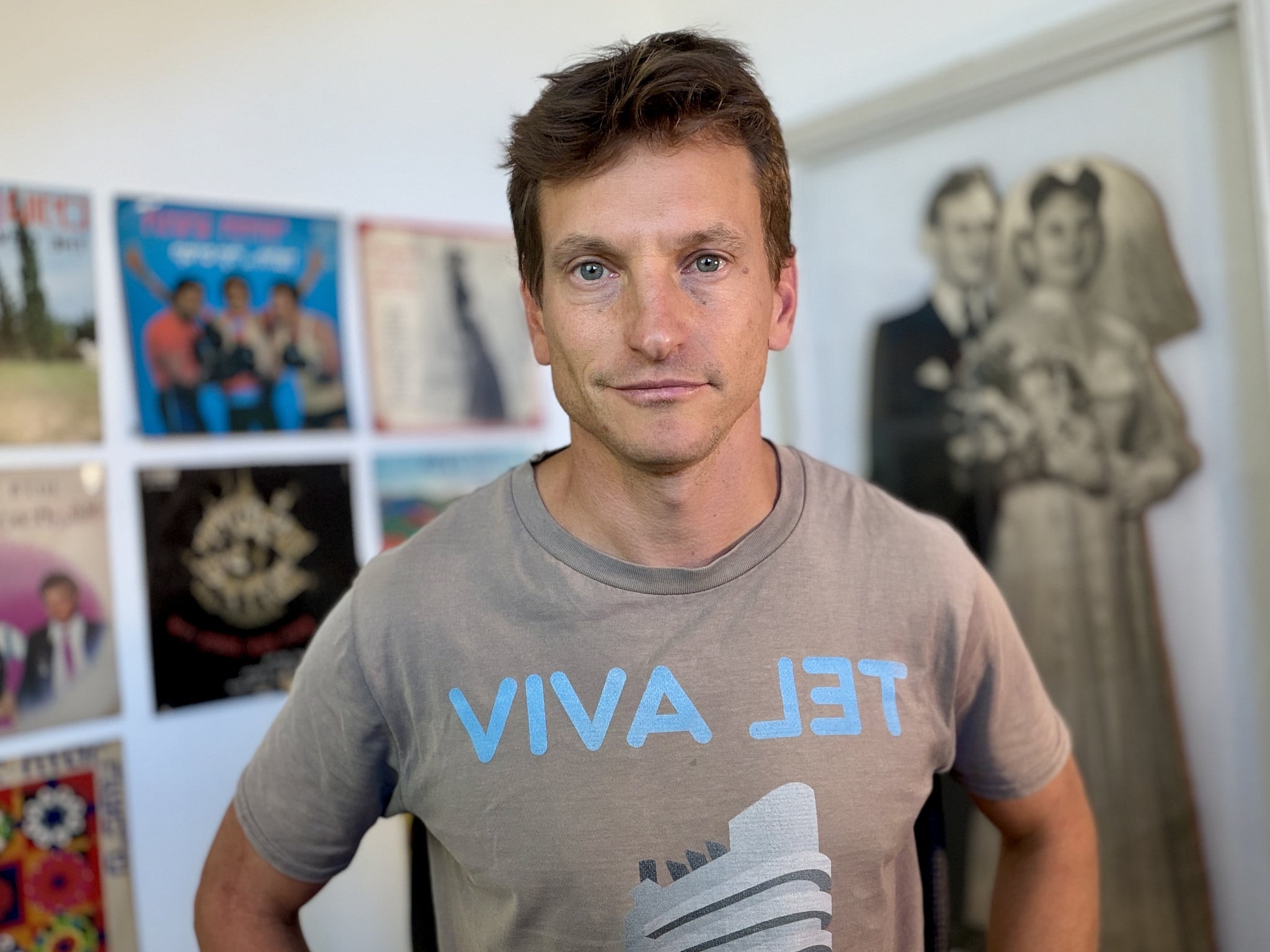
Oren Cahanovitc (Source: Oren Cahanovitc)
It is an honor to interview Oren Cahanovitc, a licensed Israeli tour guide, historian, and renowned digital content creator, to discuss the state of antisemitism today.
Oren has worked as a licensed tour guide in Israel since 2009 and holds a master’s degree in Israeli history from the University of Haifa. He is the creator of “Traveling Israel,” a popular platform offering visitors travel advice, local insights, and a deeper look at Israel’s history and culture.
Following the October 7, 2023 attacks and the sharp decline in tourism, Oren shifted much of his digital work toward Israel advocacy and commentary. His YouTube channel now explores antisemitism, Middle Eastern geopolitics, history, and Israeli society, reaching an international audience of millions.
In this interview, Oren shares his perspective on the changing face of antisemitism today and the challenges of confronting it in Israel and around the world.
- Before October 7, how would you have described the state of antisemitism around the world? How has your perspective changed since then?
To start, I actually avoid using the word “antisemitism.” Most people associate it with the Holocaust, Nazism, and distant history, a time when Jews were seen as weak and defenseless. Today, Jews are no longer viewed that way, which is why I prefer terms like “hatred of Israel” or an “obsession with Jews.” Tucker Carlson can claim all he wants that he isn’t antisemitic, but it’s hard to deny his obsession with Jews when half of his episodes revolve around blaming them for absurd things.
The violence of October 7 didn’t surprise me. I have seen what these extremists do to one another in Gaza, in Syria, and elsewhere across the Muslim world. What shocked me more than anything were the protests across U.S. campuses that erupted as early as October 8. Back then it caught me off guard; today I understand that radical ideas have captured academia – ideologies that deconstruct the foundations of Western civilization and blame the West for all the world’s ills. This wave has been vastly amplified by Islamist ideology and massive Qatari funding.
- What was your personal experience of October 7, and how did the attacks change the way you viewed your role as a content creator and educator?
On a personal level, aside from the war completely wiping out my livelihood in incoming tourism, my daily routine was largely uninterrupted. I live in the desert, so there weren’t many sirens here, and I was discharged from military reserve duty a decade ago. In the days following October 7, there was a widespread feeling that the government was failing to function, and ordinary citizens stepped up to organize everything. I realized I could use my platform, my YouTube channel, to explain to the world what is actually happening here and what this conflict is truly about. That is essentially what I have been doing ever since.
- You began your career primarily as a tour guide. What made you decide to shift your focus toward explaining Israel and addressing antisemitism to an international audience?
Even before the war, my YouTube channel was a place where I explained Israel. Most of the content was practical travel advice – how to plan a trip to Israel, the best hostels in Tel Aviv, but I quickly realized that beyond the logistics of getting from Ben Gurion Airport to Jerusalem, people around the world were genuinely fascinated by Israeli society. I had quite a few videos addressing those themes. For me, making a video about the City of David or the Samaritans is deeply pro-Israel content. In some ways, it is far more impactful than producing another video arguing that Israel isn’t committing genocide, because it shows the real Israel and breaks the adversary’s narrative.
- What historical patterns of antisemitism do you recognize in some of the rhetoric being used today?
There is a quote by Ludwig Börne, a 19th-century German-Jewish writer, who observed:
“It is truly a wonder! A thousand times I have experienced it, and yet it is always new to me. One attacks me for being a Jew, another forgives me for it, a third even praises me for it—yet all of them are thinking about it. They are trapped in this enchanted circle of the Jew; no one can escape it.”
It is that same obsession with Jews. Exactly the same obsession, just wearing modern clothes.
- As a historian, are there parallels between the current rise in antisemitism and previous periods in Jewish history that you think people should understand?
First off, I’m not a historian, just a tour guide! But it is crucial to recognize that hatred of Jews has nothing to do with what Jews actually do. Jew-hatred is a pathology independent of Jewish actions. The clearest example is Hitler: the only three Jews he knew personally -his mother’s doctor and two of his commanders from World War I, he respected and even protected.
Jew-hatred is about what the Jew represents in the mind of a sick society. The Jew is cast as the embodiment of whatever that particular mindset views as the ultimate evil. If you are a medieval Christian, the Jew is the deicide; if you are a racial supremacist, the Jew is the inferior race; if you are a communist, the Jew is the capitalist; if you are a capitalist, the Jew is the Bolshevik; and if your worldview centers on progressive civil rights, the Jew is the perpetrator of genocide. The sicker a society becomes, the more intensely it despises the Jew. This current surge in Jew-hatred stems directly from a collapse of Western values.
- Why do you think there is such a significant gap between how Israelis experience the conflict and how it is often discussed internationally?
The gap exists because Israelis live under an active existential threat. In Israel, the conversation isn’t abstract-everyone knows soldiers, reservists, displaced families, or relatives of hostages. There isn’t a single person in Israel who hasn’t had to run to a bomb shelter. Abroad, for most people, it remains a distant political debate viewed through a screen.
- What aspects of Israeli history or society do you think are most frequently misunderstood by international audiences?
I could give a factual answer: the fact that two million Arab citizens live in Israel, enjoying far greater rights and a higher standard of living than Arabs anywhere else in the surrounding region. But that addresses facts, whereas attitudes toward Israel are driven by emotion.
- Your audience reaches people around the world. What have you learned from interacting with people who strongly disagree with you?
I have learned that in these arguments, it is almost impossible to persuade people with facts, because you are dealing with emotional identification. I’ve realized that the opposing side is rarely arguing about borders; they are challenging the very legitimacy of Israel’s existence.
- What is the biggest misconception about Israel that you encounter in your online work?
That Israel is an apartheid state committing ethnic cleansing and genocide.
- How do you respond when someone approaches you with a question or criticism based on information you believe is historically inaccurate?
Historical inaccuracies are easy to correct. The real challenge is the underlying mindset, and that is something people are unwilling to abandon – certainly not in a single conversation. People base their views far more on emotion than on evidence. Even when you place the facts right in front of them, it rarely shifts their position.
- What do you think students are missing when they discuss antisemitism and the Israeli-Palestinian conflict?
Too many Israelis try to defend Israel, and that is a losing position to be in. Israel’s detractors want us stuck on defense. When we debate whether or not something is genocide, we are already playing into their narrative framing. We need to flip the equation and go on the offensive – show them that they are part of a hate movement, and that the foundational values we hold dear, such as democracy, women’s rights, LGBTQ+ rights, and minority protections, are virtually nonexistent across the Islamist world. The goal should be exposing the other side’s obsession rather than falling into the traps they set for us.
- What do you believe universities can do to create an environment where difficult conversations can take place without Jewish students feeling targeted?
I don’t claim to have an intimate understanding of the inner workings of Western universities. However, institutions must stop tolerating intimidation under the banner of free speech, and instead insist on rigorous intellectual honesty and historical literacy over activist dogma.
- After everything you have witnessed and experienced since October 7, what is the most important message you want your international audience to take away?
One thing that even many within Israel don’t fully grasp – and consequently fail to communicate outward – is that this is not a localized territorial dispute over borders; it is a global religious conflict. The international media focuses on Israel, and we in Israel tend to be very self-absorbed, but that is a mistake. This is a religious war.
A century ago, millions of Christians lived across Turkey, Syria, Lebanon, and Egypt. All of those communities have been decimated or driven to near extinction. The Druze, the Baha’is, the Alawites… there is not a single non-Muslim minority flourishing in the Middle East today. The core driver of this conflict is that a Jewish minority – which under traditional Islamic jurisprudence is supposed to remain dhimmi (subjugated second-class subjects) – succeeded in achieving national independence, sovereignty, and prosperity. That was true in 1929, in 1948, in 1967, and it remains true today. It is a religious struggle, and because the West has become so secular, it struggles to comprehend it.
- If you could correct one misconception about antisemitism, Israel, or Jewish history that you believe is shaping the conversation today, what would it be?
That Jews are a successful, non-violent minority. A healthy society does not merely tolerate Jews; it understands that it is profoundly enriched by having them as part of its fabric. A society that turns around and blames Jews for its own internal crises is a society in free fall.
Contact Information:
Traveling Israel: https://ko-fi.com/travelingisrael
You Tube Website: https://www.youtube.com/@Travelingisraelinfo