


An impossible choice: Which injustice to fight first
I am struggling to write because there is no ethical way to choose which injustice deserves attention first.
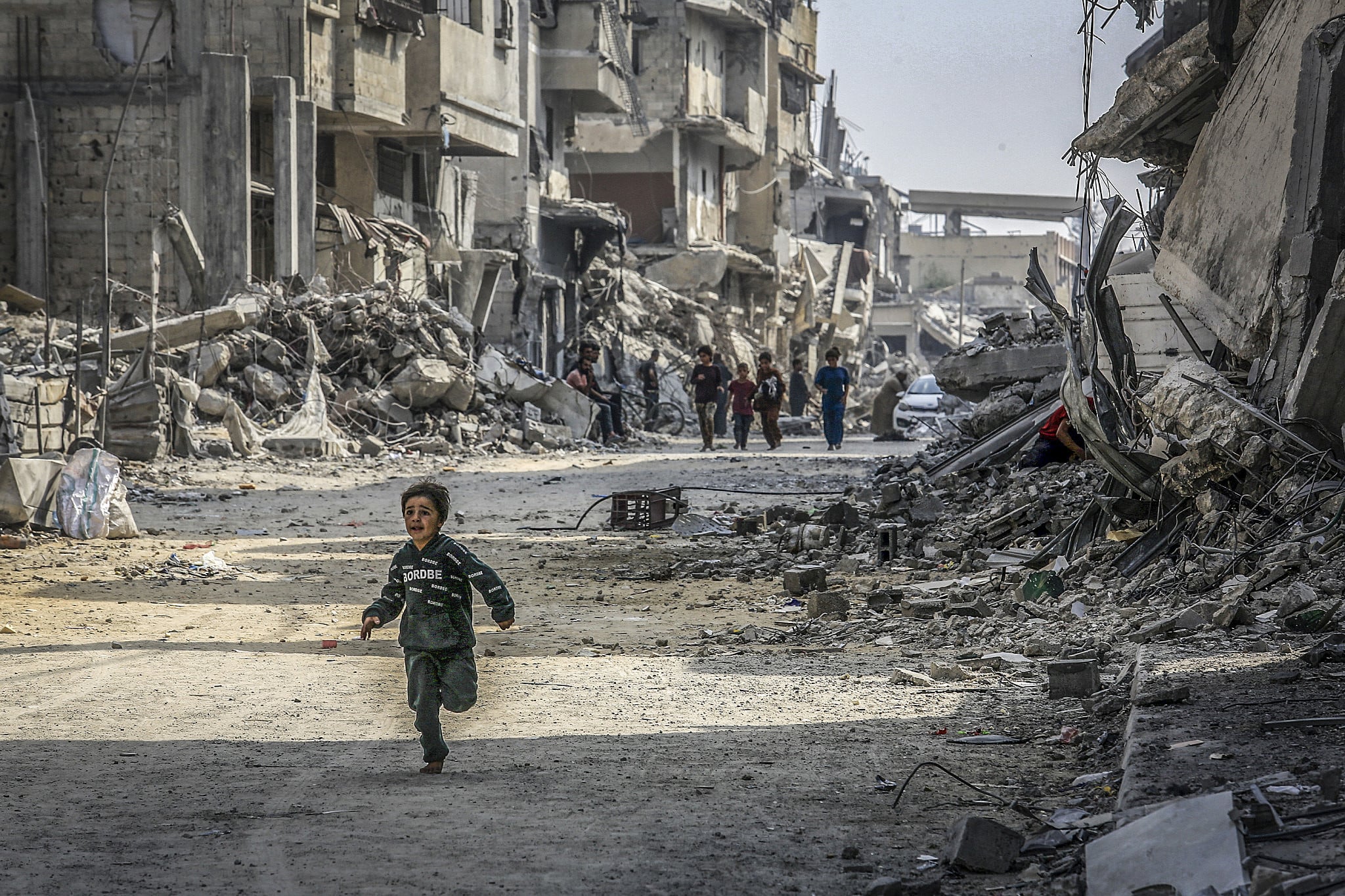
At the same moment that legislation advances in Israel to introduce the death penalty for Palestinian prisoners, they are being held in freezing conditions—without adequate heating or blankets. At the same moment, new road closures across the West Bank turn short journeys into hours-long ordeals, while people are cut off from work, medical care, and family life. All the while, families in Gaza pitch tents inside the shells of demolished buildings to escape flooding winter rains, only to have strong winds tear those tents away, injuring people and leaving children to freeze.
These are not separate stories. They are not parallel crises competing for moral urgency. They are manifestations of a single system unfolding simultaneously across geography and population.
I write this as a Christian Palestinian woman, shaped by a faith and a life that refuse the ranking of human worth, and by years of work in peacebuilding and dialogue. Living between daily headlines and daily life, my commitment to peace has never required me to make suffering competitive or dignity conditional.
The girl who was found alive under the rubble in Gaza loomed large in my mind.
I could not stop imagining the seconds she spent alone, terrified, screaming, buried, unsure whether anyone could hear her or whether she would disappear there. I could not stop asking how a child survives not only the physical rescue, but the memory of those seconds. How does anyone heal from that kind of fear? What future could possibly reach her?
The thought stayed with me, resisting every attempt to move past it, heavy and unresolved.
And even as I stayed with her, my attention was pulled elsewhere.
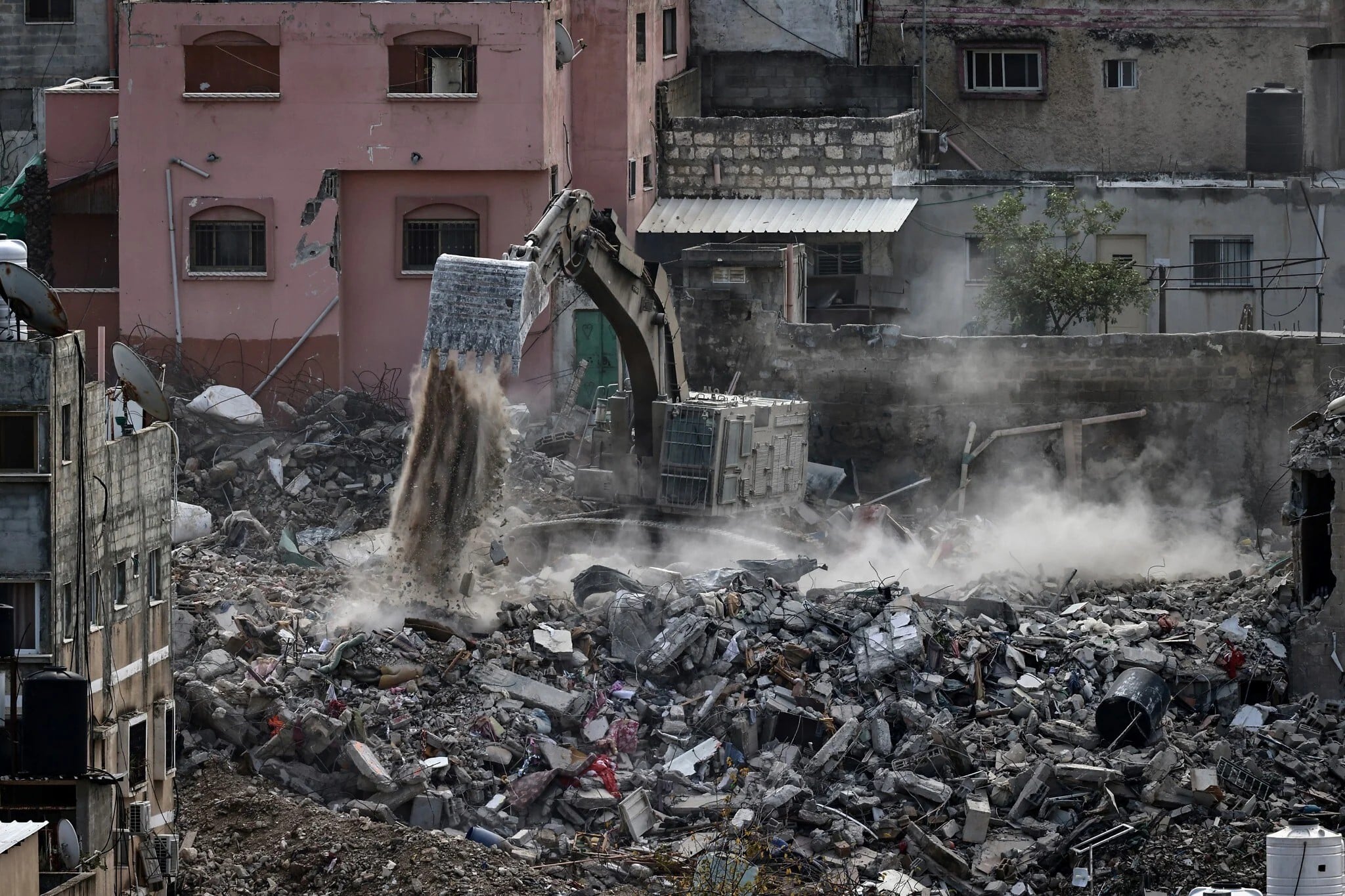
Elsewhere, homes are being demolished in Jerusalem and the West Bank. Communities in the Jordan Valley and Masafer Yatta are forced – again – to dismantle their own tents and homes. Land that people have been prevented from reaching for years is taken over, absence transformed into justification.
I move between these realities not because I am unfocused, but because this is how the violence arrives: all at once, without sequence, without pause.
The girl under the rubble does not replace the family watching their home collapse. The demolished house does not eclipse the community being erased quietly, administratively, far from cameras. None of these realities cancels the others. They accumulate.
Cold, in this context, is not simply weather. It is policy. It is the result of decisions about detention conditions, aid access, infrastructure, and accountability. Road closures are not neutral security measures; they are mechanisms that restructure daily life, transforming mobility into punishment and time into control. And the death penalty is not about justice or deterrence. It is about formalizing the disposability of a population already subjected to a separate legal and moral regime.
What makes this moment so difficult to write about is not the lack of facts. It is the expectation, implicit and often explicit, that Palestinians, or those writing about Palestinian life, must organize suffering into a hierarchy. Prisoners first, or children first. Gaza, or the West Bank. Law, or weather.
That expectation itself is violent.
Am I expected to decide whether the child freezing in Gaza should matter more than a pregnant woman stuck for hours at a checkpoint? Whether a demolished home should matter more than a prisoner freezing in a cell? Which legal development is urgent enough to interrupt the others?
There is no answer, because the question is wrong.
What is happening is not a series of unfortunate events unfolding in parallel. It is a political reality being engineered in real time, one that relies on accumulation, exhaustion, and normalization. When everything is urgent, nothing is allowed to fully register.
What is happening is that Palestinians are being asked, implicitly and complicitly, to absorb more than any human capacity allows, and then criticized for sounding overwhelmed.
There is no ethical way to rank this violence, and no language that can fully contain its accumulation. The harm continues, uninterrupted, across bodies, places, and generations.
This is what remains when analysis ends.
And then I hug my children tightly.