
Financial Advisor, Writer, Zionist, American Patriot and Conservative
An interview with Liora Rez, Founder and executive director of StopAntisemitism
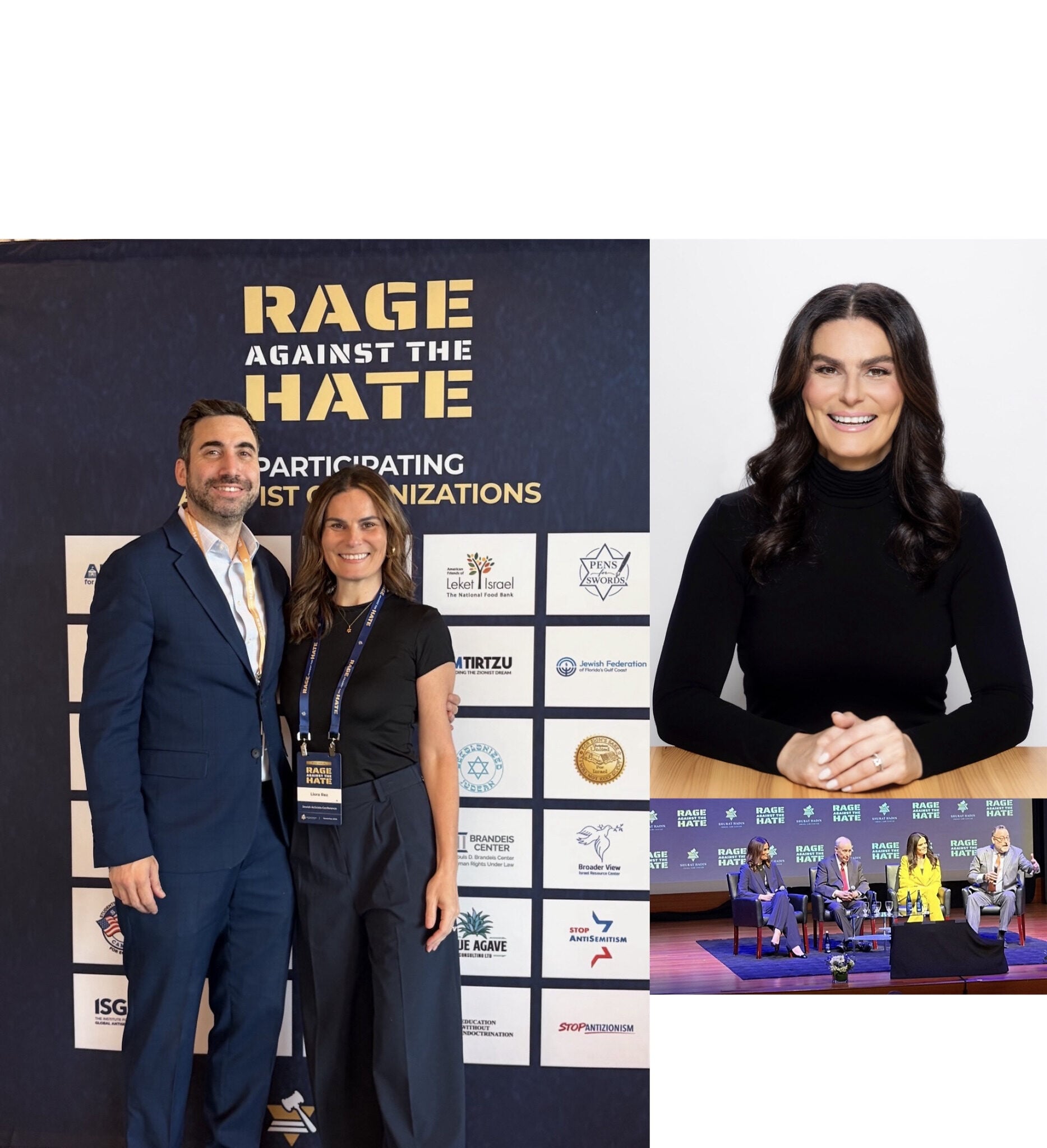
Left; The writer Joseph Scutts with Liora Rez, the Founder and Executive Director of StopAntisemitism at the Rage Against the Hate Conference hosted by Shurat HaDin in NYC (photo courtesy of the writer). Top Right; Picture of Liora Rez (photo courtesy of Liora Rez), bottom rightottom Right; A panel Discussion led by Kenneth L. Marcus (of the Brandeis Center) that included panelists Sandra Hagee Parker (of CUFI), Jonathan Tobin (Jewish News Syndicate) and Liora Rez (President and Founder of StopAntisemitism). (Photo courtesy of the writer)
Over the past few years, I have had the honor of befriending Liora Rez, Founder of StopAntisemitism. Liora is a remarkable person and an American activist, social media influencer, and the founder and executive director of StopAntisemitism, a grassroots watchdog organization. Founded in October 2018, the organization monitors, documents, and exposes online antisemitism, campus incidents, corporate behavior, and public actions in real time. I can mention countless cases of antisemitism that were both discovered and exposed by the Organization, in which both individuals and entities that have enabled this inexcusable
Under Rez’s leadership, StopAntisemitism has pioneered a modern, highly effective approach to combating hate leveraging investigative research, strategic messaging, and digital activism to confront antisemitism wherever it appears, including online, on college campuses, in corporate environments, government institutions, and activist spaces. The organization’s work has directly contributed to arrests of dangerous antisemitic attackers, the expulsion of antisemitic students, the termination of antisemitic employees, and the public exposure of extremist political activists.
Rez brings a strong academic foundation in neuroscience, informing her deep understanding of human behavior, radicalization, audience psychology, and the mechanics of hate-based movements. This expertise, paired with her background in digital marketing, has shaped StopAntisemitism’s high-impact communications strategy and fueled the growth of a nationwide network of engaged activists driving tangible consequences.
Rez’s organization works to create real-world consequences for individuals who engage in antisemitism, including pressuring employers, leading to job terminations, and affecting academic statuses. She has been featured on media outlets like CNN, Fox News, NewsNation, and Dr. Phil, and recognized in The Algemeiner‘s list of people positively influencing Jewish life. I recently had the opportunity to interview Liora and gain insight on what started her to start this both incredible and important journey as she fights the good fight on a daily basis.
What inspired you to start StopAntisemitism?
I grew up knowing that antisemitism is not an abstraction. I was born in Kaunas, Lithuania, and came to the United States as a child refugee from the former Soviet Union. My family fled because Jews were treated as outsiders and targets.
I founded StopAntisemitism in 2018 because I was tired of watching antisemitism get minimized, excused, and brushed aside. Hatred thrives when nobody names it and nobody faces consequences. Our work is to expose it, stand with the people being targeted, and demand that schools, employers, and public institutions do their jobs.
What major obstacles do American and world Jewry face amid the spike in antisemitic attacks since October 7?
Since October 7, Jews have been confronted with a disturbing truth: antisemitism has not disappeared. It has learned new language, found new platforms, and become far too comfortable in public. Jewish students are harassed on campus, Jewish employees are targeted at work, and online, conspiracy theories and calls for violence can spread to millions before anyone steps in.
The response from too many institutions has been painfully weak. They issue statements, launch reviews, and hide behind process while Jewish people are left wondering whether anyone will protect them. Criticism of Israeli policy is legitimate. Using it to intimidate Jews, excuse violence, or demand that Jewish students answer for Israel is antisemitism. We cannot let that distinction be blurred to make other people more comfortable.
What advice would you give young people facing antisemitism in the classroom, on social media, and in the media?
Do not let anyone convince you that you have to hide being Jewish to earn a place in the room. If you are harassed, document it, report it, and bring in people who will stand beside you. You do not have to fight alone, and you should never be expected to tolerate threats or abuse as the cost of your identity.
Find your community. Learn your history. Speak up when you can, and protect your safety when you need to. The shame belongs to the person targeting you and to the institution that looks away. It does not belong to you.
Related Topics
Related Posts