

An Israeli, a Diaspora Jew, and the Antisemitism We Now Share
I grew up in Canada. My wife is a Sabra from Israel. And now, we live in Australia — for the time being.
We are both Jewish — deeply so — but we came from very different realities.
I came from the diaspora — Ashkenazi, Canadian, with roots in Eastern Europe. My Jewish identity was shaped by tradition, community, and an unspoken awareness that antisemitism, while not always visible, was real. It was something you sensed — in conversations, in headlines, in the quiet caution passed from one generation to the next.
My wife came from Israel — Sephardic, born and raised in a society where being Jewish was simply the norm. Her identity was never something she had to explain or protect. It was woven into the language, the culture, the calendar. She didn’t grow up with the same awareness I had — not because she didn’t care, but because she never had to think twice about her Jewishness.
She didn’t grow up viewing the world through the lens that antisemitism might be hidden in everyday places — in schools, sports fields, boardrooms, media, or polite conversation. That wasn’t her experience. In Israel, the hatred was overt, declared, and external. The threats were real and unmistakable — wars, terrorist attacks, suicide bombings, rocket fire. When danger came, it came loudly. There were sirens, alerts, and a clear enemy. You mostly knew who the enemy was, and when to take cover.
For me, the threat was quieter — it wore a suit, sat in a meeting, or smiled at you in a hallway. It came dressed in subtlety, sometimes even in civility. Her danger came with clarity. Mine came with ambiguity.
Antisemitism in the diaspora isn’t always loud. Sometimes it’s a policy, a joke, a silence. And you learn to sense it, to read between the lines — because it doesn’t always announce itself, but it may always be there.
Since October 7, those two very different experiences have begun to converge. The hate that Israelis have long faced in the form of physical violence and existential threat has spilled into diaspora communities with a new ferocity. Here in Australia — as in the United States, the UK, and across Europe — Jews have watched once-quiet hostilities become open hostility. Jewish schools need round-the-clock security. Synagogues are receiving threats. Public spaces are filled with slogans that don’t simply criticise policy — they deny legitimacy. Hatred has moved from the shadows into the spotlight.
For my wife, this has been a disorienting shift. What was once abstract — the murmurings of antisemitism overseas — is now lived reality. The antisemitism we in the diaspora have always recognised, that subtle kind woven into politics, media, and academia, has now become visceral, immediate. And she feels it now — not as theory, but as threat.
It’s also brought about a painful reckoning. For me, it’s a confirmation of something I’ve lived with my entire life. For her, it’s a loss of innocence — the recognition that being Jewish, even outside of Israel, can come with risk and rejection. And not because of what you do — but simply because of who you are.
This shared awakening has reshaped how we think about our children.
They carry both our stories — diaspora and homeland, Ashkenazi, and Sephardi. They carry our languages, our food, our memories, our resilience. And now, they are growing up in a world where being Jewish demands more than identity. It demands awareness.
We try to prepare them. Not to live in fear, but to live in truth. To know that threats may come with rockets — or with rhetoric. That danger can appear as slogans, silence, or social exclusion. That they may have to stand up — and stand alone.
What they inherit from me is a lifelong instinct to watch the world carefully. To pick up on what isn’t said. To read between the lines. What they inherit from their mother is strength — the kind forged in a country that refused to disappear, that refuses to apologise for existing.
The difference between our experiences doesn’t diminish either one. It makes our understanding deeper — and more urgent. Because antisemitism wears many faces. Sometimes it is declared. Sometimes it is denied. But always, it seeks to isolate, diminish, and erase.
We never thought we’d share this fear. But we do now. And we face it together.
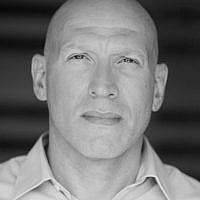
Michael Gencher is Executive Director of StandWithUs Australia. He grew up in Canada and now lives in Sydney with his wife and children. He writes on Jewish identity, diaspora-Israel relations, and the modern face of antisemitism.