An Israeli Rabbi who Actively Seeks Peace
Depart from evil, and do good; seek peace, and pursue it. (Psalms 34:14)
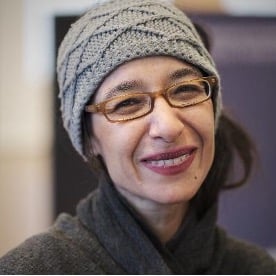
There are few rabbis in Israel who actively and consciously seek and pursue peace as part of their daily agenda. One of the rare ones, and one of the most active ones, is Rabbi Tamar Elad-Appelbaum, who is the rabbi of The Zion Community in Jerusalem (full disclosure—I am a member of her congregation) and the founder of the Bet Midrash for Israeli Rabbis, a joint program of the Shalom Hartman Institute in Jerusalem and the Oranim Midrasha (Teacher Training College) in Kiryat Tivon, as well as the founder of the Shalom Hartman Institute’s Ritual Center.
In a recent interview, I asked Rabbi Tamar about her involvement in interfaith-based peace work now, 2 plus years after the Hamas attack on began on October 7th, 2023. Is she still involved in peace work? and why? Her response was immediate and inspirational:
It is very important to be involved in peace activism especially now in order to fight against despair. Many people have given in to despair. I believe that we must resist this, and be even more involved in our faith and commitment to the ancient Jewish vision of peace. This is why I serve on the boards of peace organizations such as A Land for All, Women Waging Peace, and the Tag Meir Forum (and previously on the board of Rabbis for Human Rights). And this is why I bring up peace in my own kehillah all the time as well as we do in the training and via the network of Israeli rabbis which we have developed.
Rabbi Tamar has created a unique pluralistic Jewish community in Jerusalem during the past 13 years, called Kehillat Zion Eretz Yisraeli (An Eretz Israel Community in Jerusalem). It is a very active community, both internally through its inspirational and energizing worship services on Shabbat and holidays, as well as in the public square in Jerusalem. Kehillat Zion organizes many public events a year at various venues in Jerusalem. One event called Ma’aminim “Believers” is Zion’s annual interfaith prayer gathering that envisions what the Holy City can be for all citizens of Jerusalem. Other events in the public sphere include their interfaith Chanukah candle lighting and a multi-denominational selichot event preceding Yom Kippur. In addition, members of the congregation participate in many other social action projects with people from other faith traditions in Jerusalem.
Furthermore, Rabbi Tamar often preaches and teaches about shalom in her amazing Divrei Torah (sermons) on Friday nights and holidays and on other occasions, and she is asked to participate in many other public programs by other organizations. Her sermons are recorded and listened to by people all over Israel.
I asked her why she makes this such a priority in her rabbinate. She responded poignantly :
As a rabbi/ believer, I believe in shalom. I feel that we need to teach about it and talk about it, as did our forefathers throughout all hardships and generations —in our communities, in the public, in our training of rabbis, in our public programs, wherever we can. That is the meaning of being a teacher of faith. Faith in the goodness of God. Faith in the goodness of humanity.
I wondered aloud with Rabbi Tamar about whether it has become much harder to do interfaith peace work, with more challenges and obstacles in recent years, especially during the Hamas-Israel war, which is ongoing, even if there is some kind of cease-fire. I meet a lot of people who have fallen prey to despair. As is often the case, she responded with an answer that somewhat surprised me:
I feel that in all the circles of interfaith study, dialogue and peacebuilding that I am involved with in my community and other organizations and beyond, I am seeing more and more people getting involved in the last two years from within the trauma and suffering, not less people. This gives me hope and sustains me.
I was glad to hear that more and more people are joining in interfaith study, dialogue and peacebuilding circles. I worked in this field in Israel for over 30 years and witnessed thousands of people involved in these programs. But I was worried that the war had created newer and harsher obstacles to peacebuilding which would prevent any meaningful dialogue. I can see that through the new leadership of people like Rabbi Tamar and others, the interfaith movement for peace is growing and developing. This is a very positive development. It strengthens hope over despair.
Rabbi Tamar summarized her involvement succinctly:
There are two options: 1) to give into despair, or 2) to continue to believe in shalom and to be active in forums and organizations that do this. I follow our ancient tradition and choose the second path!
I asked her how we can continue to inspire people to be hopeful, despite all the darkness that we see around us. Her answer was very much to the point:
First by believing in God’s vision of shalom for us all and second, by never giving up, by always seeking peace partners and pursing it.
Keeping hope alive these days is very important but also very difficult. It takes both faith and perseverance to do this when so many political and violent forces are working against you. This is why the leadership in the interfaith peace movement by people like Rabbi Tamar is so vital and so encouraging. May she continue to go from strength to strength.
—
This blog post is part of a series of posts on peacebuilders in Jerusalem and other parts of Israel/Palestine.