
An Open Letter to Bernie Sanders
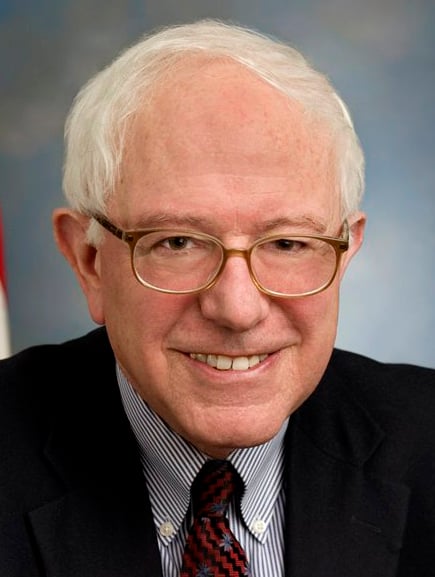
Dear Senator Sanders,
At a time when many Jews are increasingly uneasy about their place in America and around the world, the words of influential leaders carry unusual weight.
This letter is not an appeal for you to agree with every Israeli government policy. Democracies deserve criticism, and Israel is no exception. It is an appeal to reconsider whether your judgments of Israel have reflected the full moral picture at a moment when the Jewish people face extraordinary challenges both from those who seek Israel’s destruction abroad and from rising antisemitism at home.
Like many Jews, I have watched your increasingly harsh condemnations of Israel with a growing sense of dread. The anguish comes not only from what you have said, but from who is saying it. You are one of the most influential Jewish voices in American public life. When you accuse Israel of genocide and portray it as uniquely immoral, your words carry extraordinary weight. They shape how millions of people understand the Jewish state, and they deepen the sense among many Jews that someone they once regarded as an ally has turned against them.
I am writing to ask you to reconsider your repeated accusation that Israel is committing genocide and, more broadly, your judgments of the Jewish state.
I once admired you enough to volunteer for your campaign. I believed in your vision of a more just society. Your insistence that health care should not depend on wealth, your concern for ordinary working people, and your willingness to challenge entrenched interests inspired me. I saw you as someone who measured politics not by what was expedient but by what was right.
I also remember a senator who defended Israel against unfair attacks. I remember hearing you explain that no country could tolerate rockets raining down on its citizens. I remember you acknowledging that Israel, like every sovereign democracy, had both the right and the obligation to defend its people from terrorism.
Then something began to change. I cannot point to a single speech or a single vote, but I remember listening to your comments about the 2014 Gaza war and feeling a profound sense of disappointment. I heard you repeatedly describe Israel’s actions as disproportionate and cite casualty figures that were exaggerated. For the first time, I wondered whether the careful moral balance that had drawn me to your politics had begun to disappear.
As the years passed, your criticism of Israel became harsher still. Today you routinely accuse Israel of committing genocide—an accusation that, after following this war closely and considering the assessments of respected military experts, I have concluded is unsupported by the evidence.
You are one of the most influential Jewish leaders in America. Millions of people who know little about Israel trust your moral judgment. Many assume that if a lifelong progressive Jewish senator believes Israel is committing genocide, the evidence must be overwhelming.
I have often wondered what changed.
Did your understanding of Israel genuinely evolve after hearing evidence that persuaded you? Or did the political landscape around you change? Over the past decade, criticism of Israel has become increasingly common—and increasingly rewarded—in progressive political circles. Defending Israel has become more difficult. Condemning it has become easier. As one of the movement’s most influential voices, you have not merely witnessed that shift; you have helped shape it.
I do not know the answer, nor do I presume to know your motives.
But I do know that genuine leadership has never consisted of saying what audiences most want to hear. Throughout your career, you built your reputation by speaking uncomfortable truths. That is one of the qualities I admired most about you.
Which is why I find the absence of certain truths from your public remarks so difficult to understand.
When you speak about this war, I rarely hear you discuss the ideology of Hamas.
Hamas is not simply another armed movement engaged in a territorial dispute. It is an organization whose leaders have repeatedly called for the destruction of Israel and the murder of Jews. On October 7, the world witnessed what that ideology looks like in practice. Families were slaughtered in their homes. Young people celebrating at a music festival were hunted down. Children were kidnapped. Elderly men and women were dragged into Gaza.
Nor did October 7 occur in a vacuum.
For more than two decades before that day, Israeli communities near Gaza—places like Sderot and the communities of the Gaza envelope—endured relentless rocket attacks that sent children and parents running to bomb shelters with only seconds to spare. No government has the luxury of ignoring that reality.
For years you also described Gaza as an “open-air prison.” Whatever one’s view of Israeli policy, that description omitted a central part of the story: Hamas exercised governmental authority in Gaza and repeatedly chose to devote enormous resources to rockets, tunnels, and military infrastructure rather than to improving the lives of the people it governed. Every mile of tunnel, every cache of weapons, and every attack on Israel reflected choices made by Hamas’s leadership. Those choices were not merely a consequence of Gaza’s reality; they were instrumental in creating it.
Yet when you speak about this war, Hamas’s genocidal ideology often recedes into the background while Israel’s failures become the central moral focus. An honest moral evaluation of this war must begin by understanding why the war exists in the first place.
You have every right to criticize Israeli policies. Israelis criticize their own governments with remarkable vigor. But criticism becomes less persuasive when it omits essential facts.
Throughout this war, respected military experts—many of whom have spent their careers studying urban warfare—have argued that Israel has taken unprecedented steps to reduce civilian casualties while fighting an enemy deliberately embedded within civilian neighborhoods, schools, hospitals, and mosques. They have acknowledged mistakes and tragedies while nevertheless concluding that Israel has confronted one of the most difficult military environments in modern history.
Reasonable people may disagree with their conclusions, but it is difficult to understand why their assessments are almost entirely absent from your public remarks.
When a prominent public figure repeatedly describes Israel as genocidal, many people understandably conclude that the accusation has been carefully weighed and established. Some who already despise Israel feel vindicated. Others who know little about the conflict accept the charge because it comes from someone they regard as principled and trustworthy.
Whatever your intentions, words can have consequences beyond those we intend.
Since October 7, many Jews have watched with growing unease as anti-Zionism and antisemitism have become increasingly intertwined. On college campuses and in city streets, slogans directed at Israel have too often been accompanied by harassment of Jewish students, attacks on Jewish institutions, and a growing willingness to hold Jews collectively responsible for the actions of the Israeli government.
I do not claim that everyone who criticizes Israel is antisemitic. That would be both unfair and untrue.
But neither can we ignore that portraying Israel as uniquely evil, uniquely illegitimate, or uniquely criminal contributes to a climate in which hostility toward the Jewish state often spills over into hostility toward Jews themselves.
You have often spoken about the moral obligations that accompany privilege and power. I believe there is another form of responsibility—one that comes with influence. The more people trust your moral judgment, the greater your obligation to ensure that your words illuminate rather than oversimplify, especially on questions of life and death.
One of the distinctions I find missing from your speeches is the moral contrast between the two sides in this war.
Hamas’s ideology openly embraces the destruction of Israel and has repeatedly called for the murder of Jews. Its atrocities on October 7 were not a departure from its worldview but a horrifying expression of it.
Israel’s founding vision could not be more different.
In its Declaration of Independence, Israel pledged to “ensure complete equality of social and political rights to all its inhabitants irrespective of religion, race or sex” and guaranteed freedom of religion, conscience, language, education, and culture.
Like every democracy, Israel has not always fulfilled those aspirations. Neither has my own country. But there is an enormous moral difference between a nation founded on equal rights that sometimes falls short of its ideals and an organization whose stated objective is the destruction of another people.
That distinction does not absolve Israel of responsibility for its mistakes.
It does, however, shape how those mistakes should be understood.
As Jews, we inherit a profound sense of responsibility toward one another. Our sages taught, כל ישראל ערבים זה בזה—all Israel is responsible for one another.
I know that principle can be misunderstood. It does not mean that Jews should excuse wrongdoing or refrain from criticizing one another. Our tradition expects us to speak honestly and to rebuke when necessary.
But it also asks us to be extraordinarily careful that our public judgments are truthful, fair, and complete, especially when they concern matters of profound consequence for the Jewish people.
No one expects you to defend every Israeli government or every military decision, and I certainly do not. But I do hope that, as one of the world’s most influential Jewish leaders, you will be as careful in your judgments of Israel as our tradition asks us to be in our judgments of one another.
Senator Sanders, if this were simply a matter of political disagreement, I would not have written this letter.
I am writing now because this is no longer just about politics.
At a time when many Jews feel increasingly uneasy, when antisemitism is rising from both the political left and the political right, and when Iran and its terrorist proxies continue to proclaim their determination to destroy the world’s only Jewish state, the words of influential leaders carry consequences far beyond ordinary political debate.
This is a moment when Jews need friends who will speak with moral clarity.
You have the credibility, the stature, and the moral authority to be one of those voices.
I ask you to speak with the same moral clarity about Hamas’s genocidal ideology, about the suffering of Israeli civilians on October 7 and under years of rocket attacks, about the democratic ideals that have guided Israel since its founding, and about the extraordinary efforts many military experts believe Israel has made to minimize civilian casualties under extraordinarily difficult circumstances.
Our tradition teaches, בְּמָקוֹם שֶׁאֵין אֲנָשִׁים, הִשְׁתַּדֵּל לִהְיוֹת אִישׁ—”In a place where there are no people, strive to be a person.”
I have always understood that teaching as a call to moral courage—to speak difficult truths when others remain silent.
Today there are countless voices willing to condemn Israel, but far fewer willing to acknowledge Hamas’s genocidal ideology, recognize the complexity of urban warfare, or remind the world that Israelis, too, deserve security, dignity, and peace.
The Book of Esther tells of another Jew, Esther, who found herself in a position of extraordinary influence. Her guardian, Mordechai, challenged her with words that have echoed through Jewish history:
“And who knows whether it was for just such a time as this that you attained your position?”
Every generation produces moments when people of influence must decide whether to remain silent or to use their voices on behalf of those who need them most.
I believe this is such a moment.
Judaism also teaches one of its most profound and hopeful ideas: תשובה, repentance.
No person is beyond change. No public figure is forever defined by past words. Our tradition teaches that sincere repentance, moral courage, and a willingness to reexamine one’s judgements can redeem an entire lifetime.
I hope you will publicly reconsider your repeated accusation that Israel is committing genocide. Genocide is among the gravest accusations that can be made against any nation. It should not be made unless the evidence clearly supports it. I do not believe that standard has been met. That conclusion is reinforced by the assessments of respected military experts whose perspectives have been largely absent from your public remarks. To accuse a nation whose founding charter commits it to equality and human rights for all its citizens, and which itself rose from the ashes of genocide, of committing that same crime is an extraordinary charge. It deserves to be judged with extraordinary care.
At a time when many Jews feel increasingly uneasy, you have the power either to deepen that unease or to help ease it.
I hope you will choose the latter.