
An openly punitive diplomacy
The facts are clear. B. Netanyahu has accused Spain of “hostility” towards Israel and announced its exclusion from the Kiryat Gat Civil-Military Coordination Center (CMCC), the Gaza truce monitoring mechanism set up under American supervision. At the same time, Israel has decided to exclude France from direct negotiations with Lebanon next week in Washington, deeming Paris “cannot” play a credible mediating role.
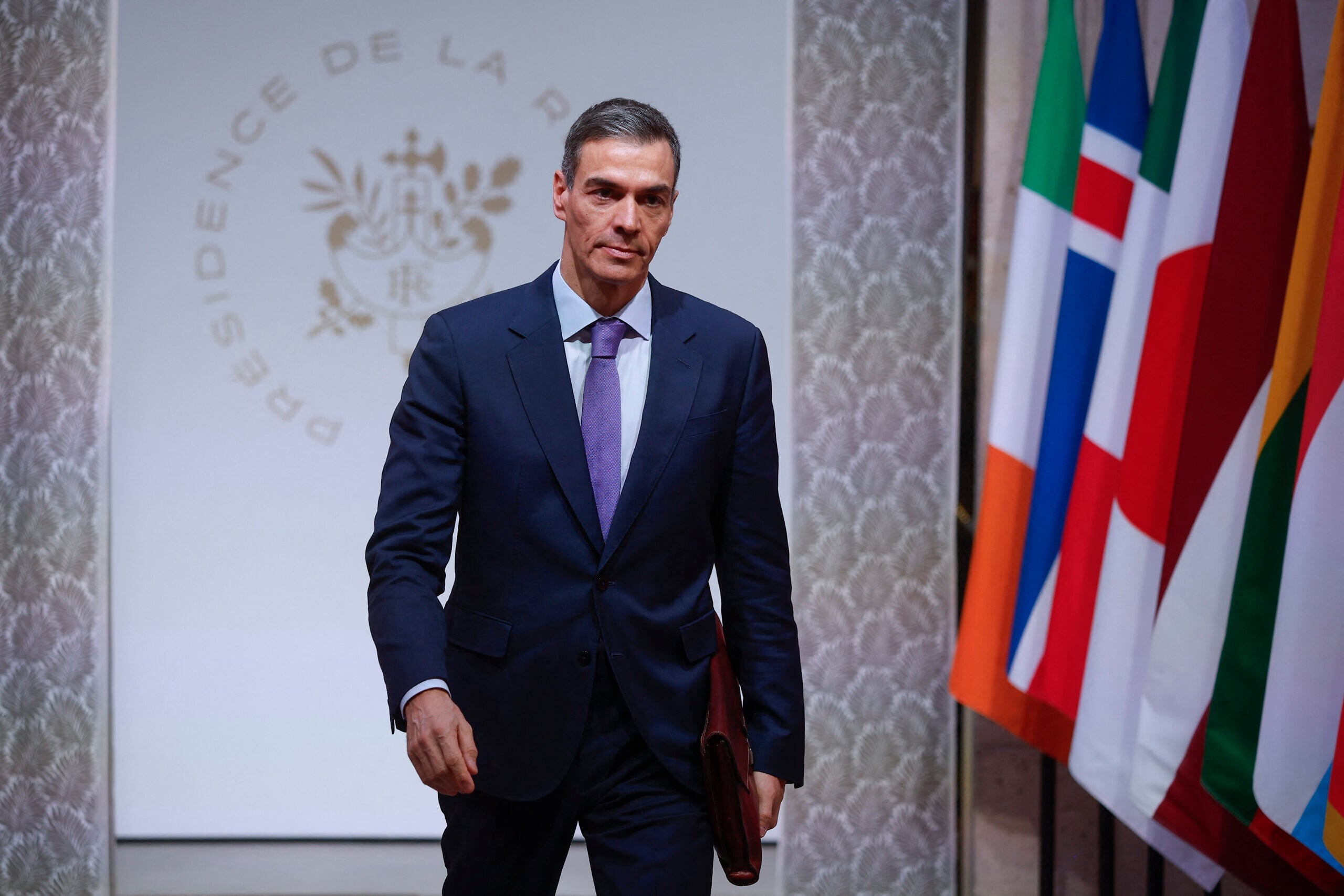
The grievance against Madrid is clearly articulated: socialist Prime Minister Pedro Sánchez opposed the US-Israeli military campaign against Iran, Madrid closed its airspace to US aircraft involved in this war and deemed it “unacceptable.” This is Beirut.
For Paris, the grievance is just as precise: France refused to allow US planes carrying weapons to Israel to fly over its airspace, and since Hezbollah began firing after the Israeli-American strike on Iran, E.Macron and other French officials are pressuring Israel not to launch a ground operation in Lebanon.
Is this a turning point? Yes—but not in the usual sense
This is not a qualitative turning point in the Israeli posture: the European isolation of Israel is not new, and the tensions with Paris and Madrid largely existed before. What is new is the method and timing.
Three elements constitute the real break:
1. The punitive measures have become operational, not just rhetorical. B. Netanyahu stated, “I have no intention of allowing any country to wage a diplomatic war against us without paying an immediate price.” It’s no longer posture—it’s a formulated doctrine, with a named retaliation mechanism. This is a signal of operational coherence, not impulsivity.
2. Israel uses the American leverage as an amplifier.
The CMCC is a Trumpian infrastructure. By expelling Spain from this arrangement, Israel is signaling that it operates within the logic of Washington-Tel Aviv and that the Europeans who did not support the campaign against Iran are now outside this perimeter of trust. It is a redefinition of who is an “ally” in the new post-strike regional order in Iran.
3. France is targeted differently than Spain—and it’s more serious.
Spain was already marginalized; its relations with Israel have been shameful since 2024. Its exclusion is a confirmation of an acquired status. On the other hand, France had obtained the establishment of a ceasefire monitoring mechanism under American leadership in which it is represented by thirteen French soldiers, with the aim of reporting violations of the truce by both parties to ensure Israeli withdrawal and allow the redeployment of the Lebanese army in southern Lebanon. To exclude him from the Israeli-Lebanese negotiations is to take away his historical prerogative—France has been the traditional guarantor of Lebanese stability since at least 2006.
What it reveals:
This moment crystallizes four background dynamics:
-The war with Iran has created a durable dividing line.
Israel now ranks its partners not on the Gaza/West Bank criterion but on the Iran criterion—more discriminatory, more recent, and therefore more politically operative.
-Israel is enjoying an unprecedented window of power.
Strengthened by the campaign against Iran, supported by Washington, and in a context where Hezbollah is weakened, the Israeli turnaround that now agrees to enter into talks with Lebanon is explained both by recent military successes against Hezbollah and an explicit request from Washington to ease the situation.
c) European powerlessness is structural, not cyclical.
France has mentioned national sanctions and a possible suspension of the EU-Israel association agreement—a procedure that must be adopted unanimously by all 27 member states, which Germany has notably opposed. The European mechanism is designed for impotence: unanimity required, deep internal divisions, and absence of direct security leverage. Israel knows these details perfectly well.
-France pays the price of its calculated ambiguity.
Paris has tried to hold the CMCC in check while criticizing the strikes on Lebanon, advocating dialogue and refusing to condemn Iran. France, by playing an overly wait-and-see role, may not have proved up to its task as a observer country, as noted by a former ambassador to Lebanon. This middle ground—neither an assumed alignment on Washington-Tel Aviv nor a frank opposition—has made it inaudible on both sides.
Three scenarios for the future
Scenario 1—Punitive escalation becomes systematic
Israel continues to sanction critical European states one by one, setting a normative precedent where diplomatic criticism has a tangible cost. The EU remains paralyzed for lack of unanimity. European isolation of Israel is confirmed, but with no practical consequences for Tel Aviv (because Washington remains the only arbiter that matters).
Scenario 2—Negotiated compromise on Lebanon, partial normalization
The Israeli-Lebanese negotiations in Washington lead to a minimum agreement on Hezbollah.
Scenario 3—Concerted European diplomatic crisis
Spain, France, Ireland, and a few others are coordinating a formal European response—a partial suspension of the association agreement. This marginally weakens Israeli economic interests in Europe but does not change the security equation. Risk for Israel: moderate. Risk for the EU: visible internal breakdown, Germany isolated.
My conclusion
This moment is not a rupture in Israel-Europe relations—this rupture has been consummated since 2024. It is the “formalization” of a new Israeli doctrine: immediate punitive reciprocity, applied to diplomatic space as Israel applies it to military space. Netanyahu is constructing a diplomacy of pure power balance, backed by regained military power and the Trump American umbrella. In this context, Europe—fragmented, lacking security leverage, constrained by unanimity—is doubly powerless: too weak to impose, too divided to deter.
The real question is not what Israel does to Europe. The real question is what Europe can still do, not for Israel, but for itself, in a region where it is being methodically squeezed out of the tables that matter.