Another Antisemitic Controversy in Ireland
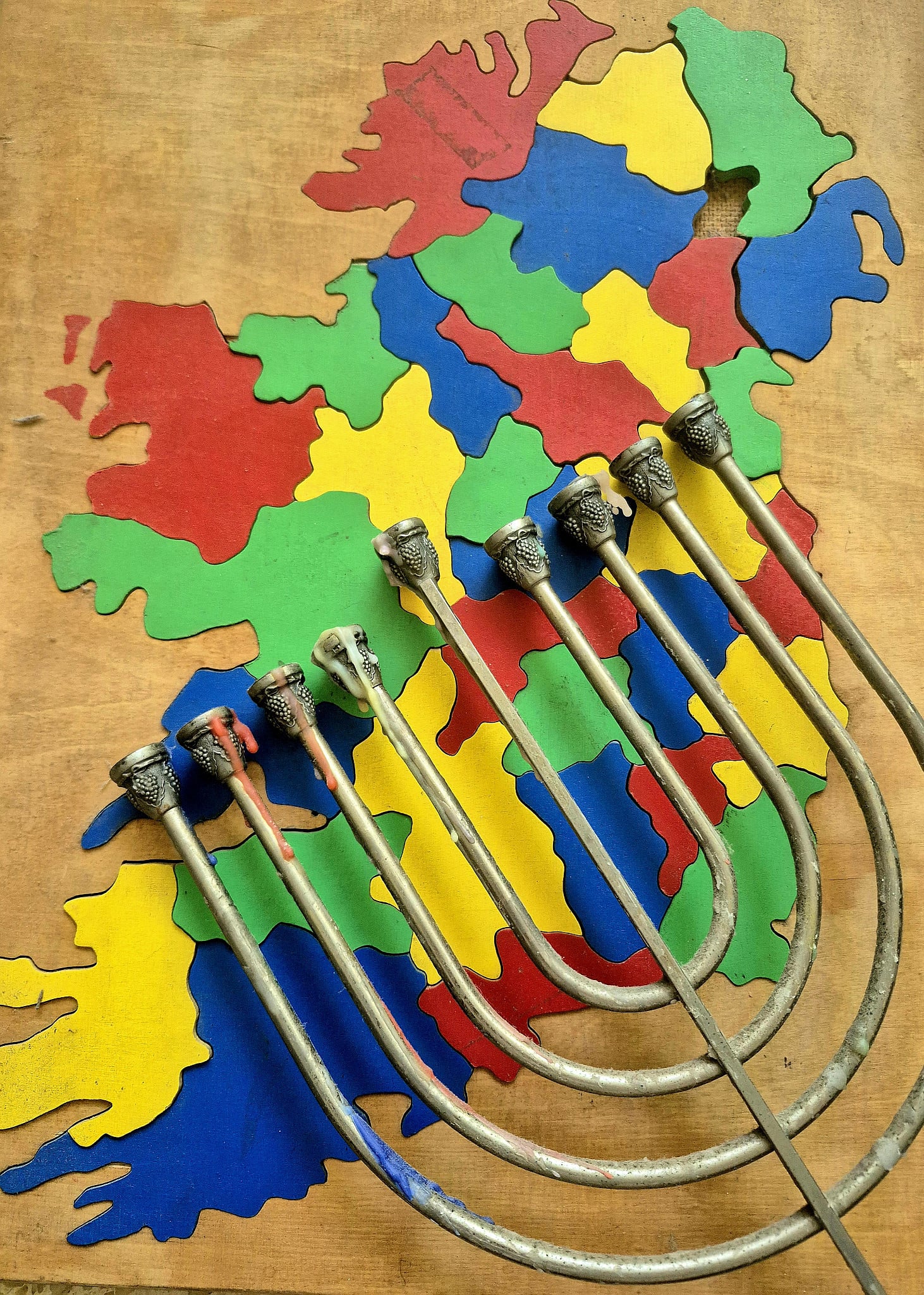
What happens when one of Ireland’s greatest institutions—The Late Late Show (a popular chat show, on air since 1962), one of its most recognizable exports—1980s pop star Boy George (whose parents were born in Ireland), and one of its most persistent taboos become entangled?
It isn’t pretty.
That taboo? Irish antisemitism. And once again, here we go. We seem to have been here too many times in too few months.
A week on, the story continues to rumble on, not least because it is attracting attention in the UK and in the Wall Street Journal in the US.
Perhaps not too many Times of Israel readers will likely have heard or read something about this story.
To recap – Boy George found himself drawn into the latest Irish antisemitic episode when he spoke about his personal upset at the widely reported attempted murder of two members of London’s Jewish community in Golders Green on April 29th. The victims—men in their 30s and 70s—were stabbed in what police quickly treated as a terror-related incident. That attack has already engulfed the UK’s Green Party leader, Jack Polanski, who has since been forced to apologize for his criticism of the police’s handling of the story.
It has now engulfed RTÉ, Ireland’s national broadcaster.
Patrick Kielty, the host of The Late Late Show, has been widely criticized for his comment that “you’ve got attacks on the Jewish community, and the backdrop of that is obviously the horrors in Gaza.”
Many would argue that there is no meaningful ‘backdrop’ or contextual framing for antisemitism-motivated violence beyond antisemitism itself.
RTÉ appears to disagree, issuing a statement that “as someone who lost his father to a terrorist attack, Patrick has always been empathic, measured and sensitive on such matters.”
That statement reads less like a defense of Kielty’s remark and more like, my pain is greater than your pain, an attempt to place it beyond criticism
I should also acknowledge that I have skin in the game. I am Irish-born, a Dubliner, married to a Jewish Israeli, raising two Jewish children in Tel Aviv—just 70km from Gaza. My oldest has been to Ireland nine times, but is still too young to understand, or perhaps be shielded from, Ireland’s uneasy relationship with its own antisemitism.
But it wasn’t Kielty’s comment that lingered. It was what came next.
In conversation, Boy George said: “If you do not know any Jewish people, that’s the problem.” He then turned to the audience and asked, plainly: “Do you know any Jewish people?”
Silence.
Slightly taken aback, he pushed again: “Look at the quietness. That’s weird.”
He was right. It was weird. More than that, it was a little chilling.
Presumably, no hands went up—or at least not enough to register—otherwise Boy George would have acknowledged them. What followed, a ripple of uneasy giggles, only deepened the discomfort. It felt less like a pause and more like a vacuum.
This was the moment. The kind of moment The Late Late Show used to thrive on—awkward, revealing, slightly unscripted. Kielty might have tried to break it with an avuncular, “come on now… there must be someone who’s shaken the hand of Alan Shatter, Mervyn Taylor, or Ben Briscoe”—Jewish TDs (Members of parliament) who, across overlapping periods, served Irish parliament between 1969 and 2016.
Instead, the audience at home was left hanging.
Of course, there are softer explanations. Perhaps those in the audience who do know a Jewish person hesitated. Perhaps they forgot, or second-guessed themselves, or felt it awkward to raise a hand. Perhaps, in today’s Ireland, even acknowledging a connection to a Jewish person, and especially to an Israeli, carries an unspoken social cost.
Perhaps the estimated 1,500 Israelis living in Ireland have learned, quietly, to keep their heads down.
But the question still hangs: why didn’t anyone say yes? It is impossible to know exactly what that silence meant in the moment, but it is difficult to ignore what it appeared to reveal, or withhold.
Math doesn’t lie.
Ireland has a population of roughly 5 million. The Late Late Show audience numbers around 200. The Jewish population in Ireland is about 3,000. Assume, conservatively, that each Jewish person knows at least 40 non-Jewish people—friends, colleagues, neighbors. In reality, the number is likely far higher.
Even on the most cautious estimate, the probability that no one in that audience knew a Jewish person is vanishingly small—close to zero. Statistically, it is almost certain that several people in that room did.
And yet: silence.
That silence matters more than Kielty’s clunky comment; a comment can be walked back, clarified, or reframed; the silence, however, is harder to explain. What is also striking is the apparent lack of curiosity about the silence. To date, there has been no effort to interrogate what that silence actually meant.
One television exchange is not evidence of a wider social condition, but, some might suggest, a pattern of silence is emerging in Ireland.
The release of the damning Jewish Representative Council of Ireland (JRCI) report in March, “Ireland Antisemitic Incidents Report: A Baseline of Lived Experience,” was met with silence from the Taoiseach, Tánaiste, and President, Catherine Connolly.
Their collective silence was deafening as it was telling.
And why hasn’t anyone asked the obvious question in Ireland since? Why did 200 people appear—at least for a moment—to have no connection whatsoever to a community that has been part of Irish life for generations?
The lack of curiosity to date is, in its own way, as telling as the studio’s silence.
Ultimately, this isn’t about Boy George, Kielty, or a single poorly handled comment. It offers a glimpse—brief, unscripted, uncomfortable—into something Ireland still struggles to name, let alone confront.
And like all such moments, it seems to be passing too quickly, with too many Irish justifications, and with too few Irish questions.