
Antisemitism in India: An unwelcome import
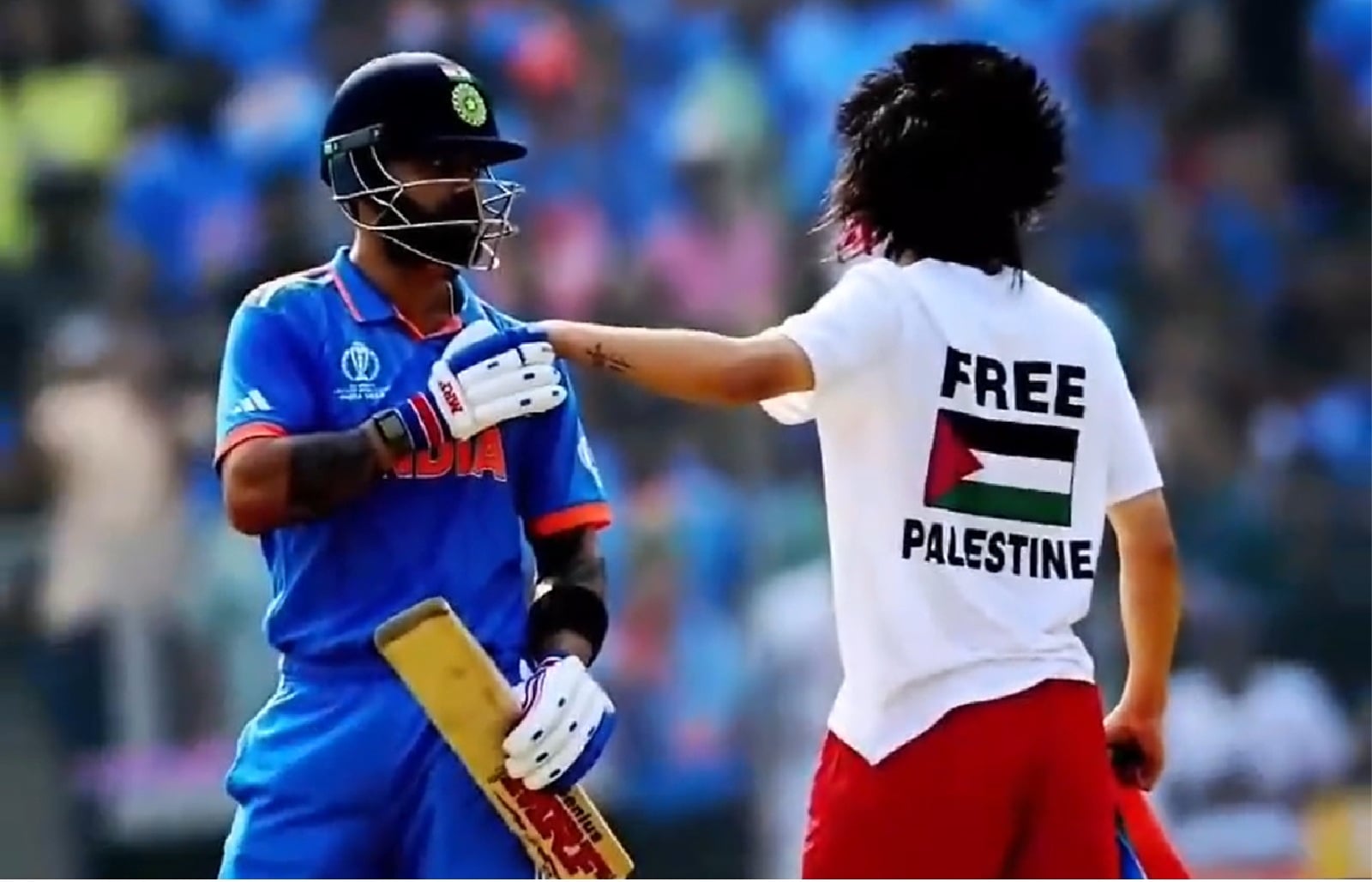
The October 7 attack by Hamas and the subsequent war in Gaza have redrawn global debates on Jews, Israel and antisemitism. India, long seen as a society without deep-rooted antisemitism, is now confronting imported ideological currents that complicate its political and intellectual landscape. The result is a growing divide between those who view Israel as a natural ally against radical Islamism and those who frame the Gaza conflict as part of a global anti-colonial struggle. Caught in this crossfire is a broader question: Is India beginning to absorb forms of antisemitism previously foreign to its social fabric?
Historically, India’s relationship with Jewish communities has been exceptional. Jewish groups in Cochin, Mumbai and Kolkata lived for centuries without facing the systematic persecution that marked Jewish life in Europe or the Middle East. They preserved their religious identity while integrating into local society, and India’s cultural and political structures never produced the antisemitic laws or social hostility seen elsewhere. This history became part of India’s civilizational ethos – an example of pluralism that sheltered minorities ranging from Jews to Parsis and Armenians.
Yet antisemitic ideas were not entirely absent. With colonial modernity and the spread of global ideologies, some conspiracy theories and anti-Jewish rhetoric entered India from abroad. Islamist networks tied anti-Jewish sentiment to the Palestinian struggle, while segments of the left adopted anti-Zionist frameworks that blurred the distinction between Israel, Zionism and Jews. These ideas circulated on the margins but never shaped mainstream politics. The October 7 attacks, however, have altered the landscape.
Because India has only a tiny Jewish population, debates about Jews and antisemitism do not resemble those in Europe or North America. They play out instead through foreign policy alignments, ideological identities and symbolic politics. The Modi government responded to October 7 with strong statements of solidarity for Israel, framing Hamas’s actions as unequivocal terrorism. Pro-government media amplified this line, and Hindu nationalist groups increasingly portray Israel as a “civilizational ally” – another ancient community long persecuted and now engaged in a fight against Islamist extremism. For these groups, supporting Israel is both a strategic necessity and a moral stance.
On the other side, leftist student organisations, intellectuals and Muslim groups have framed the Gaza war as a struggle against colonialism and oppression. Campus protests and academic statements denounce Israel as an apartheid state and accuse it of genocide, reflecting the dominant language of Western progressivism. These criticisms, though valid in parts, often slide into antisemitic territory, especially on social media. Claims that “Zionists control global politics,” that Jewish lobbies manipulate the media, or that Israel fabricated accounts of atrocities on October 7 mirror long-standing antisemitic tropes. Without significant Jewish communities in India to serve as living counterpoints, such rhetoric remains unchallenged and abstract.
The central dilemma is distinguishing legitimate criticism of Israeli policy from antisemitism, a challenge increasingly visible not only in India but worldwide. In some activist circles, critiques of Israel have become all-inclusive: denying that Israel was a victim of terrorism, dismissing documented accounts of killings and sexual violence, or reframing Hamas’s actions as resistance. Academic discussions often frame Israel exclusively through colonial or apartheid lenses, leaving little space for Jewish historical experience or the legitimacy of Jewish national self-determination. Antisemitism rarely features as a category of analysis in these debates.
At the same time, Indian social media has become fertile ground for imported conspiracy theories. Narratives about “Zionist control” of finance, Hollywood or Washington, popularized in Western far-right and Islamist spaces, are circulating widely among young Indians. These ideas resonate partly because they tap into anxieties about global power structures, inequality and Western influence. Given India’s enormous online population, the risk is not widespread antisemitic violence but the normalization of ideas India has historically resisted.
Deepening partnership
India’s approach to the Israel-Palestine conflict after October 7 will likely evolve along three paths. First, the India-Israel partnership will continue to deepen in defense, technology and counterterrorism. This institutional closeness will reinforce Israel’s place in Indian strategic thinking and may limit the impact of anti-Israel rhetoric on national policy.
Second, polarization is likely to intensify between pro-Israel Hindu nationalist groups and anti-Israel leftist and Muslim constituencies. Each side reads its own political identity into the conflict: Israel becomes a symbol of resilience and national security for one, and a symbol of settler colonialism and oppression for the other.
And finally, social media will remain the main vehicle for antisemitic content. Imported narratives about Jewish global power, shorn of nuance and historical grounding, could spread further among young people who lack direct contact with Jewish communities or deeper knowledge of West Asian history.
India’s strength has always been its ability to absorb global ideas without losing its pluralist core. The country’s historic lack of antisemitism is not accidental; it emerged from a civilizational ethic that allowed minority communities to coexist without fear. But this heritage cannot be taken for granted. The ideological battles unfolding after October 7 show how quickly imported narratives can reshape local debates, even in places where antisemitism has no historical roots.
The challenge before India is not simply managing diplomatic ties with Israel or responding to student protests. It is ensuring that debates on Gaza, Palestine and Israel remain grounded in facts, historical awareness, and moral clarity. Supporting Palestinian rights is entirely compatible with rejecting antisemitism or anti-Zionism. Likewise, backing Israel as a strategic partner need not mean endorsing every aspect of its wartime policy.
If India can sustain this balance, it could model a more mature and principled approach to a conflict that has polarized much of the world. If it fails, it risks importing forms of prejudice its own history has long resisted.
—