Are the Pahlavis About to Make a Comeback in Iran?
With the protests in Iran in their third week, many observers are asking whether the Islamic Republic—after nearly half a century in power—could face collapse. While it remains too early to predict such an outcome, the scale and persistence of the unrest raise an important question: if the Islamic Republic does fall, who, if anyone, is positioned to replace it? One figure increasingly discussed in this context is the exiled Crown Prince Reza Pahlavi.
Who Are the Pahlavis?
The Pahlavis were Iran’s ruling dynasty prior to the establishment of the Islamic Republic. Reza Shah Pahlavi founded the dynasty and ruled from 1925 to 1941, after which his son, Mohammad Reza Shah Pahlavi, reigned from 1941 until the 1979 revolution. Both figures remain deeply controversial, having left behind legacies marked by significant achievements as well as serious abuses.
Reza Shah is best remembered for establishing stability and central authority to Iran following the devastation of World War I. His son, Mohammad Reza Shah, oversaw a period of rapid modernization, including improvements in literacy and life expectancy, the expansion of women’s suffrage, and greater personal freedoms in areas such as dress. He also cultivated close ties with the West and was regarded as a key U.S. ally in the Middle East during the Cold War.
At the same time, the Pahlavi era was characterized by authoritarian governance. Under Mohammad Reza Shah, the secret police force SAVAK became infamous for its brutal suppression of political opposition. The shah also overinvested in the military and a narrow ruling elite while neglecting the economic and political grievances of broader segments of Iranian society. These tensions, combined with the economic collapse in the 1970s, ultimately contributed to mass unrest and the fall of the dynasty.
Following the revolution and the formation of the Islamic Republic, the Pahlavi family went into exile in the West. Mohammad Reza Shah’s eldest son, Reza Pahlavi, assumed the title crown prince and would stand as their symbolic heir should the monarchy ever be restored.
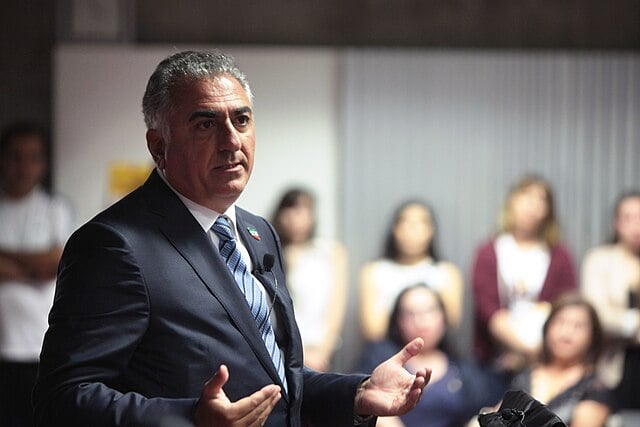
Today, as protests continue across Iran, Reza Pahlavi has taken on a symbolic leadership role from abroad. He has called on Iranians to sustain their demonstrations and has urged members of Iran’s security forces to defect from the Islamic Republic through statements and videos circulated on social media.
He has also written an op-ed in The Washington Post in which he positioned himself as a potential transitional authority following the fall of the Islamic Republic, pledging to facilitate a move toward a more democratic system. There have also been protesters chanting “Pahlavi barmigardeh”—”Pahlavi will return”—suggesting that at least some protesters view him as a symbol of an alternative future.
This raises a central question: is Reza Pahlavi, as the third generation of his family’s dynasty, a viable successor to the Islamic Republic?
Why Might He Be a Viable Successor?
One of Reza Pahlavi’s primary strengths lies in his international standing. Any post-Islamic Republic transitional authority would require significant support from the global community. Iran’s current instability is exacerbated by decades of international isolation, driven by the regime’s hostility towards the West, its support for terrorist groups, and its illicit nuclear program.
In contrast, the Pahlavis have had historically close relations with Western governments, and Reza Pahlavi has spent much of his life in the United States and Europe, where he has cultivated relationships with policymakers and opinion leaders. Were he to assume a transitional leadership role, Western governments would likely be inclined to relieve sanctions, re-establish diplomatic ties, and support efforts to stabilize Iran’s economy and state institutions.
Reza Pahlavi also offers a degree of name recognition that few other opposition figures possess. While many Iranians appear united in their desire to see the Islamic Republic end, the protest movement has struggled to coalesce around a single leader or organized political force. As a widely known figure with a recognizable legacy, Reza Pahlavi may be more capable than most of serving as a unifying symbol around which disparate groups could rally.
Why Might He Not Be?
Despite these potential advantages, significant obstacles stand in the way of any Pahlavi return.
The first is structural. Even if the Islamic Republic were to collapse, there are already actors on the ground—many with ties to the current regime—who are better positioned to assert control. Iranian author Arash Azizi has argued that any post-regime government is more likely to emerge from within Iran itself, possibly led by a more moderate clerical figure or a technocratic government formed from existing state institutions.
The Islamic Revolutionary Guard Corps (IRGC) would also likely play a major role in a post-Islamic Republic government. Over the decades, the IRGC has become entrenched within Iran’s economy and civilian infrastructure, giving it a stake in any new government. As a result, Reza Pahlavi could find himself sidelined even in the event of regime collapse simply because those ready to inherit power already have institutional leverage.
There is also the question of the Pahlavi’s popularity. Due to strict censorship and repression under the Islamic Republic, it is difficult to accurately gauge contemporary Iranian attitudes toward the Pahlavis. While some may associate the dynasty with relative social freedoms, others may remember its authoritarianism and may fear that their return would not deliver the political freedoms they seek.
Additionally, Reza Pahlavi’s close ties to Israel and the West may prove to be a liability rather than an asset. Memories of foreign intervention may remain potent in Iran, particularly the CIA-backed overthrow of Prime Minister Mohammad Mossadegh in 1953, which helped restore the Pahlavis to power. More recently, the brief but devastating 12-Day War with Israel in June, 2025 may have reinforced anti-Israel attitudes in Iran. For some Iranians, these associations may complicate Reza Pahlavi’s appeal rather than enhance it.
But Has the Narrative Changed?
That said, anti-Western sentiment in Iran may no longer hold the same power it once did. Modern Iranian history reveals a pattern in which blame for societal problems shifts dramatically in the lead-up to major political transformations.
Up until the 1960s, much of Iranian literature attributed the country’s problems to Islam and clerical influence. By the decades preceding the 1979 revolution, however, the narrative had changed. After years of Western-backed rule and aggressive modernization, it became easier to frame Iran’s struggles as the result of Westernization while Islam—having receded in public life—was increasingly idealized as a moral alternative.
As historian Nikkie Keddie wrote in Modern Iran: Roots and Results of Revolution (2006): “As Iran became more modern and Westernized, the evils of indiscriminate Westernization became more obvious, and as Islamic ways for many receded into the background, it was natural for many after 1960 to blame evils on Western ways and to turn for salvation to an idealized Islamic past.”
Today, after nearly half a century of Islamist rule that has failed to meet the needs of much of Iranian society, the narrative may be shifting once again.
During the 2022 “Women, Life, Freedom” protests, I attended a lecture by Iranian author Roya Hakakian. During the Q&A session, I asked if Western support for the movement would risk backfiring by reinforcing memories of imperialism and foreign interference. Hakakian disagreed, arguing that the generation shaped by Mossadegh-era politics has largely passed away. Most Iranians today, she suggested, have known only the repression of the Islamic Republic, making them more open to external support and engagement with the West.
Questions That Remain
Whether the Islamic Republic will fall remains uncertain. But if it does, a series of difficult and consequential questions will demand answers.
To what extent would the regime collapse? Would the clerical establishment be dismantled entirely, or would power merely shift from Supreme Leader Ali Khamenei to a more “moderate” ayatollah? What role would the IRGC play in shaping a successor government? How deep does anti-Western sentiment run among Iranians today, and how popular are the Pahlavis inside the country?
Equally important are questions about Reza Pahlavi himself. Does he envision his role strictly as a transitional figure, or as a long-term leader? If he were to assume authority, would he pursue a constitutional and democratic system, or would his rule resemble that of his father and grandfather? And, more broadly, is Iranian society prepared for a democratic transition after decades of authoritarian rule?
These unresolved questions underscore the complexity of Iran’s future. While Crown Prince Reza Pahlavi may be one of the most visible potential successors to the Islamic Republic, whether he is a viable one ultimately depends on forces beyond symbolism, exile politics, or historical legacy alone.