
Where Jews and Judaism Meet the Political Road!
Are We or Are We Not Experiencing a Religious Revival?
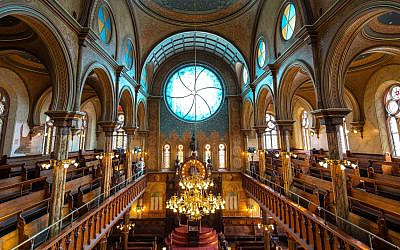 What lies ahead for American religion? New data on “religious stability” is raising some interesting questions. More directly, there are significant, even uncertain challenges facing American Judaism.
As Pew studies confirm:
Over the long term, organized religion has experienced a broad-based decline. The Christian share of the population fell from 78% in 2007 to 62% in the new study, while the unaffiliated share surged from 16% to 29% over the same 17-year period.
But in the short term, the numbers have held steady, especially when compared to data collected from 2007 to 2019. But, despite these signs of recent stabilization and abiding spirituality, other indicators suggest we may see further declines in the American religious landscape.
When unpacking the 2024 Gallop study on American religion, 45% of Americans described themselves as Protestant or “nondenominational” Christian; 21% as Catholic; and 10% as another religion, while 22% did not identify with any religion. In connection with smaller religious constituencies, these were the findings:
- 2% of adults identify as Jewish
- 5% as Latter-Day Saints (Mormon)
- Muslim, Buddhist, Orthodox Christian, and Hindu each registered as 1% or less.
- 6% of respondents did not name a specific religion or described themselves as “spiritual” or failed to answer the question.
The figures introduced above are each within one percentage point of their 2018-2020 levels. Overall, 69% of Americans identify with a Christian religion and 4% with a non-Christian religion.
Religious preferences remain distinctively different between younger and older Americans. More than three in 10 younger adults — those in Generation Z (aged 18 to 27 in 2024) and millennials (aged 28 to 43 in 2024) — have no religious preference, compared with about one in eight baby boomers and fewer than one in 10 of those in the Silent Generation (who were aged 79 or older in 2024). Today, the number of “Religious Nones” rival Protestants as the largest religious subgroup within the United States.
The findings of “stability” noted above, follow years where the data consistently pointed to a downsizing of congregations. But the picture moving forward is less clear, especially in connection with Christianity:
At the beginning of the 21st century, 84% of U.S. adults identified with a Christian religion, according to combined 2000-2004 Gallup data. Two decades later, the figure is 69%. If substantial shares of adults in future U.S. generations continue to eschew religion, Christian religious identification will drop into the 50% range once the millennial generation becomes the oldest generation of Americans, if not sooner.
How might we explain the religious future?
While there may be some general influencers impacting American religious behavior, religious sociologists clearly offer different reasons for specific faith communities. There is significant conjecture, even disagreement, concerning the future of Christianity in America.
In connection with Judaism, some of this stabilization, and even growth, can be attributed to the “Surge” . The characteristics of this new momentum include:
- Increased Affiliation: There has been a notable increase in affiliation and engagement with Jewish institutions like Hillel, synagogues, and Jewish Community Centers (JCCs).
- Desire for Community: A significant driver is a craving for community, connection, and meaning, especially among young adults who may feel isolated from their secular peers.
- Demand for Information: There is a strong desire for information, particularly regarding antisemitism and the Israeli-Palestinian conflict.
- Shifting Engagement: While the overall surge is notable, the forms of engagement differ across demographics. For example, young adults are seeking non-political spaces, while parents are focused on finding family-oriented communities.
What are the contributing factors to this acceleration of engagement?
- Antisemitism: The rise in antisemitic incidents is a major catalyst for increased Jewish involvement.
- Concerns about Safety: A majority of American Jews report feeling less safe, with nearly six in 10 changing their behavior due to fear, which has spurred a response of greater community solidarity.
- Generational Differences: Younger Jews, particularly on college campuses, have shown a strong, though sometimes divisive, reaction to antisemitism and the events in Israel, leading to increased Jewish activism and engagement.
- Communal Response: The community is responding by creating more opportunities for engagement, but research indicates a gap exists for certain age groups and communities who are not finding suitable options.
The Surge and its Challenges:
- Defining the Surge: This transformational time involves individuals from all age groups and backgrounds, each with unique needs and expectations. For instance, older adults are looking for age-appropriate community, while parents are seeking resources for their children.
- Sustaining Engagement: A key challenge is determining how to sustain this renewed interest beyond the current moment of heightened awareness.
- Addressing Specific Barriers: Some groups, including Jews of color, are experiencing the surge differently due to pre-existing barriers to inclusion and a need to see more diversity and equity within Jewish institutions. Many individuals who are experiencing antisemitism are not reporting it, indicating a possible lack of trust in institutions or a feeling that reporting will not generate any new outcomes.
Does the “surge” also suggest that Judaism here, or across the globe, is in fact a growth religion? Pew reports that between 2010 and 2020 “the Jewish population did not grow or decline substantially (by at least 5 percentage points) in any country or territory.”
What do we know, the factors that are likely to shape the Jewish future:
- The Growing Reality and likely Growth of the
“Religious Nones” - The Rise of Privatized Judaism
- The Growth of On-line “National” Jewish Synagogues
- The Presence and Growth of Boutique Jewish Organizations
- The Decline, and in Certain Situations, the Closure and/or Merger of Specific Legacy Institutions, i.e., Denominations-Synagogues-Schools and Organizations
- A Strong Commitment to Innovation and Experimentation.
What don’t we know?
- The Sustainability and Impact of the “Surge”.
- The Role that Family/Community Foundations and Individual Funders Will Play in Underwriting and Supporting both Existing and New Ventures
- The Future Role of Federations in Supporting Synagogues, Schools, and Other Expressions of Jewish Education, Spirituality and Religious Practice.
- The Rise of New Organizing Models of Community-Religious Expression-Jewish Learning and Culture, etc.…
- The Unknown Impact of such Factors as Israel, Anti-Semitism, and American Politics on Jewish Identity and Institutional Expression and Engagement and Communal Activism.
- How Significant and Continuous will be the Current outmigration from Major Metropolitan Areas and What are the Specific Implications for the Jewish Community?
- The Growth of Jewish “Spirituality” and the Various Forms of New/Alternative Jewish Religious Expressions.
- The Impact of Technology on American Religious Life and Practice.
- Will there be another American Great Religious Reawakening?
Five Major Challenges Before Us, Among Others!
- The Overriding Concern over the High Cost of Jewish Living and its Impact on Jewish Families
- The Spiraling Costs of Jewish Institutional Life and its Particular Impact on our Synagogues-Camps-Schools, etc.
- The Paralysis: Breaking with Old Cultures and Practices; helping Jewish Institutions and Synagogues to “Move on and Breakout!”
- Dealing with Political Divisions Amongst Us; Creating a Framework of Civility and Trust
- Tackling the Big, Bold, and Challenging Questions: Can We Envision New Ways of “Doing Jewish” and Do We Have the Leaders to Take Us There?
Related Topics
Related Posts