
Argentina Removes Judge for Antisemitism
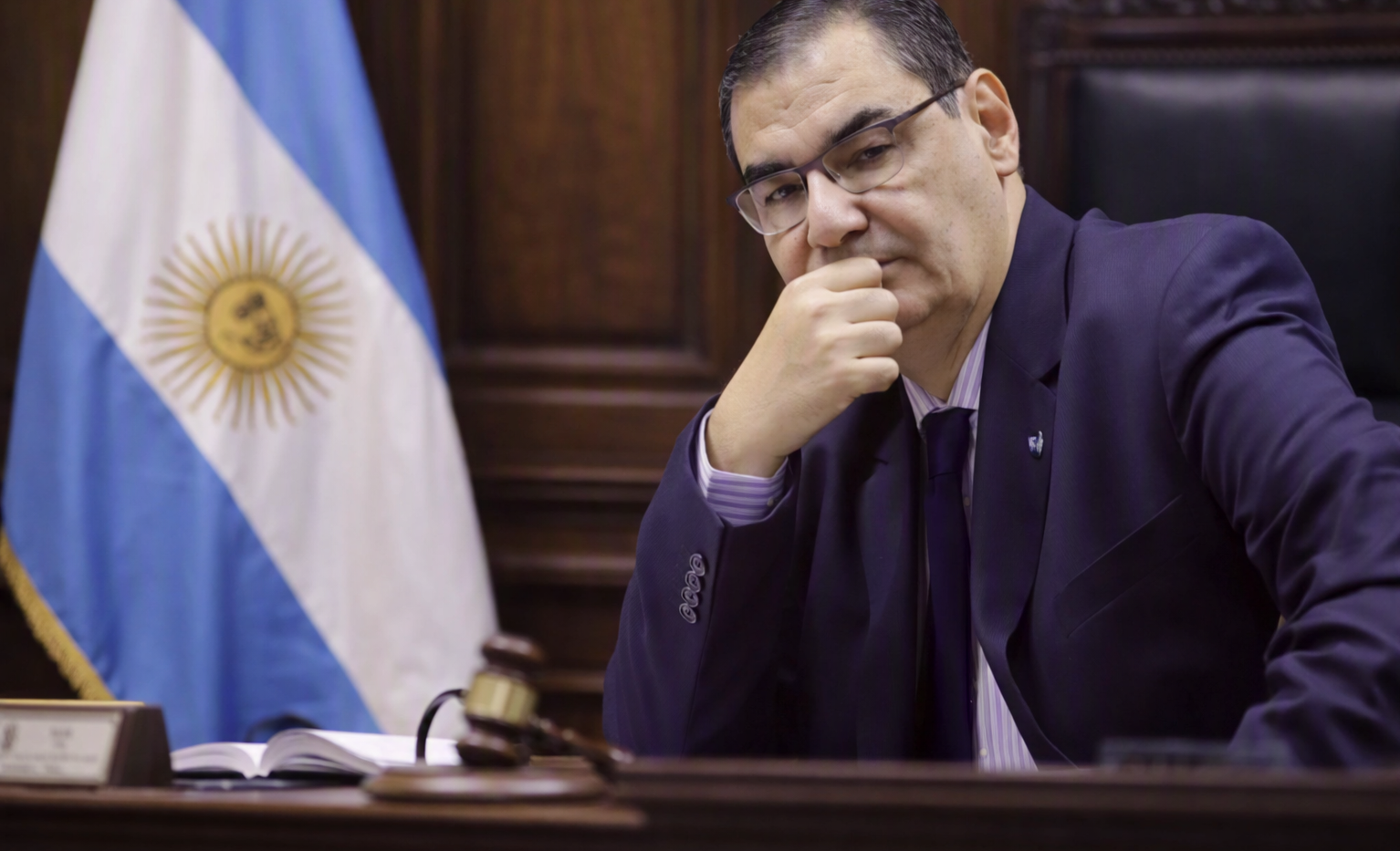
For the first time in the history of Argentina’s judiciary, a federal judge has been removed from office for antisemitic statements.
On August 14, 2026, the National Jury for the Prosecution of Magistrates unanimously decided to dismiss Dr. Alfredo Eugenio López, head of Federal Court No. 4 in Mar del Plata, for misconduct in the exercise of his duties.
The case did not concern political opinions about Israel or the Middle East, but rather a repeated series of social media posts in which the judge referred to Jews as a “race of vipers,” used the Nazi term juden, revived the medieval accusation of deicide (the killing of Jesus Christ), and publicly questioned the national loyalty of Argentine Jewish citizens.
The ruling marks a milestone that goes beyond procedural law. It is an institutional recognition that the judiciary is not immune from ethical scrutiny when a judge, leveraging the authority of office, publicly fuels hatred against a minority.
Expert testimony included in the proceedings highlighted that López’s expressions reproduced at least four overlapping historical tropes of antisemitism: the religious charge of deicide, animalistic dehumanization, Nazi terminology, and the myth of dual loyalty — the latter rooted directly in the 1935 Nuremberg Laws, which relegated German Jews to second-class citizenship.
The tribunal was explicit in rejecting any interpretation that reduced the case to a dispute over freedom of expression. The judgment noted that Argentina’s Constitution protects even speech that offends, but that judges bear an additional responsibility: to guarantee not only impartial rulings but also the founded confidence that litigants will be judged without prejudice based on origin, religion, or community. That confidence, the jury concluded, had been irreparably broken.
A Country with a Heavy Past
Argentina hosts the largest Jewish community in Latin America and has endured two of the deadliest terrorist attacks against Jewish targets outside Israel.
In March 1992, a car bomb destroyed the Israeli Embassy in Buenos Aires, killing 29 and injuring hundreds. Two years later, in July 1994, another bombing struck the AMIA Jewish community center, leaving 85 dead and hundreds wounded — the worst terrorist tragedy in Argentina’s history.
Decades later, both cases remain largely unresolved. The wound deepened further in January 2015 with the death of prosecutor Alberto Nisman, found dead hours before presenting evidence to Congress alleging that government officials had negotiated to cover up Iran’s role in the AMIA attack. More than a decade on, the circumstances of his death remain contested, symbolizing the cost of pursuing justice for crimes against Argentina’s Jewish community.
Against this backdrop of bloodshed, prolonged impunity, and the unresolved death of a prosecutor, the removal of Judge López carries particular symbolic weight. It is not merely a disciplinary case but a sign that, decades after Buenos Aires and AMIA, and more than ten years after Nisman’s death, Argentina’s institutions can still respond when antisemitic prejudice infiltrates their ranks.
Why the Decision Matters Beyond Argentina
The Argentine Forum Against Antisemitism (FACA) called the ruling a “historic day,” a description that does not seem exaggerated.
At a time when international organizations and independent observers report a global resurgence of antisemitic hate — often disguised as political criticism of Israel — the Argentine jury’s decision offers a clear distinction. None of the seventeen messages examined in the case criticized Israeli government policy or military decisions. All targeted Jews as people — their loyalty, belonging, and dignity — echoing traditions of hate that predate the State of Israel by centuries.
This distinction is the case’s most enduring contribution: demonstrating that legitimate political debate about the Middle East must be separated from the perpetuation of stereotypes rooted in Europe’s oldest antisemitic traditions. A judge may disagree with the policies of any foreign government. What he cannot do is use the authority of his office to question whether his Jewish compatriots truly belong to the nation.
By removing Dr. López, Argentina did not erase the past or restore the lives lost in the embassy, AMIA, or prosecutor’s office. But it proved that the same society that endured decades of antisemitic violence and impunity can also build institutions willing to declare, unequivocally, that the robe does not shield prejudice.
It sets a precedent aligning the judiciary with the Constitution, republican principles, and international law — one that should inspire the region and the world.
Source: Clarita Maia, a legislative consultant for the Argentine Senate and holder of a doctorate in Law from the University of São Paulo.
Originally published in CrusoÉ magazine, Brazil