
As Kazakhstan Joins the Abraham Accords, Jewish Americans Should Engage
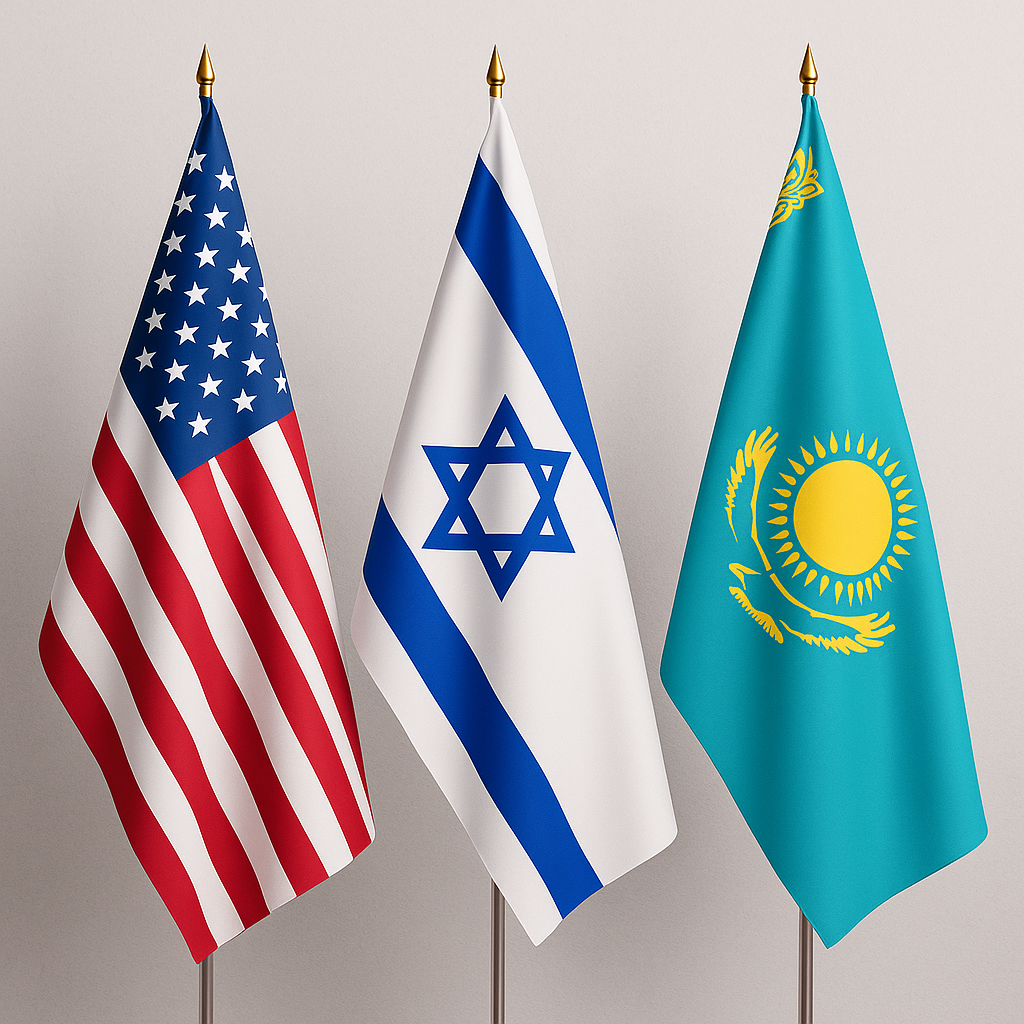
Announced at the C5+1 summit personally hosted in Washington by President Donald Trump, Kazakhstan’s decision to join the Abraham Accords expands the framework beyond its origins as a series of Middle Eastern normalization agreements with Israel. At a time when Israel faces increasing diplomatic isolation, President Kassym-Jomart Tokayev’s embrace of the Accords is a notable gesture of friendship and legitimacy. Moreover, Kazakhstan has maintained active diplomatic relations with Israel since 1992, shortly after gaining independence, with a long and proud record as a safe and stable home for its own Jewish minority. Jewish Americans should embrace this catalyst to include Kazakhstan and other Accords members in the economic, institutional, and communal support that the community has long provided for Israel.
Economic Development and Investment
Since before independence, Jewish Americans have invested in Israel not only with the expectation of tangible financial returns but also an intangible commitment to the country’s prosperity, security, and vibrancy. Their contributions, even and especially at challenging moments, helped to lay the groundwork for the start-up nation’s dynamism and innovation.
Kazakhstan’s economy, the largest in Central Asia, offers a broad range of partnership opportunities and a diverse, highly skilled workforce. Buoyed by new investment, burgeoning trade, and rising domestic demand, the International Monetary Fund projects growth of 6% in 2025. The impending removal of Kazakhstan from the Soviet-era Jackson-Vanik Amendment, which unjustly continued in force even after independence, clears the way for permanent normal trade relations with the United States and removes a complicated question for Kazakhstan’s relationship with the Jewish American community.
Located at the heart of the “Middle Corridor,” Kazakhstan serves as a vital hub for trade and energy across Eurasia. Rich in natural resources, including oil, uranium, tungsten, lithium, and other critical minerals, the country is investing heavily in mining, logistics, agriculture, and digital transformation. Strategically, it offers an increasingly viable alternative to China as a source of the critical minerals powering the global economy. As a major agricultural producer, the country also seeks to draw on Israel’s successful experience with agritech, irrigation, and water management.
Joint ventures combining expertise and investment from the United States, Israel, Kazakhstan, and the Gulf would foster diversification, development, and resilience, along with deeper geopolitical and diplomatic integration. Continued growth in the energy, mining, and logistics sectors in turn will support investment in priority areas such as fintech, artificial intelligence, health care, real estate development, and higher education.
Diplomatic and Institutional Relations
Kazakhstan’s entry into the Abraham Accords enhances its successful diplomatic approach of multivector outreach, interethnic harmony, support for conflict mediation, and diversified trade relations. The country has long positioned itself as a mediator in international affairs, notably through its hosting of the Astana Process on Syria.
Jewish American organizations, including federations, business councils, advocacy groups, policy institutes, and think tanks, can strengthen ties with Kazakhstan’s diplomatic missions in the United States and incorporate Kazakhstan into discussions of global security, energy diversification, counterextremism, and regional development. Joint forums involving Kazakhstani representatives, United States officials, and Jewish community leaders can help identify areas of shared strategic concern, while collaborative initiatives can strengthen investment, educational exchange, and cultural ties.
The well-developed world of Jewish philanthropy can support social and cultural projects across a wide range of sectors. Partnerships with Kazakhstani universities and research institutions could advance priority fields such as energy, mining, logistics, water management, and information technology, as well as international relations. Exchange programs could bring Kazakhstani students together with their Jewish American peers, strengthening academic cooperation and mutual understanding. Cultural initiatives could help preserve the long heritage of the country’s Jewish community and its broader history as a center of exchange along the Silk Road. Support for health care would demonstrate a concrete concern for the well-being of Kazakhstanis.
A Shared Heritage
A distinctive feature of Kazakhstan’s participation in the Accords is its long established and well-integrated Jewish community within a Muslim-majority society. Vibrant synagogues, schools, and communal institutions operate in Almaty, Astana, and several other cities. During World War II, Jews fleeing the Nazi invasion found safety in Kazakhstan, and many of their descendants have maintained a cohesive and stable communal life. Predominantly Ashkenazi, they share a historical trajectory familiar to many Jewish Americans, whose families created new lives after escaping Tsarist or Nazi persecution.
Engagement with this community, through educational exchanges, synagogue partnerships, or cultural programs, can strengthen this historical connection and bolster ties with Kazakhstani society. Collaboration with the Kazakh American diaspora also can promote mutual understanding within the United States and serve as a model for constructive engagement with the homeland.
A Strategic Opportunity for Regional Engagement
Kazakhstan’s entry into the Accords presents an opportunity for an emerging United States-aligned economic, diplomatic, and security framework in the Greater Middle East. This flexible, informal arrangement would serve the complex interests and priorities of all involved. Drawing from their own long and varied experience, Jewish Americans can play a key role in supporting this process, fostering multilateral, close, lasting, and mutually beneficial relationships with Kazakhstan.