Asking Forgiveness from non-Jewish Israelis
When we here in Israel soon gather for the Tishrei holidays and examine the past Hebrew calendar year’s deeds, including interpersonal relationships, we’ll most likely focus on our familiar – Jewish – environs. There are good reasons why we should also do so vis-à-vis non-Jewish Israelis.
The High Holidays Amida prayer shows the way. Conservative Movement wording translates the relevant passage as “may all humanity form a single fellowship to do Your will with a whole heart,” while one prominently recognized Orthodox translation uses the term “single society.” The point is the same: we need to strive for unity that is broad – not just with those who are like us – while working toward common goals.
Succot, on which we are commanded to welcome guests – Ushpizin – particularly focuses our attention on this universal message. Abraham, father of our people and guest number one to the Sukkah, serves as our ultimate role model in the importance of making strangers feel welcome.
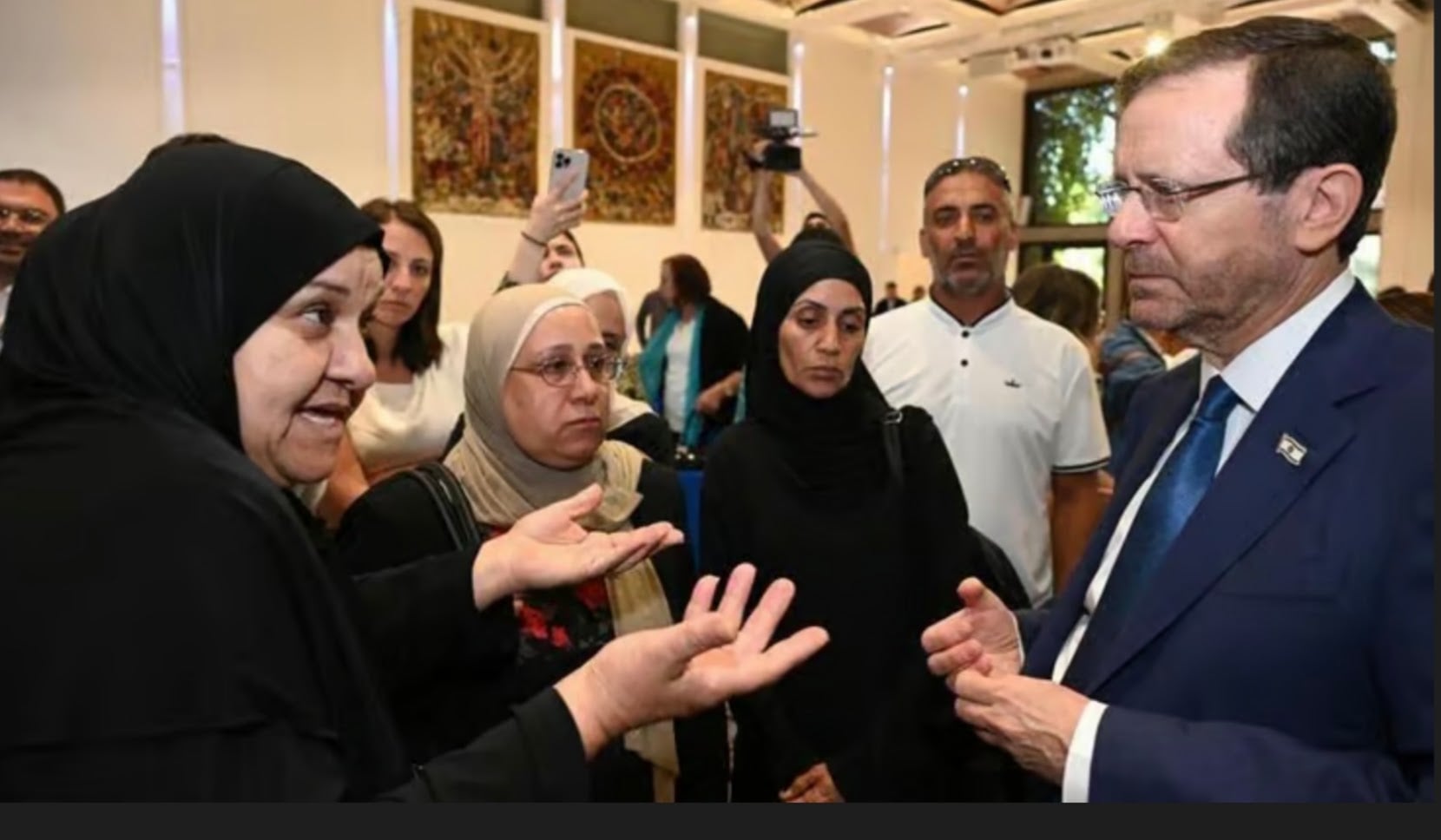
In our current events reality, I’m of course referring primarily to Israel’s Arab citizens when I say “strangers” (I’m fine with Tanach’s contextual meaning of the word: minorities). To better understand why we should take a step toward them, it’s enough to have a glance at the government’s five-year plan for advancing the Arab community’s socio-economic status.
Also known as Government Resolution 550 from October 2021, the vital program is about to expire. This, without knowing what – if anything – comes next. The issue isn’t being raised at all in the election campaign’s mainstream discourse, even though the Arab community accounts for 21 percent of Israel’s population.
Circumstances surrounding implementation of this five-year plan aren’t necessarily transparent for the public to fully see. What we do know is that since adoption – following the success of its predecessor, which was approved in December 2015 and constituted Israel’s very first such program – about 22 percent of its budget found its way elsewhere.
This occurred concomitant with its very concrete results in integrating the country’s Arab community. These include a jump in the number of its students enrolled in Israeli institutions of higher learning (around their proportion in the general population), as well as a significant increase in the employment of Arab women – today only 4 percentage points below the government’s 2030 goal of 53 percent.
All this good is happening while challenges also grow in the law enforcement sphere. It’s not hard to understand why some of the budget was sent in that direction: the Arab community accounts for at least 80 percent of those murdered in Israel in 2026.
Here is the place to ask a cardinal question: do we – Israel’s Jewish majority – even want the country’s Arabs to integrate?
Assuming that most of us are willing to go along – enthusiastically or not, depending on worldview – a follow-up: have we even noticed that this integration is taking place? My guess: not necessarily; hence this post, at this particular time in the Jewish calendar.
I’ve already touched upon some achievements of the five-year plan. There’s more elsewhere: according to a study released in May by Tel Aviv University’s Moshe Dayan Center for Middle Eastern and African Studies, about 75 percent of Arab society is in favor of volunteering for the government’s non-defense-related national-civic service. Around 70 percent of Arabs between the ages of 18-34 support it.
Statistics from the Authority for National-Civic Service reflect this trend. They point to steady growth in the number of volunteers, including during the stormy years of 2023-25.
Developments in East Jerusalem, a blur for many Israeli Jews, offer more insight in the integration context. About 50 percent of Arab students from that region now study in Israeli institutions of higher education – 70 percent of them women. Apropos: according to the Jerusalem Institute for Policy Research, the proportion of East Jerusalem Arab women in the Israeli work force rose between 2018 and 2025 from 18 to 33 percent.
Female empowerment in Arab society is also taking place in the country’s south.
According to data conveyed during a July conference here, the number of Bedouin women in the work force jumped from 23 to 39 percent between 2005 and 2025. In addition, by 2021 Bedouin women accounted for 81 percent of all those from their community studying for a bachelor’s degree. Connect the dots: 75 percent of Bedouin women with an academic degree are employed.
Unfortunately, not everything is going smoothly. According to the non-profit “Alfanar,” the proportion of Israeli Arabs aged 18-24 who are neither studying nor working spiked to 34 percent in 2025 (from 25 and 26 percent in 2023 and 2024, respectively).
The Torah mentions our duty to tend to the well-being of the “stranger” living in our midst at least 36 times. In this spirit, according to my understanding of our tradition, we are not limited to seeking forgiveness only from Jews; this Yom Kippur obligation applies to any individual we’ve harmed. We should do so with our Arab citizens – for not better promoting their integration.
It also wouldn’t hurt to signal that our next government, whoever leads it, intends to advance a third five-year plan. To the attention of claimants to the throne on October 27.
Chag sameach.