

Jewish values, leadership, and honest conversation
At the Junction of Simchah and Tza’ar
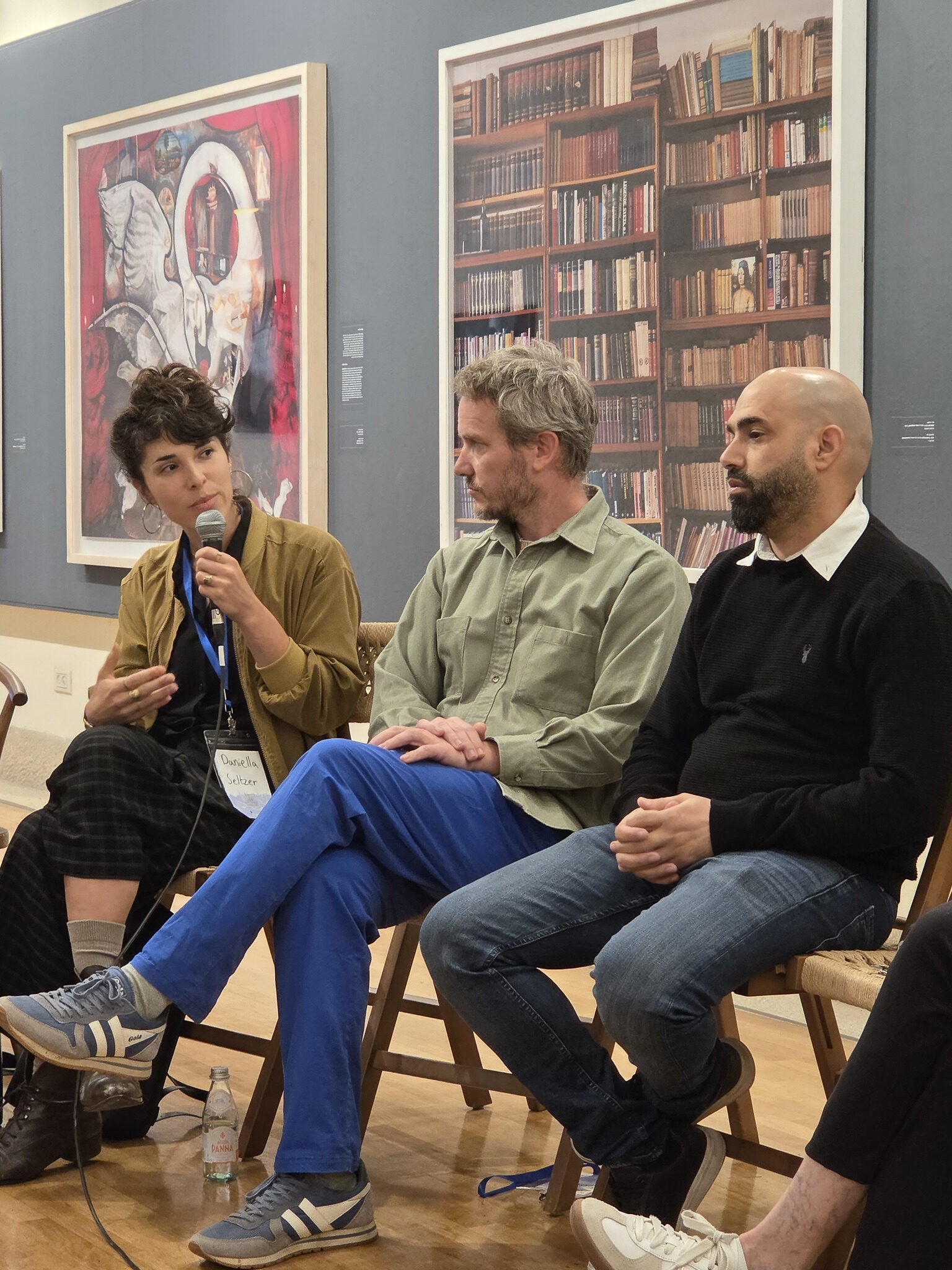
Shai Doron Leadership Fellows of the Jerusalem Foundation, Photo by author
I came to Israel this week for a wedding.
Jennifer and I have been friends since grade 7. Over the decades we have shared simchas and sorrows, more of both than either of us could have imagined as kids. On Tuesday night her son was married. She has six children, and this was her first wedding. She is in remission, thank God. When she saw me, she hugged me in a way that said everything. I was just as glad to be there.
I watched the glass shatter under the chuppah. A moment later, everyone was dancing.
That turned out to be the shape of the whole week.
On Wednesday I spent the day with the Jerusalem Foundation. We met the fellows of its Shai Doron Leadership Fellows Program, and people doing the daily work of repairing this city: rescuing food that would otherwise be thrown away, building a shared society between Jews and Arabs, helping Arab residents of East Jerusalem claim the services and rights that are theirs. In Beit Hanina we toured the new sports complex, the first in East Jerusalem, and met five women working to improve the lives of women in their community. They did not pretend it was easy. They also had no intention of stopping.
And I heard Sarit Zussman tell the story of her son.
Ben Zussman was 22, a reservist in the Combat Engineering Corps. He was killed in Gaza on December 3, 2023. He had left a letter for his family, in case. “I don’t allow you to sink into sadness,” he wrote. He asked them to turn the shiva into “a week of friends, family, and joy.” “Laugh, listen to stories, meet all my friends you haven’t seen yet.”
Sarit told us a midrash. A poor man, working as a day laborer, is approached by Elijah the prophet. Elijah offers him seven good years. He may have them now, or at the end of his life. The man goes home and asks his wife. She does not hesitate. Now.
Sarit said she would make the same choice. Better to have had Ben, and all those years of simchah, than never to have had them at all.
She and her husband Zvi have decided, in her words, “to live. To fight, not with weapons but with words, and through telling stories.” Ben’s family and friends, together with the family of his cousin Yosef Malachi Gedalia, who also fell, are dedicating a Magen David Adom intensive care motorcycle in their memory. Two young men who gave their lives are being remembered by a vehicle built to save someone else’s.
On Thursday I went south, to absorption centres in Beer Sheva and Ashkelon. I met new olim from France, Belgium, Peru, Argentina, Russia and Ethiopia. They have looked squarely at everything happening here and decided to build their lives in the Jewish homeland anyway. Again and again, they told me how grateful they are for the welcome they have received. As chair of the Jewish Agency’s Aliyah and Klitah Committee, I read the reports. Sitting across the table from the families themselves is something else entirely.
All of this unfolds as Israel goes to the polls next Tuesday. No one knows what will happen; the likeliest outcome is a stalemate and yet another election. The war with Iran is on pause, and many here expect it to resume after the American midterms. Jew-hatred is rising around the world, including at home in Canada. Every conversation this week carried that weight.
Simchah and tza’ar. Joy and sorrow. Real life is lived at the junction of the two.
Just weeks ago, we celebrated Sukkot, and the Torah’s command was almost defiant:
“You shall rejoice in your festival… and you shall be only joyful.” (Deuteronomy 16:14–15)
That little word ach, “only,” is usually a word of limitation in Hebrew. Here it limits everything except joy. The Torah is not naïve about harvests that fail, enemies at the border, or an empty chair at the table. It knows, and it commands joy anyway. Our halakhah goes further: when a festival arrives, it cuts short the shiva of one who is mourning. Life takes precedence over grief.
That is what the wife in the midrash understood. It is what Sarit Zussman understands. You do not wait for the uncertainty to pass before you take hold of the good. You take it now, because now is what you have.
Today I had brunch with a friend who is optimistic about the elections. I wish I shared that optimism. I don’t.
But I leave this week optimistic about the Jewish people.
If a mother who has fought her way back to health can dance at her son’s wedding; if a mother who buried her son can stand before strangers and choose joy; if five women in Beit Hanina can keep working for a better future; and if families from Buenos Aires and Brussels and Gondar still believe enough to come home to the Jewish state, then I, too, can do what Sukkot asks of us. I can rejoice in all that is ours.
So, I am.
Shabbat shalom from Jerusalem.