
Attack of the Drones
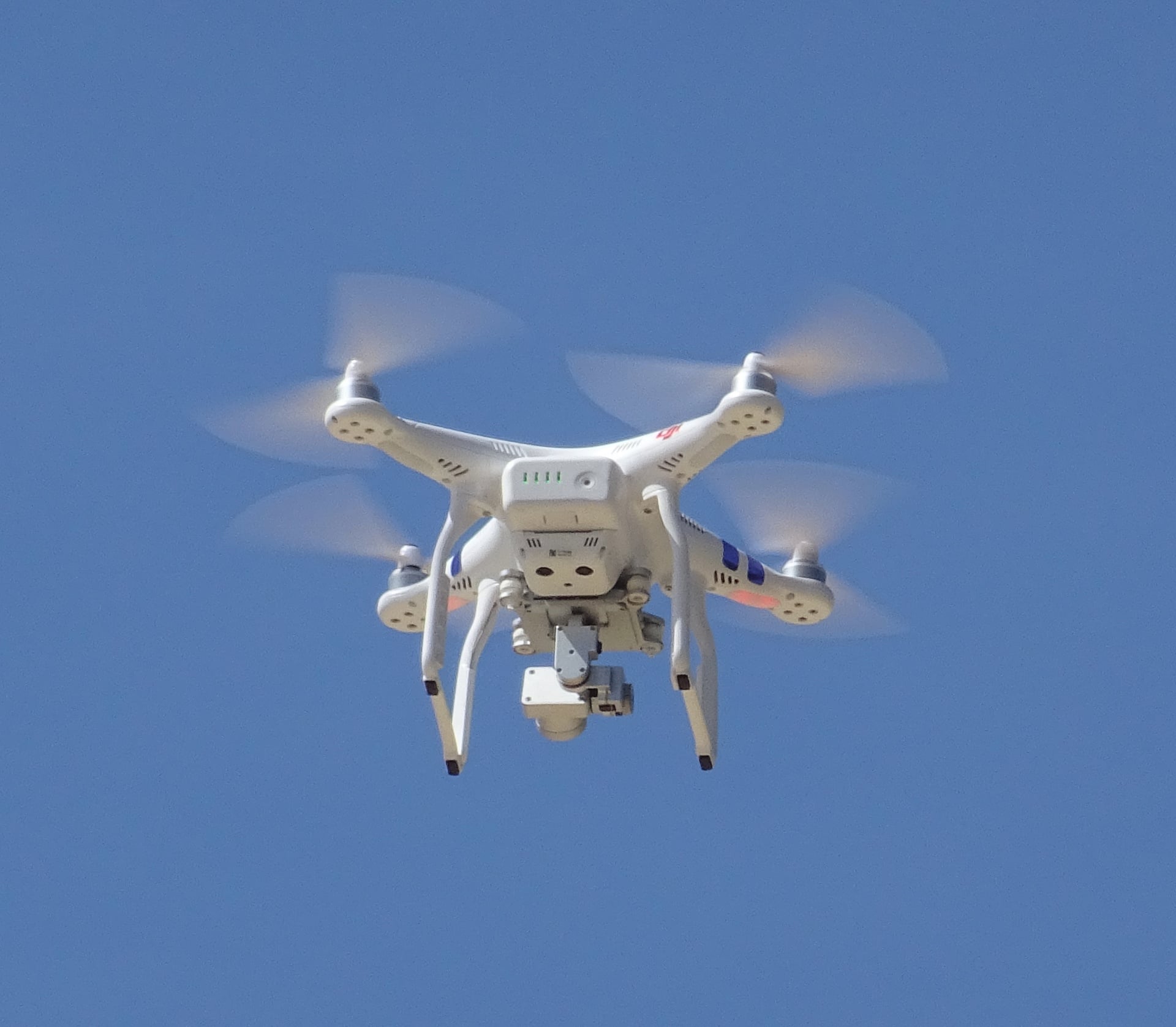
Drones. They have changed the way in which modern warfare is conducted: saving soldiers’ lives by enabling attack without physical presence, yet making civilians more vulnerable to attack from the skies. They also offer significant new possibilities in the fields of agriculture, medical supply delivery, rescue operations, and more.
But I want to discuss a harmful effect of drones, one that is not talked about enough.
It looks as if drones are increasingly making their way into our lives, and like other technology that has been invented and then thrust irresponsibly upon the human race without sufficient thought, the adverse consequences are not being taken into account. Science fiction movies like to depict the skies whizzing with flying objects. While I enjoy the busy look of these futuristic cities, inside I am cringing at what I greatly fear is an oncoming disaster for the human race.
I’ve been against drones from the start. I remember many years ago meeting a woman who told me she had just bought three drones. When she unboxed the first one and activated it, it flew a couple of hundred metres, landed on a road, and was run over by a car. I confess that I felt great schadenfreude on hearing that… my nasty thought was ken yirbu (may this only increase).
Why am I so against drones? You might think I am referring to the invasion of privacy. It’s definitely an issue, don’t get me wrong. One day recently I heard a humming near my large living room window that overlooks the valley in the Armon Hanatziv neighbourhood of Jerusalem. Approaching the window, I saw a drone hovering not far from it, level with my window. That was a frightening experience; I felt that my private space had been violated. Who might be watching, or even filming me, as I walked around my house in my pyjamas?
This is not what I expect to happen in a democratic country. The gemara in Bava Batra (2b and onwards) has a lengthy discussion of how the feeling that someone is peering into your personal living area is potentially an actual, legally recognized damage. Now I understand why.
But discussions of privacy are already being held, both legally and in opinion pieces. It is another aspect that I’d like us to think about: the invasion of our sky, which represents the even further encroachment of tech into our spiritual space.
The Spiritual Importance of the Sky
During the Covid years, my saving grace was the sky. No matter how masked or isolated I had to be elsewhere, I could always go out to my balcony, sit on my old couch, and contemplate the view of the sky. It was a place to reconnect with myself and with God. A visiting Italian friend told me she could sense the shechinah on my porch.
The sky was immune to the ills of Covid, and to other human malaises. Apart from an occasional plane, birds, not humans, were its natural denizens. Nearby trees reached for the heavens with their green fingers. Looking into the heavens, I could breathe.
Then, one night, on one of the Jewish festivals, I was out on my balcony meditating. To my great disappointment, my heavens had been taken over. A drone buzzed around the perimeter of the sky for forty minutes. Eventually it went away. But I realized that even this could be taken from me, even my big sky.
This for me is the danger I want to note. While it is still relatively rare, the more Amazon drops its packages using drones[1], the more they become a commonplace way in which to transport goods, the narrower the patch of sky we humans will have. And we need that patch to be as large as possible – for our souls.
Remember the story of the battle with Amalek at Rephidim? (Ex. 17:8-13). In this week’s parsha, Ki Tetze (Deut. 25:17-19) Moses reminds the Israelites of that event, in the verses we remember each year as parshat Zachor. How was that battle against evil won? Not by military might. Moses raised his arms to heaven, supported by Aaron and Hur, and the battle was won. Why? Not because of some voodoo but because raising their eyes to the skies, the Israelites remembered their Father in Heaven. Would they have gained that level of spiritual consciousness had the sky been full of Amazon couriers?
Rebbe Nahman of Breslov speaks of the importance of looking up at the sky. Spotting one of his followers rushing by in the marketplace, he asked, “Have you looked up at the sky this morning?” “No, Rebbe, I haven’t had the time,” replied the follower. The rabbi told him: “Believe me, in fifty years everything you see here today will be gone. There will be another fair – with other horses, other wagons, different people. I won’t be here then and neither will you. So what’s so important that you don’t have time to look at the sky?!”[2]
But, unless we are very careful, we will lose that precious realm to machines, and yet another resource will be polluted due to human greed and blindness. To put it in the terms coined by Rabbi J.D. Soloveitchik in The Lonely Man of Faith: Adam I (majestic man, or what we might term technological man) wins another battle over the homo religious, Adam II.[3] Instead of the sky reminding us of our smallness compared to the infinite, which is its spiritual power, seeing the sky awash with the work of our hands will only serve to increase human hubris.
As I mentioned earlier, drones can save lives. They should be limited to these areas: medical supply delivery, search and rescue, and military operations. Not for delivering iPhones today, and tomorrow pizza.
Lawmakers, rabbis, thinkers, anyone with a soul – let’s fight for our sky against the evils of wanton and thoughtless technology. It is worth it.
– – –
[1] The Amazon service “Prime Air” is now up and running – see https://www.aboutamazon.com/news/transportation/amazon-drone-deliver-package (the photograph of a drone landing in a backyard looks to me straight out of a science fiction horror movie!).
[2] Paraphrased from the story in The Empty Chair: Finding Hope and Joy by Chaim Kramer (Breslov Research Institute, 1994). In other versions of the tale, Rebbe Nahman asked him. “Have you looked at the colour of the sky?” (The gemara in Menahot 43b teaches us that the tzitzit were dyed blue so that we would think of the colour of the sea and the sky which would make us think of the Throne of Glory.)
[3] J.D. Soloveitchik, The Lonely Man of Faith, Tradition 7:2, 1965.