Australia’s Hate Speech Law: A Joke on Jews
Religious shields turned into swords of unequal protection
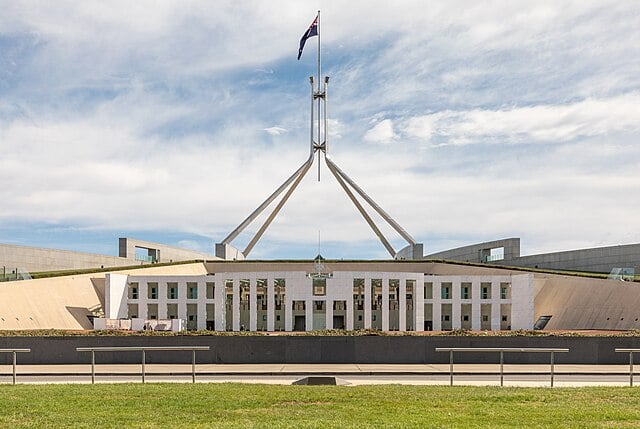
In Canberra’s echo chambers, politicians hastily assembled in January 2026 for a special sitting, unleashing the Combatting Antisemitism, Hate and Extremism Bill upon us. They touted it as a fortress against bigotry. Central to this is the new racial vilification offense in Section 80.2BF of the Criminal Code: it outlaws publicly inciting hatred based on race, color, or national/ethnic origin, if it leads a reasonable person in the targeted group to fear harassment or violence, with up to five years’ imprisonment.
But here’s the rub: a defense absolves those merely quoting religious texts for teaching or discussion. What qualifies as such? The bill mumbles vaguely, leaving judges to analyze intentions in a fog of subjectivity. This exemption looks like a gateway to trouble, shielding the pious while exposing the vulnerable, as if sanctifying scripture were a license to lob verbal grenades under the guise of enlightenment.
Turn to the Qur’an for a stark illustration. Surah Al-Baqarah 2:65 recounts a divine rebuke to Sabbath transgressors among the Children of Israel: “And you had already known about those who transgressed among you concerning the sabbath, and We said to them, ‘Be apes, despised.’” Surah Al-A’raf 7:166 reinforces: “So when they were insolent about that which they had been forbidden, We said to them, ‘Be apes, despised.’” Ibn Kathir’s tafsir details this as a literal punishment for cunningly evading fishing bans on the holy day—a transformation into despised creatures, a warning against deceit.
A devout Muslim sharing this in a lecture? Likely shielded, factual within their tradition. Yet for Jews, such references can evoke dehumanization. The bill’s ‘reasonable person’ test invites inconsistency: one court deems it education; another, incitement; ignoring calls from groups like the Executive Council of Australian Jewry ACAJ to scrap the clause entirely. Result? A law that might chill free discourse while harboring hidden harms, turning the courtroom into a circus where “reason” juggles interpretations like flaming pins.
The bill disintegrates the instant reciprocity is applied. The identical “religious teaching” shield immunizes one community’s abrasive doctrines from targeted abuse. A Jew may quote the more blood-curdling verses of the Tanach (Hebrew Bible) inside a synagogue study group and call it piety; a Muslim in the room may quite reasonably hear it as a slur on his entire heritage, not theology but provocation, flipping sacred study into a game of interpretive hot potato.
Everything then hinges on subjective interpretation. One person’s protected recitation is another’s incitement. Offense mutates into fear at the “reasonable” listener’s discretion. Section 80.2BF therefore drags us straight back into the very swamp it claims to drain: contested meanings, rival sacred narratives, and the naked question of whose sensibilities are allowed to function as a veto. A law that claims neutrality without evidence is a crystal ball that bills you for legal fees, and the judge’s reasoning is basically: “If it looks kosher, it must be kosher.”
This weaves a web of mutual sensitivities, where vagueness breeds litigation lottery. Prosecutors might shy away; individuals self-censor to avoid being test cases. The bill’s aggravated offenses for religious leaders advocating violence (up to 12 years if threatening Commonwealth order) lack the scriptural shield, yet the divide blurs: is a verse-laced call to arms “discussion” or danger? Rushing the law post-Bondi without ironing out these knots, as if haste were the secret ingredient in a recipe for regulatory indigestion.
Deeper flaws emerge in the bill’s outsourcing of power, amplifying vagueness’s risks. Hate groups can be prohibited via ministerial decree, informed by the Australian Security Intelligence Organization – ASIO intelligence without procedural fairness or hearings – a shortcut our democracy might rue. Membership offenses carry up to 15 years, with reversed onus on the accused. Informal religious circles reciting the verses above could skirt or stumble into bans, depending on unclear assessments. The piety clause complicates this: scriptural quotes might defend against vilification charges, but if tied to extremism, they invite scrutiny under grooming provisions (up to seven years for sharing material with minors), creating a bureaucratic maze where piety pirouettes on the edge of danger.
Such imprecision invites backlash – unintended censorship for some, impunity for others. Jews reciting Tanach or Muslims’ Qur’an verses in good faith might fear overreach, while true hatemongers exploit exemptions. Our leaders, in their theatrical crackdown, ignored expert warnings of authoritarian drift. This is empty toughness, leaving us with a framework that seeds division rather than healing it, similar to prescribing arsenic for a headache.
To end, my memories of further drift toward tyranny under Saddam Hussein, the charming leader who’d surely applaud his decades-old innovation in reducing people to mere parrots – now grotesquely echoed in this bill’s absurdities as a comedy of freedom – compel me to relish the poisonous irony: by tearing apart this legislative garbage, a reeking heap of hypocrisy, I might finally win the privilege of a taxpayer-funded cage for inciting sanity, or dodge it through absolute official incompetence; congratulations, lawmakers, on crafting such a perfectly idiotic trap, which he’d surely applaud.