
Australia’s ‘Never Again Is Now’ Moment
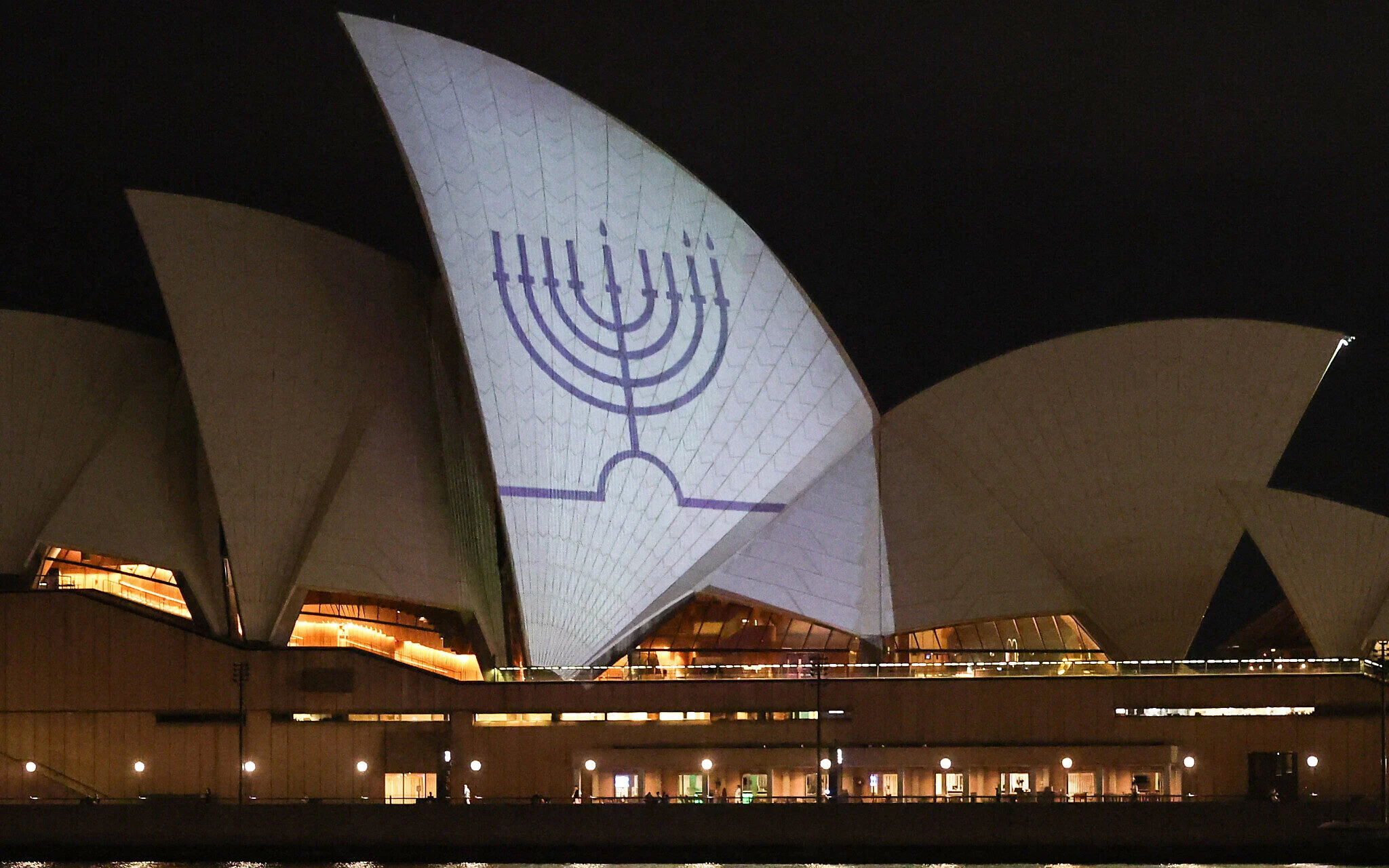
Exactly eleven years separate the Lindt Café siege in Sydney’s iconic and busy Martin Place and last Sunday’s killings near Bondi. But eleven years is not a long time.
Eleven years, however, is long enough for a nation or a people to convince itself that trauma belongs to the past, that lessons have been learned, and that history bends naturally towards safety, logic, and reason. But extremist violence does not retire quietly. It mutates, waits, and returns—often in forms we prefer not to recognise until it is too late.
In December 2014, Australians watched in disbelief as a lone Islamist gunman held hostages inside a café in the heart of Sydney’s financial district. The black flag of ISIS in the cafe window, the language of historical grievance and moral absolutism, and the ritualised performance of terror were unmistakable.
The Lindt Café siege was not simply a criminal act; it was ideological violence, staged for symbolism as much as for bloodshed. It was meant to terrify, to divide, and to announce that no public space was beyond reach.
Last Sunday’s killings on the golden sands of world-famous Bondi Beach shattered a similar illusion, that is, ordinary life, sunlit and communal, cannot remain immune to the sudden brutality of human evil. Different circumstances, different original motivations, different methods. And yet the echo of gunfire is unmistakable.
Once again, a public place became a killing ground. Once again, the randomness was the point. Once again, families were left to mourn while a nation searched for language strong enough to explain the rupture.
The temptation, especially in democratic, pluralistic societies, is to insist these events are unrelated. One was terrorism; the other, perhaps, a lone act of rage or derangement. One carried an overt ideology; the other may not have worn its creed so plainly.
But focusing only on surface distinctions risks missing the deeper and more dangerous continuity: the normalisation of mass violence as a means of expression, identity, or grievance.
It is the boiling frog syndrome writ large.
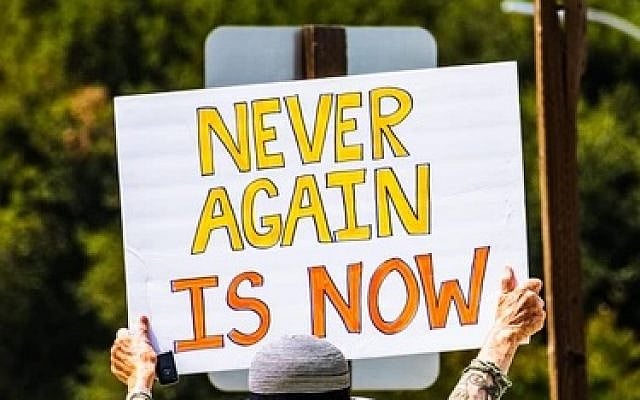
This is where “never again” ceases to be a memorial phrase and becomes an urgent warning. Because ‘never again’ is not a promise history keeps on its own. It is a discipline—one that must be renewed each time violence tries to redefine the boundaries of what is acceptable.
The Lindt Café siege belonged to a global wave of ISIS-inspired violence that sought, once again, to turn Western openness into vulnerability. Its logic was chillingly simple: public spaces are symbolic, civilians are interchangeable, and fear is the objective.
The ideology behind it rejected pluralism outright. It divided the world into the pure and the impure, the believer and the enemy, and justified annihilation in the name of moral certainty.
That worldview bears an uncomfortable resemblance to another ideology Western societies once swore they would never tolerate again: Nazism. Not because the doctrines are identical, because they are not, but because the structure of thought is the same. Absolute truth. Dehumanisation of the other. Glorification of violence. The belief that coexistence is weakness and that terror is a form of purification.
Nazism did not begin with gas chambers. Or Death Squads. Or even with the fiery speeches at stadiums. It began with the acceptance of collective guilt over past events, with cruelty as politics, with the idea that some lives mattered less than others, and with the normalisation of violence in public life.
By the time its full horror was undeniable, it had already been allowed to root itself in the everyday.
ISIS-inspired extremism operates on a similar moral architecture. It does not merely seek to kill; it seeks to reorder society through fear. It demands that free societies either harden into fortresses—betraying their own values—or fracture along lines of suspicion and blame.
In that sense, its true target is not any single café or beach or shopping precinct, but the civic trust that allows diverse societies to function at all.
The Bondi Beach killings, whatever their exact Islamist-inspired justification turns out to be, land in the same moral terrain. They remind us how thin the line is between normalcy and chaos and how quickly violence can intrude into spaces defined by openness and joy. Beaches, cafés, concerts, markets—these are not incidental backdrops.
They are the physical expressions of democratic life. When violence colonises them, the damage extends far beyond the immediate victims.
What makes these moments especially dangerous is the slow recalibration of expectations. The first attack shocks. The second one unsettles. By the third or fourth attack, there is a risk of grim resignation.
People begin to speak of such events as inevitable, as the price of modern life. Security measures expand, freedoms contract, and fear becomes ambient rather than acute.
Source: Grok.
That is how “never again” quietly dies—not in a single failure, but in a series of accommodations.
Western societies have been here before. In the interwar years, political violence was dismissed as the work of extremists at the margins. Assassinations, street fights, and intimidation were treated as regrettable but manageable. By the time the full machinery of totalitarianism emerged, the moral ground had already shifted. What once would have been unthinkable had become merely unfortunate.
The lesson is not that every act of violence heralds fascism or theocracy. It is that ideologies and environments that legitimise violence thrive when societies hesitate to draw clear and firm moral lines. When we over-intellectualise brutality or reduce it to pathology alone, we risk stripping it of its ethical dimension.
To say that ISIS-inspired violence is akin to Nazism is not to collapse history into some form of glib analogy. It is to recognise a shared threat to the foundations of open society. Both reject the premise that human dignity is universal. Both weaponise identity. Both depend on the erosion of empathy and the paralysis of moral clarity.
The appropriate response is neither panic nor passivity. It is resolve. A firm, steely, unwavering resolve.
This resolve means refusing to allow public spaces to become arenas of hate and fear. It means investing in prevention without surrendering openness and in vigilance without stigmatisation.
It means confronting extremist ideologies—religious or otherwise—with the same seriousness once reserved for fascism, rather than treating them as aberrations that will fade if ignored.
It also means resisting the false comfort of compartmentalisation. The Lindt Café siege is not merely a chapter in Australia’s counterterrorism history. The Bondi killings are not just a tragic anomaly.
Together, they are warnings, harbingers if you will, about what happens when violence, in any ideological wrapping, is permitted to edge towards normality.

Source: Wikipedia.
“Never again” was born from the ashes of the Holocaust as a universal moral claim, not a historical footnote. It was a declaration that certain lines, once crossed, demand collective resistance. Its power lies not in repetition, but in application.
Today, ‘never again’ is not about memorials alone. Or historical lectures. Or thoughts and prayers. It is about insisting that mass violence—whether cloaked in ideology, grievance, or nihilism—remains morally intolerable and politically unacceptable.
It is about recognising that the defence of open societies requires more than policing and policy; it requires a shared refusal to adapt to terror.
The sun will once again rise again over Bondi’s famous beach. The cafés and bars will fill once more. Life, resilient as ever, will reassert itself. But resilience must not become amnesia.
If we allow these moments to blur into a pattern, then we no longer challenge, and then the violence has already succeeded in reshaping our world.
Never again is now—not because history is repeating itself exactly, but because the conditions that once allowed barbarism to flourish are always waiting for permission.
And permission, in free societies, is often granted not by endorsement, but by silence.