
From Kibbutz to the global stage
Autonomous AI Could Help Civilization Survive the Day After the Crisis
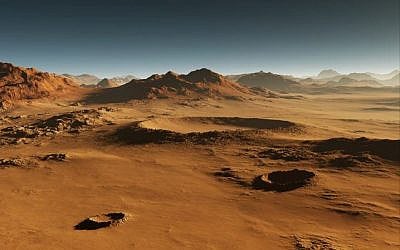
Can Civilizations Survive Beyond 5,000 Years? AI May Be the Key.
As the current confrontation between Iran and the United States raises once again the specter of nuclear escalation, a deeper and more unsettling question emerges:
How long can a technological civilization actually survive?
For decades, nuclear war has been seen as humanity’s ultimate existential threat. Today, as geopolitical tensions intensify and multiple global flashpoints converge, it is becoming clear that this is only one risk among many.
A recent scientific analysis, discussed in outlets such as Universe Today and The New York Post, revisits the famous Fermi Paradox — the question of why we have not detected other advanced civilizations despite the vastness of the universe.
Two physicists from Sharif University of Technology in Tehran, Sohrab Rahvar and Shahin Rouhani, approached the paradox from a different angle:
What does the silence itself tell us?
Their conclusion is striking.
If intelligent life is common, then technological civilizations do not typically survive for millions of years — or even tens of thousands. Instead, statistical reasoning suggests a much harsher limit:
Around 5,000 years.
This places humanity in a uniquely fragile position.
We have been a technological civilization, in any meaningful sense, for roughly 200 years. In other words, we are still at the very beginning of what may be the most dangerous phase of our existence.
The threats are well known: asteroid impacts, supervolcanic eruptions, climate instability, pandemics, nuclear war, uncontrolled biotechnology, and artificial intelligence itself. Any one of these could disrupt — or even end — our current civilization.
But the deeper implication of the “5,000-year limit” is not just that collapse is possible.
It is that collapse may be typical.
From Prevention to Survival
If this is true, then humanity may be asking the wrong question.
Instead of focusing solely on how to prevent collapse, we should also ask:
how do we survive it — and how do we recover from it?
This shift leads to a different model of civilization — not a linear lifespan, but a cycle of collapse, recovery, and renewal.
Such a perspective raises profound questions:
Would intelligence survive a global collapse, even if technology does not?
Could civilization re-emerge faster the second time?
Are we, in fact, the first technological civilization on Earth — or simply the latest?
The so-called Silurian Hypothesis, proposed by Adam Frank and Gavin Schmidt, explores whether an industrial civilization could have existed in Earth’s distant past without leaving clear traces. Their conclusion is cautious: over millions of years, direct evidence would likely disappear, leaving behind only subtle chemical, isotopic, or climatic signatures.
At the same time, the natural world offers another perspective. The evolutionary return of whales from land to sea, alongside growing evidence of complex communication among marine mammals, suggests that intelligence can persist — and even evolve — outside a technological framework.
This leads to a critical insight:
Intelligence may survive collapse — but knowledge does not necessarily survive with it.
AI as a Continuity Mechanism
This is where artificial intelligence enters the picture — not as a threat, but as a potential solution.
If civilizations fail because they cannot preserve and transfer knowledge across catastrophic disruptions, then AI could serve as a bridge between pre-collapse and post-collapse worlds.
In this sense, AI is not merely a tool of efficiency or productivity.
It becomes a strategic continuity mechanism.
The debate over AI autonomy is often framed in terms of risk. Yet there is another, less discussed dimension — its potential role in survival.
To understand how relevant autonomous systems already are, we can look at everyday situations.
In a recently reported incident at New York’s LaGuardia Airport, a combination of air traffic controller overload, staffing shortages, and poor coordination led to a serious accident. Within seconds, a situation developed in which a fire truck and an approaching aircraft could not react in time — resulting in a fatal collision.
An autonomous AI system, connected in real time to all control and traffic systems, could potentially have identified the risk earlier, coordinated responses, and prevented the accident.
If this is true in a complex but localized system such as an airport, it is not difficult to imagine how such capabilities could be critical when managing risks at the scale of an entire civilization.
This concept can be described as a “digital Noah’s Ark” —
an autonomous, resilient system designed to preserve human knowledge, analyze evolving conditions, and support recovery after global collapse.
A Practical Survival Architecture:
This vision is not purely theoretical. Elements of it already exist or are under development:
Permanent or semi-permanent bases on the Moon, as envisioned in NASA’s Artemis program
Modular space stations capable of long-duration operations
Orbital logistics platforms storing essential resources such as water, oxygen, and fuel
Autonomous AI systems capable of monitoring Earth, analyzing risks, and executing recovery protocols.
Positioned in space, these systems would be largely insulated from terrestrial disasters. Powered by solar energy and designed for long-term operation, they could maintain functionality even under extreme conditions.
At predefined intervals — or in response to major events — they could deploy missions back to Earth:
To assess conditions, deliver resources, and assist surviving populations in rebuilding infrastructure and knowledge systems.
Rethinking Civilization:
This approach fundamentally changes how we think about survival.
The question is no longer whether we can prevent every catastrophe.
History — and perhaps the silence of the cosmos — suggests that we cannot.
The real question is whether we can design a system that allows civilization to restart.
If the 5,000-year limit is real, then survival will depend not only on avoiding collapse, but on our ability to plan for recovery in advance.
In that sense, artificial intelligence may represent something far more significant than a technological breakthrough.
It may be the first tool in human history capable of preserving not just life — but civilization itself.
Final Thought:
The question is no longer whether our civilization will face a major collapse.
The question is:
Will we be the first civilization to prepare for what comes after?
Related Topics
Related Posts