‘Ayeka’: The Deafening Sounds of Silence
It is so difficult to fathom that this October 7th will mark the second anniversary of the worst massacre of Jews since the Holocaust.
Since that infamous day in history, acheinu bnai yisrael have experienced unbearable pain, anguish and depression resulting from the cold blooded vicious murder and maiming of our Israeli brothers and sisters by Hamas.
This deep pain, unbearable suffering and profound loss, is exacerbated by the continued captivity of those precious souls still being being held hostage by Hamas in the dark damp hell-holes of Gaza.
The short and long-term impact of October 7th and its effect on Israeli families and society, and by extension world Jewry is profound.
The thought of so many innocent families who lost loved ones, the increased number of IDF soldiers now requiring extensive physical and emotional rehabilitation and the increased number of Israeli families and children who are currently being treated for psychological trauma defies the imagination.
If this heart wrenching pain is not enough to bare, October 7th also ignited a global firestorm of Jew-hatred and antisemitism, the likes of which are reminiscent of Nazi pogroms in Europe. These seismic antisemitic attacks have increased significantly over the past year and virtually every major country in the world is now questioning or withdrawing their support for Israel. Several countries have even taken recent actions to publicly isolate Israel politically, socially and economically on the global stage. A reality which I never thought I would experience in my lifetime.
At times, I ask myself….“can this nightmare really be happening”? How is it possible that everything changed so fast and on a dime…. making our lives upside down, and living in an environment of fear, uncertainty and insecurity.
On October 6th, Israel was experiencing relative calm (emphasizing “relative) Then like a lightening bolt, October 7th happened and the black clouds of war, destruction and hatred exploded.
Could we have foreseen this? Were we even prepared for such an attack and subsequent events? These are very difficult and complex questions which beg responses, but to no avail.
One of the Rabbinic leaders and scholars who I follow closely, recently provided me with a relatively simple and clear response to this question….( keeping in mind that nothing is really as simple as it appears).
He posits that today’s antisemitism and Jew-hatred, especially since WW II, has always existed just below the surface. For some, it was always feared and anticipated; for others, with the passage of time, our Jewish community became complacent as we wrapped ourselves in a blanket of protection through a false narrative and sense of false security.
This was especially the case for many Holocaust survivors who following the war were always concerned and fearful about a re-occurrence and/or a rise of antisemitism and Jew hatred reminiscent of the 1940’s.
This false sense of security, he posits, has its origins in our belief and assumption that by integrating and assimilating into the larger society we would be protected. History nevertheless reminds us that just prior to WWII, many German and Polish Jewish families attempted to integrate and assimilate into the larger community or society in Europe, In doing so, they truly believed that they would be immune and protected from outside influences of antisemitic hatred. As we know well, the outcome did not prove this to be correct, accurate or wise. But at that time, it was the only way for our Jewish community to survive…..or so we thought.
It was just a matter of time as our community’s veil of assimilation was lifted and we were identified, singled out and carted off to concentration camps like sheep to slaughter..
When I was a child, I used to hear the expression “silence is golden”. This phrase was used quite often in my household in order to impress upon myself and my two younger brothers that the less we talk about others, the more it reduced the chances of spreading gossip or lashon harah. This rule made lots of sense. In fact, it still does and it represents a major Jewish value which is foundational in Jewish practice.
Friends, as we all know inherently that there are times to be silent and times to be vocal.
According to the Talmud, shtika k’hodaah – silence is like admission, acquiescence or complicity.
It is therefore appropriate to assume that our individual and collective communal silence is less than desirable in light of today’s. matzav (condition).
As a Jewish communal collective, it is not enough or sufficient for us to protest against Jew hatred, anti-Israel violence or antisemitism through sporadic social media posts, articles, and pronouncements. These are critically important venues. But, they do not match up to the impact of public rallies and protests as well as holding our elected government officials accountable for combating the evil and vile impact of Jew hatred in our neighborhoods and on college campuses.
Reality dictates that our community has been way to silent in light of the current dangerous scourge of antisemitism our communities.
Where are the demonstrations, the strikes, the protest rallies, public displays of anger and consternation?
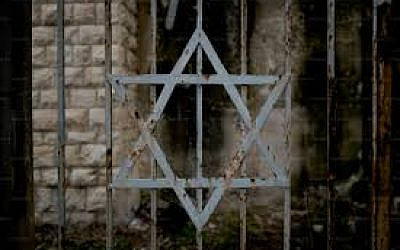
Friends, the days of cowering in the corner and fearing to wear our magen david or mezzuza necklaces or kippot in public are over. To be sure, hiding our Jewishness is exactly what out enemies and adversaries dream about and are hoping for.
It is essential that we continue to publicly celebrate our Jewish identity with passion, strength and conviction. And we must never ever shy away from expressing our Jewishness in public by caving into the threats of antisemitism or the fear that it causes.
We must publicly call out all groups, organizations and individuals who promote, encourage or incite Jew hatred. It is indeed our sacred obligation and responsibility. Moreover, by not doing so, we unintentionally promote and encourage more antisemitism and demonstrate our weakness, apathy, fear and complacency.
Remember, a large part of our Jewish people’s resilience and strength is embedded in our ability and capacity, to protest and fight back – all through the guiding hand of HaShem.
The word Ayeka in Hebrew means ” where are you”. It is found in the Torah when God asked Adam and Cain the question “where are you”….following their sinful actions..
Our commentaries tell us that the question was not a physical manifestation, but rather one which God used to arouse our consciousness about our actions and deeds.
These wake-up calls are what I refer to as ayeka moments….. times in our lives when we must ask ourselves and others “where are we” and “where are you?”.
By asking ourselves these critical existential and introspective questions we are forced to confront today’s harsh realities which threaten our safety and well-being. To be sure, by not asking or thinking ayeka we are remaining silent – a communal condition which places all of is in serious jeopardy and danger.
Finally, we must never ever forget that we are a resilient nation, because we are created bzelem elokim, and as an am kadosh and as a truly privileged ohr lagoyim..
To this end, we should do everything in our power not to fall pray to our enemies by remaining silent.; for as we know well – silence can be deafening
It is our responsibility to speak up and challenge today’s status quo – lest we once again fall into the deep dark abyss of violent unchallenged antisemitism and Jew-hatred – a condition which we must never ever let happen again.
Am Yisrael Chai