


Writing on Jewish identity, Israel, and American politics
Featured Post
‘Bad Jew’
Forget bacon and skipped synagogue. These days, a 'bad Jew' is the one who refuses to apologize for being Jewish
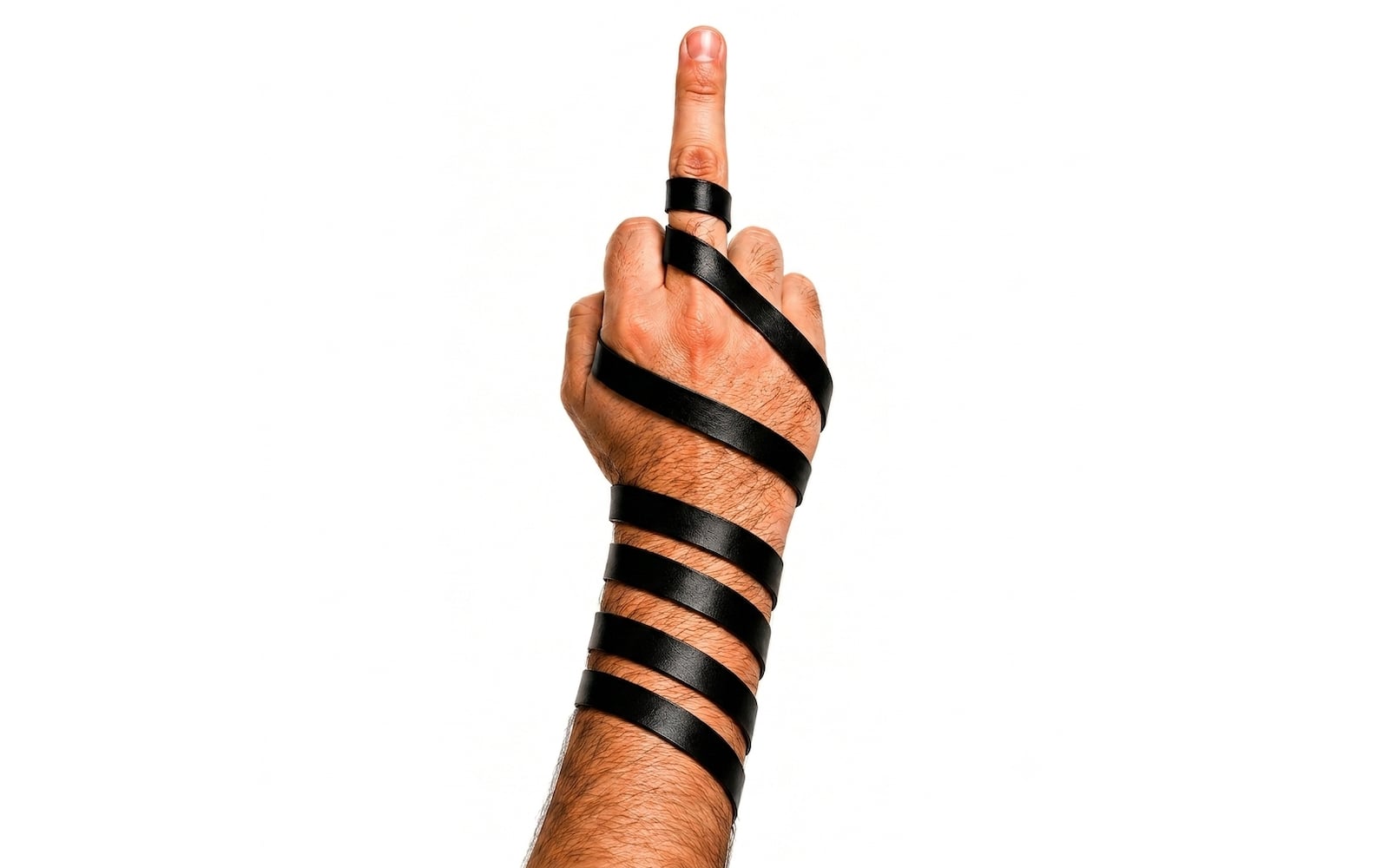
I’m done pretending that Jewish survival requires Jewish silence.
For most of my life, I thought a “bad Jew” was someone like me.
I wasn’t Orthodox. I didn’t keep kosher. I’ve eaten more shrimp, lobster, and cheeseburgers than I can count. I worked for Bernie Sanders, though I later came to regret it. My wife is a convert, and I hope my daughter marries for love, not because someone approves of her choice.
Growing up in the Diaspora, “bad Jew” was almost a joke. It was what you called yourself when you felt you weren’t Jewish enough.
I didn’t become who I am on my own. Some of it was pushed into me from the outside. Some of it I had to find on my own, underneath everything the outside world told me to be.
The outside part is easy to point to. Working for Bernie taught me how easy it is to mistake belonging to a movement for standing on principle. Years of watching activists, politicians, and institutions redraw the lines of who gets to be a “good” Jew taught me what conformity costs. Then October 7 happened, and the people I thought were allies went quiet, or worse, and that taught me the fastest.
But the other part didn’t come from outside at all. It came from something already in me that I’d spent years ignoring.
At 50 years old, I decided to pray daily and put on tefillin every morning. Today, at 51, it’s part of my daily routine. Not because anyone guilted me into it. Not because I suddenly became more religious. Because I finally stopped drowning out something that had been calling to me for years. That one was mine. Nobody pushed me into it. Nobody gets credit for it but me.
That’s the difference between the two forces that made me who I am. One was the world trying to shape me into something convenient. The other was me finally listening to who I already was.

Today, a “bad Jew” isn’t the one who eats bacon or skips synagogue.
A bad Jew is the one who refuses to apologize for being Jewish. The one who refuses to be bullied into abandoning Israel. The one who won’t redefine antisemitism to make other people more comfortable. The one who won’t capitulate to intimidation, fashionable politics, or terror. The one who says, “No. You don’t get to decide what my Jewish identity should look like.”
Then, last week, something happened that finally pushed me to write this.
The House voted on an amendment from Thomas Massie that would have eliminated all $3.3 billion in annual U.S. security assistance to Israel. A record 103 House Democrats voted yes. Among them were Jamie Raskin, Jan Schakowsky, and Becca Balint, all Jewish. Nancy Pelosi voted yes. Katherine Clark, the second-highest-ranking Democrat in the House, voted yes. (Jerry Nadler, co-chair of the Congressional Jewish Caucus, missed the vote because of a family medical emergency and later said he would have voted no.)
I wasn’t surprised. That was the problem.
Just two months earlier, 40 Senate Democrats had voted to block arms sales to Israel. Those resolutions were written by Bernie Sanders, who is Jewish, and supported by Adam Schiff, Ron Wyden, and Elissa Slotkin. Chuck Schumer and Richard Blumenthal voted no. Same party. Same faith. Different choices.
Two votes. Two chambers. Same direction. I realized this wasn’t really about military aid. It was about who gets called a “good Jew,” who gets branded a “bad Jew,” and who gets to make that decision.
That’s the trade some of my fellow Jews in Congress keep making. Vote with the progressive flank, get cover from the base. Vote for Israel, get called an extremist. That’s not conviction. It’s political convenience, and doing it with a Jewish name attached doesn’t make it more forgivable, it makes it
more useful to the people it serves. It lets the loudest critics of Israel say, “Even the Jewish members of Congress agree with us.” It launders the attack.
Trading Jewish solidarity for political convenience
This isn’t new, and it isn’t subtle once you’ve seen it before. A century ago, Vienna elected a mayor named Karl Lueger who built his entire career on antisemitism. He campaigned on it and he governed on it, and a young Adolf Hitler watched him do it and later called him “the greatest German mayor of all times.” Lueger also had a Jewish mentor and Jewish friends. When people pointed out the contradiction, he had one answer for it: “I decide who is a Jew.” Historians still cite that line as the moment antisemitism stopped pretending to be about religion or ethnicity and became about whoever was inconvenient that year.
New York has its own version of it now. Mayor Zohran Mamdani scrapped the city’s antisemitism definition on his first day in office. He’ll condemn a swastika. He won’t call it discrimination when someone denies the Jewish people the right to a state of their own. When he finally sat down with Jewish leaders, he picked them himself, mostly the ones who had already endorsed him, while the organizations most Jewish New Yorkers actually belong to were left off the list. That’s not an oversight; that’s Lueger’s line, updated: I decide what counts as hate, and I decide which Jews get a seat at the table.
It was never really about my kosher habits or my synagogue attendance. It’s about who gets to hold the pen.
I’m still a Democrat, even as the party keeps walking away from people like me. I’m not leaving. I’m Jewish. I’m Israeli. I’m American. I’m a Democrat. All four, whether anyone likes it or not. If that makes me a bad Democrat too, so be it. I’m done letting other people define my Judaism.
You can watch the “who decides” game play out in real time. Rep. Dan Goldman is Jewish. He has defended Israel’s right to exist and defend itself while openly criticizing Netanyahu’s government. Yet a Brooklyn coffee shop declared him unwelcome because of his views, and Mamdani never called it antisemitism. Goldman later lost his primary to Brad Lander, who repeatedly pressed him to call Israel’s conduct in Gaza a “genocide.”
Related: NYC coffee shop bars a Jewish congressman: ‘We don’t serve genocide enablers’
In that world, Lander is the good Jew and Goldman is the bad one. That’s exactly backwards. Goldman kept his convictions and paid a political price for them. If that’s what counts as being a bad Jew today, sign me up.
For centuries, antisemites tried to tell Jews who they were. Now activists, politicians, celebrities, and social media mobs try to tell us what kind of Jews we’re allowed to be. Be the quiet Jew. The apologetic Jew. The politically useful Jew. The Jew who condemns Israel on command. The Jew who makes everyone else comfortable.
I spent years being shaped by what was around me. I’m done letting that be the whole story. I’m done trying to earn anyone’s approval. I’m done conforming. I’m done appeasing. I’m done pretending that Jewish survival requires Jewish silence.
If standing with my people, refusing to surrender my identity, and refusing to let others define my Judaism makes me a “bad Jew,” so be it.
Because a “bad Jew” is no longer someone who falls short of Judaism.
A “bad Jew” isn’t someone who eats bacon.
A “bad Jew” isn’t someone who misses synagogue.
A truly bad Jew is someone who abandons the Jewish people when they need them most. I won’t.