Bahraini Jews before and after the Abraham Accords
The Arabian Peninsula is a site of historical Jewish presence. Jews moved there at least at the time of the Babylonian exile and possibly earlier. Yet today the prosperous Jewish tribes of Medina are but a fleeting recollection, the once powerful Yemenite community is non-existent, and the Chabad-orchestrated Jewish life in Dubai is a recent expat phenomenon. The only place in the region where an indigenous Jewish community still survives is the tiny island of Bahrain.
Located on the southern coast of the Arabian Gulf (as the Persian Gulf is called in the region), on the crossroads of trade routes between Asia, Europe, the Middle East and Persia, this island has been a strategic stop-over of migrants, merchants and armies for millennia. Four thousand years ago it was the center of the Dilmun civilization, which left its mark on the island with huge burial mounds. Conquered by a general of Alexander the Great, Bahrain was Hellenised as Tylos. It was later part of Parthia and the Persian Empire. Indeed, Persian dominance was so important that the Iranian parliament keeps an (empty) seat for a delegate from Bahrain – a lost province that Iranian rulers dream of recapturing.
When Muslim invaders swept through the area around 630 CE, the local Jewish community held to its faith. In the 12th century, Benjamin of Tudela mentioned Jewish populations in the Gulf who were involved in pearling – a Bahraini speciality for centuries, until the spread of cultured pearls and the 1932 discovery of oil (the first in the Arabian Peninsula). The present Al Khalifi dynasty conquered the island in 1783 and has ruled ever since. Bahrain was a British protectorate until independence in 1971.
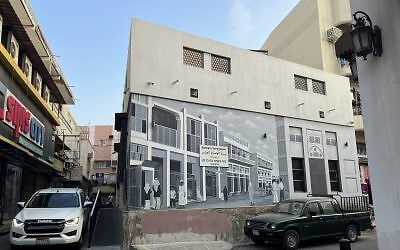
The present-day Jewish community came mainly from Iraq. Their ancestors started arriving in Bahrain in the 1880s from Basra in search of economic opportunity. Many passed on to Hong Kong or Singapore while others stayed, attracted by the thriving pearling business and other trades. The Jewish community quickly became prosperous and influential. By the 1920s, a busy street in the central market area of Manama was known and shāriʿ al-Yahood (the Jews’ street) and Jews were serving in the city government. The community numbered between 800 and 1500, and it needed a synagogue. This is when Shimon Cohen arrived from Iran. He established good contact with rich Jewish pearl traders and secured funds for purchasing a plot of land for the synagogue in the vicinity of Jews’ Street. The synagogue was registered under the name of Millet al-Musaweeya (the Tribes of Moses) in Arabic, or the House of Ten Commandments in Hebrew and English.
Today’s community leaders insist that Bahraini society has always been tolerant, and that Jews were consistently well integrated. But misfortune struck in 1947-48: in the wake of the UN vote and the establishment of the State of Israel, the rabbi and other Jews were attacked, the synagogue was ransacked and the two Torah scrolls stolen. Ostensibly, hostilities were instigated by Egyptian and Yemeni workers, while some Bahraini Arabs sheltered their Jewish neighbors in their houses. After these riots, the majority of Jews left for Israel, and another wave of emigration followed in 1967.
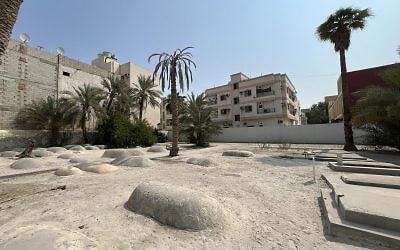
The dwindled Jewish community hovers today at around 30 people. There is no rabbi, Hevra Kadisha, shochet, or Jewish school. For major rites of passage, such as bar-mitzvahs or weddings, Bahraini Jews travel to England or Europe, and British and American Jewish schools remain the primary educational options for Bahraini teenagers. The Jewish cemetery is located behind a blank wall, next to Christian and Shia burial grounds, and presents a rather sad sight, with most graves unmarked. In the entry hall, a partial list of the deceased is displayed on the wall, but it is unclear where exactly many of these people are buried. My gracious host and a leading figure of Jewish Bahrain, Houda Nonoo, told me that the bodies are usually washed using the Muslim burial services and the funeral ceremony is led by one of the community members.
And yet, the life of Bahraini Jews is not as precarious as it may first appear, and recent years have brought a more positive dynamic. The Jewish community, as tiny as it is, remains one of the wealthiest, most entrepreneurial and best educated. It has permanent representation in the upper chamber of parliament. Houda herself, her cousin Ebrahim Nonoo and another relative Nancy Kadoori, author of a book about Bahraini Jews entitled From Our Beginning to Present Day (2007), have all served as MPs. Hooda Nonoo’s career is indeed symbolic of the inclusivity of Bahraini monarchy: between 2008 and 2013 she served as the country’s ambassador to the USA, the first Jewish woman from the Gulf ever to occupy such a post.
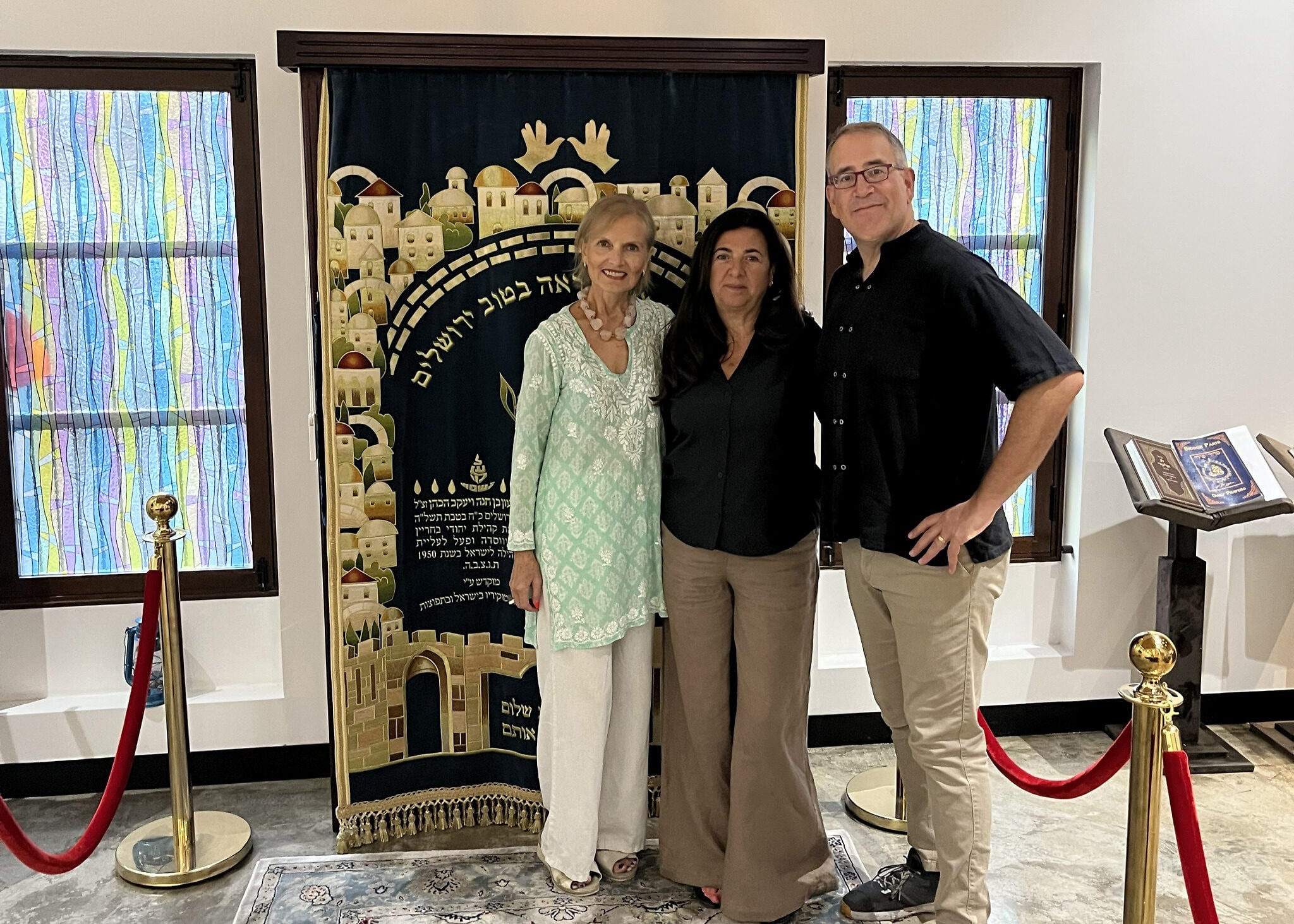
The Abraham Accords, signed between Bahrain and Israel in September 2020, gave a much-needed boost to the local Jewish community, which had already undertaken the renovation of the synagogue in anticipation of international guests. After his visit to Bahrain, Jared Kushner presented a new Torah scroll to King Hamad bin Isa Al Khalifa, who accepted it on behalf of his Jewish subjects.
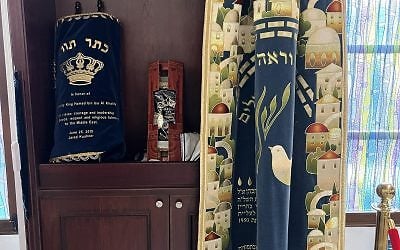
Above the Ark are two sets of Ten Commandments, in Hebrew and Arabic, just as there are two tablets with יהוה and الله on them. The congregants use Sidur Farhi with parallel translation into Arabic, and there are also Artscroll Siddurim on the shelf. For special occasions, a rabbi is flown in from Dubai, although generally Bahraini Jews are proud of their traditions and reluctant to cede their religious life to Chabad.
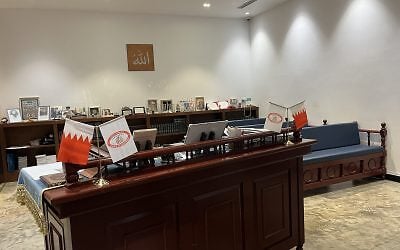
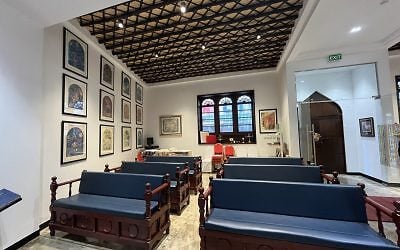
An important change stimulated by the Abraham Accords was the abolishment of a prison sentence for returning emigres, which had been in force since the massive departure in 1948. Many ex-Bahrainis came from Israel to see their parents’ homes: as opposed to most other Arab countries, except perhaps Morocco, emigrating Bahraini Jews did not forfeit their possessions and could sell their property. As for those who continued to live in Bahrain, the Abraham Accords gave them an opportunity to finally visit the Holy Land. For some time, direct flights were operating between Manama and Tel Aviv on Mondays and Thursdays. Houda told me that in two years following the establishment of diplomatic relations with Israel she had travelled to Tel Aviv twelve times.
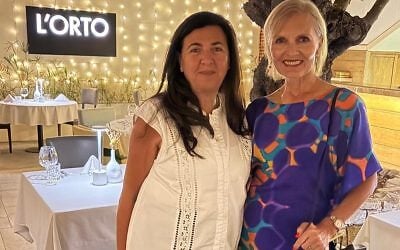
The October 7 catastrophe put an end to this promising beginning. Today, hardly any Bahraini dares to pursue a business relationship with Israeli partners. Talal Al Zain, owner of a number of investment companies and board member of many others, including Gulf Air and Bahrain Islamic Bank, has travelled to Israel nine times, looking to bring human-oriented technologies to the Gulf. He acknowledges that he pursued these initiatives despite the hostile reaction of his countrymen. This soft-spoken gentleman with impeccable English spends evenings in his stylish restaurant, L’Orto, equipped with a cozy bar and piano lounge – a meeting place for the Bahraini and international business and political elite. Talal regrets the unrealized opportunities of cooperation with Israel, which came to a halt after October 7. But he has not lost hope.

What I heard from Talal Al Zain and my other Bahraini acquaintances exposed the stark reality of Jewish-Israeli-Arab coexistence after the Abraham Accords. Very much an initiative of the elite, the normalization with Israel has never been accepted by the “Arab street.” There is an organization in Bahrain that stages weekly demonstrations against the Accords. There are no more direct flights between Bahrain and Israel. Prominent members of the local Jewish community, seen as too closely linked to Israel, receive periodic threats. Houda, for example, can no longer leave her house without a bodyguard. The Israeli ambassador, Sammy (Shmuel) Ravel, lives under tight security, compelled to move to a new location every three days. When I met him at Shabbat dinner at Houda Nonoo’s house, he said that 95% of Bahrainis are anti-Semitic, and he finds it difficult to counter anti-Israeli libel circulating in press. When journalists are invited to meet with him, Sammy tries to suggest a more positive image of Israel, talking about its achievements in technology and science, or proposing that they write about the anniversary of the Abraham Accords as a topic of common interest. However, none of this ever reaches the printers, as the journalists claim that their editors ban any material showing Israel in a positive or even neutral light.
In any event, Bahrain is certainly more tolerant than most of its neighbors. Alcohol is freely sold there, which makes the country an attractive destination for Muslim visitors from the region, especially Saudis. Although most Muslim women wear abaya out of respect for tradition, women of other religious persuasions and ethnic origins are not expected to observe any particular dress code. Indeed, it was even more permissive before 1979, with many women wearing mini-skirts in public: the Iranian revolution had an influence on Shia Bahrainis, and Islamist tendencies have since radicalized, bursting into anti-government revolt in 2011, during the Arab Spring.
The Abraham Accords were a visionary project for the Middle East and hopefully they will bear further fruit. But we should understand that normalization with Israel will remain largely symbolic as long as mainstream media discourse and the popular mentality remain unchanged. In the midst of these conflicting global trends, hopes and disappointments, a small community of thirty individuals continues to thrive despite all odds, proudly preserving their Arab-Jewish identity and unique cultural heritage, which they are happy to share with their guests – in true Eastern hospitality and sophistication.