
Balak: The Cycles of the Torah

Those crazy times have a way of repeating themselves. As journalist Adam Ciralsky uncovered, the Iranian regime paid the infamous, now-deceased Sinwar $2,000,000 to commit the Simchat Torah attack of 5784. Balak offered and paid Bilaam a huge sum of money, which Bilaam so “reluctantly” accepted, openly defying Hashem’s orders while fully aware of Hashem’s will. The thing is, they would have committed these attacks either way, but deep down, they knew there wouldn’t be any spoils for them after this war, so they reluctantly took the last few dollars to hold onto before death.
Money certainly holds value for people. It should—it’s a significant factor in the choices we make, and the more we have, the greater our options. But for some, money isn’t just value; it is power. To them, there is nothing they cannot do, which means they live entirely by sheer will. A person living this way becomes a force of nature, a leader to their people, and a formidable enemy to the authorities around them.
What truly matters is what one does when claiming such a way of life—it depends on their true will. Is their will driven by ego and personal gain, or is it a desire for a better world? When we hear someone’s deepest dreams, we know they will stop at nothing to make them a reality. It’s important for every person to question what their greatest dream is and, if it is a creative one, to actively pursue its realization. But the truth is, when someone has such a deep dream, they will subconsciously guide themselves in that direction. If that’s the case, we must ask ourselves, “What dream has been guiding us until today?”
Power doesn’t come only through money. It can also come from a position of influence, being respected for achieving a certain level of success, or simply knowing that others need you for your service. But the greatest power is when one has no fear at all. Much like money provides a sense of security—often mistaken for safety—so too, when one is completely secure in their beliefs, they find they have nothing to fear. For us, good people, we truly want the best for the world: a world where peace reigns, and each person can live with a happy and fulfilled heart. We believe in the most Powerful and Eternal Father of heaven and earth, and by taking that belief seriously and literally, there is simply no room for fear at all.
Bilaam’s subconscious mind drove him to curse the Yidden, as the Gemara in Makkot 10b notes, “In the path that man wills to go, in it he is led.” Money couldn’t secure him from the wrath of Hashem, but since he walked away from Hashem, the only thing that gave him a sense—albeit a false sense—of security was money. All the money could do was keep him on the run for longer, which, in a sense, is worse than receiving punishment instantly.
We must ask ourselves, though: “Bilaam was a prophet; he had no doubt in the existence of The Creator and the love He has for His children. How, then, was he so low as to have his subconscious mind wish for the destruction of the Jewish people?” This leads us to understand the difference between the egocentric and the humble. The Mishnah in Avot 5:19 speaks of the students of Avraham Avinu and of Bilaam Harasha: “A good eye, a humble spirit, and a surrendered soul” versus the opposite at the school across the road. All Bilaam knew was to claim his success and fame as his own accomplishments. He couldn’t comprehend that Hashem gave him this life opportunity to show closeness to the nations, as described in the beginning of Talmud Avoda Zara. He had “a bad eye, a haughty spirit, and a craving soul” and squandered his position for personal gain. He knew the truth about Hashem but was far from knowing himself.
His will drove him, and he never paused to rethink his actions. He committed disgusting acts with his donkey and lived a lavish lifestyle among the kings of the world. His ability to choose was stripped from him because he corrupted himself with absolute power. As we’ve come to understand, one with absolute power must truly know themselves, their dreams, and their will. Much like a starving person narrows their request to one word, “Food,” because it is their sole will, Bilaam, too, automatically expressed his inner dreams when he alluded to his request for pay without even realizing it, as it was his only will.
It’s like a rush that never ends, a force that can’t be stopped, as another Mishnah in Avot (4:2) states, “One mitzvah leads to the next, while one transgression leads to another.” When we live with absolute power, we are driven by our will. If our will desires good, we attract good; if we will bad, we spiral into a never-ending, rapid descent.
The Ramban notes that “Maase Avot Siman L’banim—the stories of the fathers are a sign for the children”—can be understood in three ways: 1) We learn to act in their fashion; 2) Hashem determines our future as a cycle of stories comparable to those of our fathers; and 3) The actions of our fathers created the future for us, their children. It’s clear that deciding which school to send my children to is a direct result of having them, just as reciting Asher Yatzar follows a satisfying meal. My actions result in effects that I can sometimes foresee, but the further I get from the action, the harder it is to see the connection to the result.
These three points aren’t just nice concepts; they should guide how we experience life. Hashem ultimately decides our futures, and through the experiences He sent our parents, we know we will be tested in similar ways. For this reason, when we face challenges, we must follow the direction of the greats before us to ensure we emerge unharmed and stronger. We must also remember that our actions will shape the future of our lives and generations to come.
Much like the cycles we encounter in our personal lives and subconscious minds—where good leads to more good and bad to more bad—so it is with the events of the world. We are up against a war of wills, and the stronger will shall prevail. We must take our belief in Hashem seriously to live without fear and with satisfied hearts. Avraham Avinu taught us to have a good eye on the world, a humble spirit, and a calm soul, and so the cycle will end with Magen Avraham.
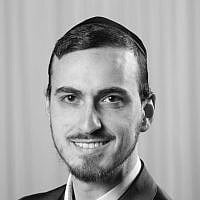
David Lemmer is an Orthodox Jewish Hypnotherapist. Check out his website @ LemmerHypnotherapy.com