Sports, Politics, Broadcast and Media Specialist
Bankstown Nurses Ruling is No Vindication — Just the Law at Work
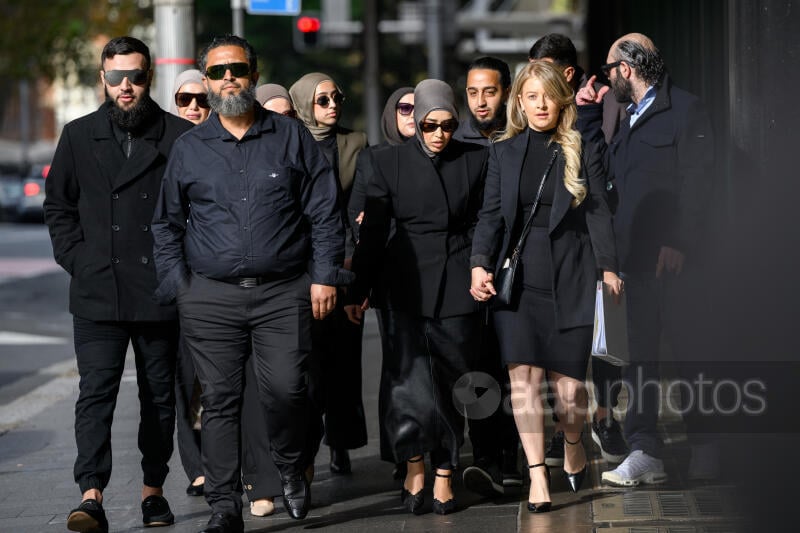
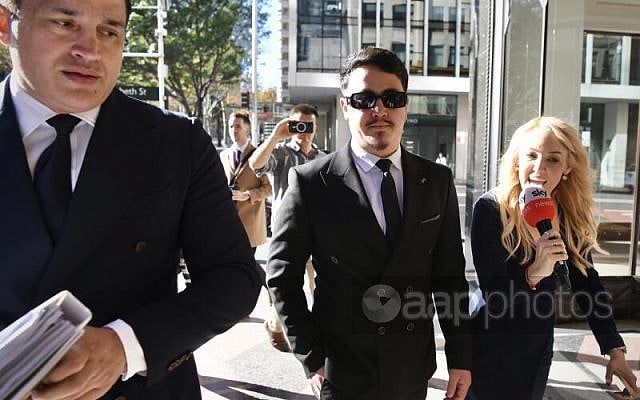
Sarah Abu Lebdeh (centre) arrives at Downing Centre Local Court, Sydney, Thursday, June 4, 2026. Two nurses have been charged over comments made in a video chat with an Israeli influencer. (AAP Image/Bianca De Marchi)
The exclusion of the viral video is a setback for the prosecution, but it does not erase what was said, what was admitted, or the deeper fear the case has unleashed in the Jewish community.
The exclusion of the Bankstown nurses video is a blow — no point pretending otherwise. It is deeply frustrating, deeply upsetting, and for many Jewish Australians, it feels like yet another institutional disappointment in a case that already exposed something rotten at the heart of our health system. But the ruling does not mean the nurses are vindicated, nor does it mean the case has collapsed. It means the court has applied the law on admissibility, and the case now proceeds the way most criminal cases do: through witness evidence, admissions, surrounding circumstances and the court’s assessment of the facts.
That distinction matters. The public reaction has been understandable because the video was not just evidence; it was a shocking public record of a private exchange in which two medical professionals allegedly made antisemitic threats about Israeli patients. Yet outrage alone does not decide admissibility. Courts have to ask a narrower question: was the recording obtained lawfully, and if not, should it still be allowed in? In this case, the judge answered no.
Why the ruling was made
Under NSW law, it is generally an offense to record a private conversation without the consent of all parties, subject to limited exceptions. The Surveillance Devices Act 2007 is built around the idea that people are entitled to some degree of privacy in their conversations, even when those conversations are ugly, foolish or offensive. That is not a special indulgence for bad actors; it is a general rule designed to stop all Australians from being exposed to covert recording as a default condition of life.
The defense argued that the Bankstown chat was a private conversation and that the recording was made without consent. The Crown argued the opposite, saying the platform and the cross-border nature of the exchange meant the material should still be admissible. The judge accepted the defense position and excluded the video, noting that the admissibility question is separate from whether the alleged conduct actually occurred.
This is why the case is legally important. The court was not saying, “nothing bad happened.” It was saying, “even if something appalling happened, the way this recording was obtained means it cannot be used in the trial.” That is a hard result, but it is a normal one in a legal system that values evidentiary rules and procedural fairness. This online conversation was not immediately sent to any authorities but rather was posted online on Instagram, TikTok, etc. If the person making the recording (Mr Faifer) had immediately sent the footage to the Australian authorities believing there was a serious and imminent threat for patients – this decision may have been different. The Judge also ruled that as this case is being prosecuted in Australia and the alleged offenders were in Australia during the incident then he must apply Australian law – therefore unable to rule the evidence admissible as it was captured overseas.
Why dash-cams and CCTV are not the same
A lot of people have understandably compared this to dashcam or CCTV footage, and the instinct is easy to understand. But the comparison only goes so far. Dashcams usually record public roads. CCTV usually records public or semi-public areas or privately owned businesses, where there is no reasonable expectation of privacy. A private online conversation is different in law because the core question is whether the participants could reasonably expect the exchange to remain private. Further, Police do have body cameras on their persons. That power is given to them very specifically under its own statute. In addition, Police will always tell you they are recording when their camera is on and if they don’t, they can have their video evidence deemed inadmissible.
That is why the legal analysis matters. The law does not turn on whether the content is hateful, whether the public is outraged, or whether the accused are sympathetic. It turns on whether the evidence was obtained in a way the law permits. If we are serious about defending the rule of law, then we cannot only respect it when the outcome feels emotionally satisfying.
The exception that didn’t apply
There is one important caveat in NSW law: a recording can sometimes be admitted if it was reasonably necessary to protect a person’s lawful interests. Courts have recognized that narrow exception in cases involving abuse, coercion, or situations where covert recording was the only practical way to preserve evidence. The classic example is DW v R NSWCCA 28, where a secret recording was allowed because it was made to protect the recorder’s lawful interests.
But that exception is narrow. It is not a general permission slip for covert recording whenever a person suspects they may later be useful to police or the media. The court has to decide whether the facts genuinely justify the exception. In the Bankstown matter, the judge evidently found that threshold was not met. That is why the video fell away.
That may be unsatisfying. It may feel like form triumphs over substance. But in law, form matters because it is the structure that prevents arbitrary decision-making. The same rule that protects a victim of abuse from being silenced is the rule that protects every citizen from being recorded and exposed at will.
Why this is not the judge siding with antisemitism
It is important to say this clearly: this ruling is not judicial antisemitism. It is not a moral endorsement of what was said. It is not the court “letting them off.” It is a legal ruling about whether a piece of evidence meets the statutory and evidentiary threshold for trial. The judge’s role is not to punish on the basis of public disgust; it is to determine whether evidence can properly go before a jury.
That may sound cold, but it is the architecture of the criminal justice system. Judges are meant to be insulated from public anger so they can apply the law consistently, even when the facts are vile. In a case involving antisemitic comments made by hospital staff, the emotional temptation to read every adverse ruling as institutional failure is real. But that temptation should be resisted. The legal system is not being asked to approve the conduct; it is being asked to apply rules that exist precisely so decisions are not made on outrage alone.
Why it still shouldn’t matter much
The video was powerful, but it was never the whole case. The prosecution is not left with nothing. The witness who was on the call remains central. The surrounding context remains central. The accused’ own admissions, explanations and attempts to reframe the exchange also matter. In court, a case can be proved by direct testimony, admissions, contemporaneous records and surrounding evidence, even where a headline-grabbing recording is excluded.
That is why the public should not confuse a procedural setback with the collapse of the prosecution. The core allegation remains: that two nurses, while employed in a public hospital, spoke in a way that was menacing, offensive and profoundly threatening to Jewish people and Israeli patients. Excluding the clip does not erase what was said; it simply changes the evidentiary path by which the court will assess it.
This also explains why the public and employer response already matters. The nurses’ conduct was not treated as a harmless misunderstanding by the institutions responsible for them. Their professional standing, reputation and employment were already hit hard. That remains part of the story, regardless of whether a judge later rules that one item of evidence cannot be tendered.
Why the community reaction is so intense
Jewish Australians are not overreacting when they say this case hits a nerve. It is not just that the comments were antisemitic. It is that they were allegedly made by health workers, in a hospital context, about the treatment of Israeli patients. That cuts straight to trust, and trust in medical settings is not an abstract concern. For Jews, especially those who have already felt the temperature rise in public life since October 7, this incident confirmed a fear many have been carrying quietly for some time.
That is what makes the case larger than its legal mechanics. It is not simply about two people making vile remarks. It is about whether Jews can walk into hospitals and feel safe, dignified and protected. That is a serious social wound, and it is one that will not be closed by a single ruling either way.

The case still has weight
The real danger now is not the ruling itself. It is the temptation to treat the ruling as if it changes the substance of what occurred. It does not. The law has not said the comments were acceptable. It has not said the nurses are innocent. It has said that this specific recording cannot be used in the trial. The prosecution can still proceed, and the court can still reach a serious outcome on the basis of admissible evidence.
That is why calm matters. Not passive calm — not silence, not surrender, not forgetting — but disciplined calm. The community should remain outraged about the underlying conduct while remaining clear-eyed about the law. We should be hard on the offense and precise about the process. If the case is strong, it will remain strong. If the evidence supports conviction, the absence of one video clip will not save the accused.
What this moment demands
This is not the moment to abandon our anger. It is the moment to direct it properly. The problem is not that the court followed the law. The problem is that two nurses were alleged to have spoken in a way that should never be spoken by anyone, let alone professionals in a public hospital. The deeper problem is the climate that allows Jews to hear such stories and wonder whether the institutions meant to protect them can be trusted.
That is why the focus now should be on the remaining evidence, the witness, the admissions, the broader context and the trial ahead. The video may be excluded, but the case is not dead. The horror of what was said has already done its damage, and no evidentiary ruling can undo that. What remains is for the legal process to run its course. If it does, and if the facts are proved, the result can still be the same.
Related Topics
Related Posts