


Rabbi, Special Operations Police Officer, Award Winning Filmmaker
Be Yourself, Because Everyone Else Is Taken
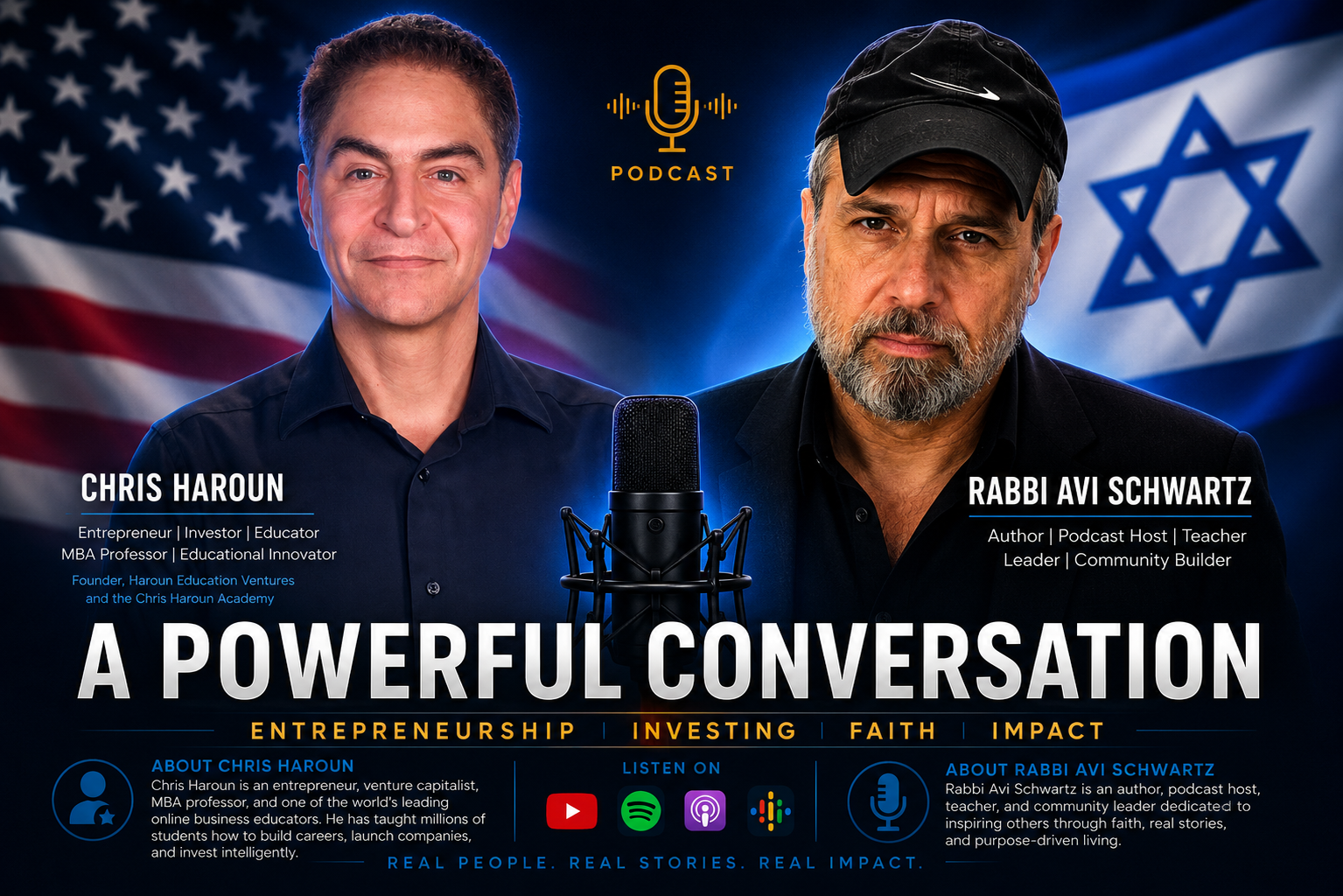
Lessons on Confidence, Networking, Faith, and Human Connection from My Conversation with Chris Haroun
Today I had the privilege of interviewing Chris Haroun, entrepreneur, investor, MBA professor, and one of the world’s most respected online business educators.
Chris has taught millions of students in more than 200 countries how to build careers, launch companies, invest intelligently, and create lives of purpose and financial freedom. He earned his MBA from Columbia Business School and worked at institutions such as Goldman Sachs and Citadel. Yet despite his extraordinary accomplishments, including visiting prisons to help prisoners redeem their lives, is the simplicity and authenticity of his message.
“Be yourself,” Chris said, “because everyone else is taken.”
That one sentence captures a profound truth.
Too many people spend their lives trying to win the approval of others. They suppress their dreams, silence their voices, and conform to expectations that were never meant to define them. Chris’s message was the exact opposite. Real success begins when a person has the confidence to become who G-d created him or her to be.
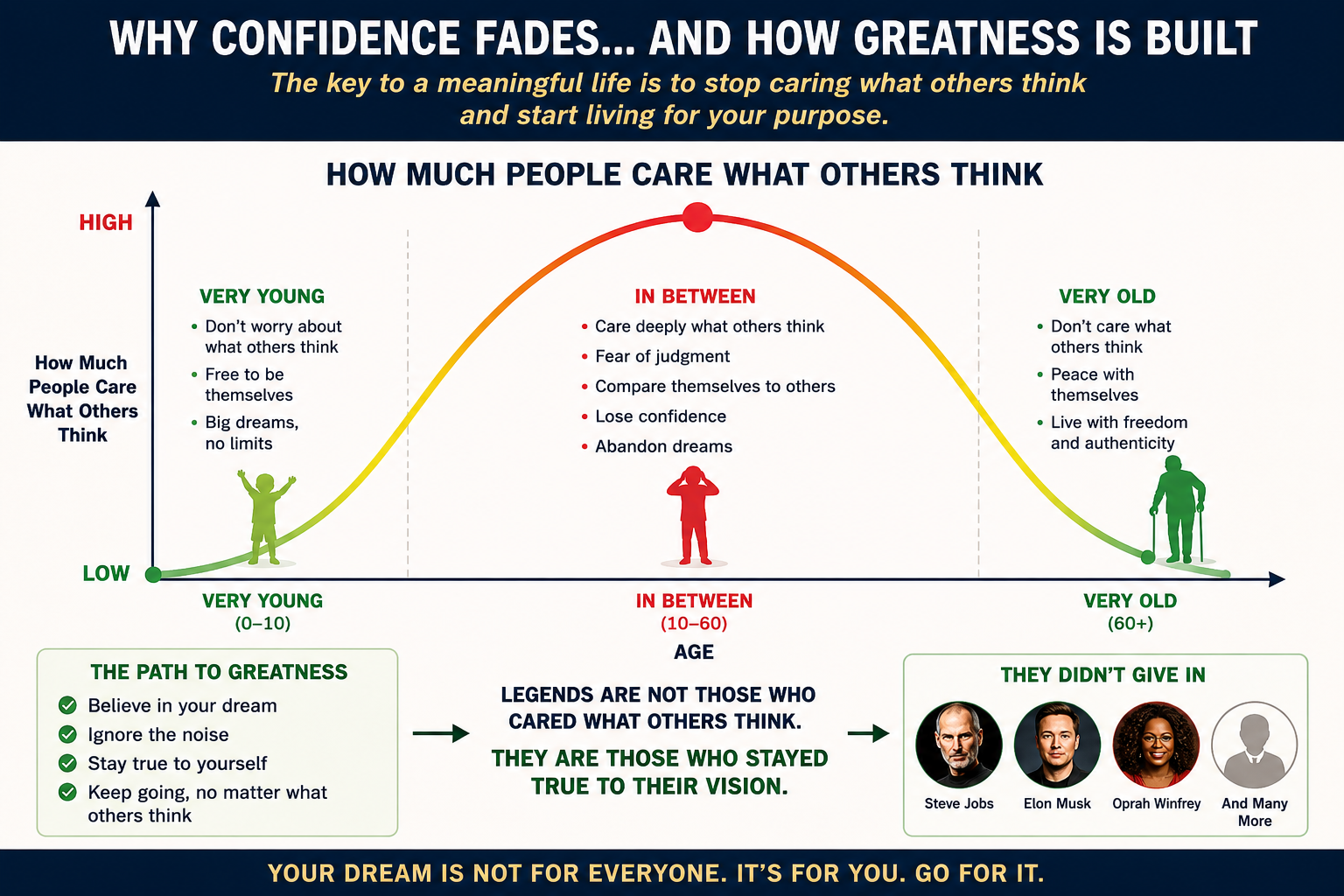
During our conversation, we discussed what Chris calls the “confidence curve of life.” When we are children, we dream freely. We do not spend much time worrying about what others think. We imagine boldly and believe almost anything is possible. Then, as we enter adolescence and adulthood, many of us become increasingly self-conscious. We begin to ask: What will people think? What if I fail? What if they laugh at me? This is often the stage in life when people abandon their greatest dreams.
But later in life many people stop caring so much about the opinions of others. They rediscover the freedom they once had as children.
If you were to graph this phenomenon, the horizontal axis would represent age, and the vertical axis would represent how much we care about what other people think. The curve would rise sharply during adulthood and then decline as we grow older. The lesson is powerful: the less you care about external approval, the more freedom you have to fulfill your purpose. “Within the ages ranges of 20s to 50s… it is the triangle of despair.. when people care too much about other people’s opinion in terms of self confidence”
This does not mean ignoring morality or ethics. Chris was emphatic that confidence must always be rooted in integrity. He distinguished clearly between confidence and arrogance. Confidence means trusting your G-d-given abilities and pursuing your mission. Arrogance means believing you are superior to others.
Chris shared a personal example. When he worked in venture capital, many people were eager to speak with him because of the prestige associated with that title. Today, he focuses primarily on teaching. As a result, some people may not view him with the same status. But he does not allow that to affect his self-worth.
“That’s their agenda,” he explained. “That’s not yours.”
In other words, other people’s opinions often reveal more about them than they do about you.
One of the most practical pieces of advice Chris shared concerned the first two weeks in a new job. Rather than trying to impress everyone immediately, he recommends taking time to observe. Listen carefully. Study the culture. Learn how decisions are made. Build relationships.
He offered a particularly powerful insight: the most valuable mentor in a new company may be your boss’s assistant. That person often understands how your boss thinks, what matters most, and how things truly get done.
Chris also emphasized the importance of networking.
Networking is not manipulation. It is not collecting business cards or using people. It is the art of building genuine relationships based on trust and mutual respect.
Success is not determined solely by what you know. It is also shaped by who knows you, who trusts you, and who believes in your character.
To illustrate this point, Chris and I role-played sales conversations and explored how rapport is created. The lesson was clear: people buy from people they trust.
Chris emphasized that in the age of AI rapport via sales will become even more important.
AI will transform every industry. Agents and algorithms will automate countless tasks. But one thing AI cannot replace is human trust.
People will continue to seek out those who are ethical, empathetic, competent, and reliable. Technology can process data, but only character can build lasting relationships.
In that sense, sales becomes more important than ever.
At its highest level, sales is not about pressure or persuasion. It is about understanding another person, communicating clearly, and helping solve meaningful problems.
Chris also spoke movingly about faith and gratitude.
He begins each day by thanking G-d for the blessings in his life. That simple practice creates a mindset of abundance and confidence.
“G-d believes in you. The question is: do you believe in yourself?” asks Chris.
This concept resonates deeply with Jewish thought.
The Torah teaches that every human being is created b’tzelem Elokim, in the image of G-d. Each of us has unique gifts and a mission that no one else can fulfill.
Our task is not to seek universal approval.
Our task is to identify and fully develop the talents G-d has entrusted to us.
Chris asked the viewers to take out a piece of paper and write the following sentence ten times:
“I don’t care of what people think of X ”
X is whatever people think is successful or what they deem as the right personality. Personality is not character. Character is morals, ethics and integrity. Personality is How You Express Yourself.
This exercise is not about rejecting constructive criticism or moral responsibility. It is about refusing to let fear of judgment keep you from becoming the person you were meant to be.
The implications of this message extend far beyond business. Whether we are speaking to entrepreneurs, students, or even individuals in prison seeking a second chance, the principle remains the same: every human being has inherent worth, untapped potential, and the capacity to rebuild.
Sometimes the greatest gift we can offer another person is the confidence to see the greatness that already exists within them.