

Thoughtful, Caring and Effective Therapy
Bearing Witness: Sagui Dekel-Chen’s Remarkable Concert at Kibbutz Nir Oz and the Story I Didn’t Expect to Hear
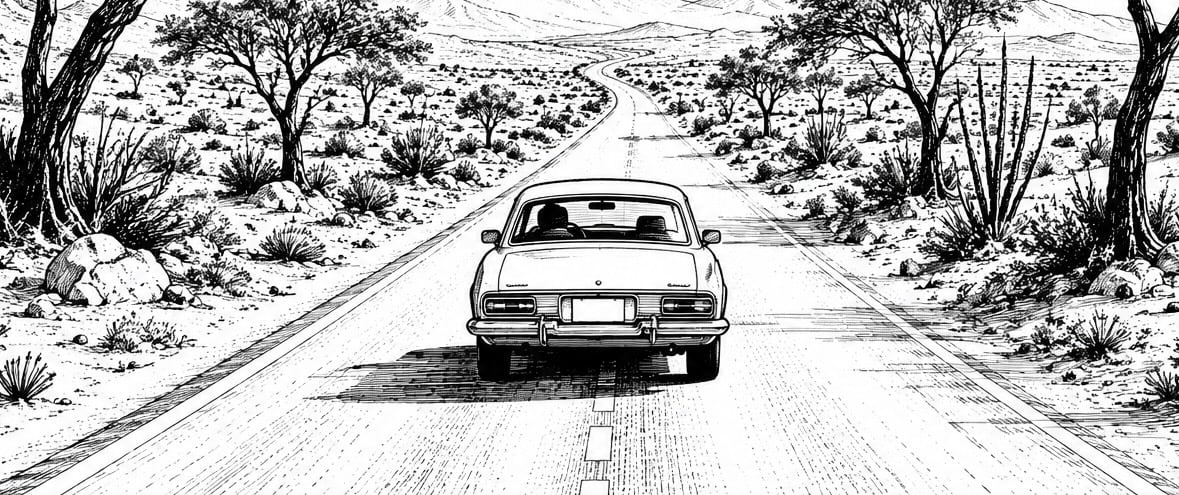
Illustration by Rich Kirschen (with some help from AI :) )
Last week, I made a journey to Kibbutz Nir Oz to hear the story of an extraordinary young man.
Sagui Dekel-Chen returned to his kibbutz to perform a concert on its lawn before more than 3,000 people. His story is almost impossible to comprehend. On October 7, 2023, when Hamas terrorists invaded Nir Oz, Sagui fought back to defend his kibbutz. He was shot, wounded, and taken hostage. He then spent 498 days as a hostage in Gaza.
During those 498 days, Sagui composed songs in his head and committed them to memory. When he finally came home, he brought those songs with him. And now he was performing them in the very place where his heartbreaking story had begun.
It was possibly one of the most incredible concerts I have ever attended — not because Sagui is a professional singer. In fact, he was humorously upfront about the fact that he isn’t, which made him all the more endearing. What made the evening so meaningful were the songs themselves: songs about what happened to him, his family, and his friends in Nir Oz on October 7, and about what he endured during the many months he was held captive by Hamas.
I think part of Sagui’s astounding strength lies not only in his determination to embrace life as part of his rehabilitation, but in what he chose to do with his experience. After enduring one of the most inhumane situations imaginable, he decided to create something from it. He wrote songs in captivity, held them in his memory, returned home, and then somehow summoned the charisma, courage, and sheer will to bring 3,000 people back to Nir Oz to bear witness to what happened to his home.
It was an act of reclaiming his life.
But what I didn’t expect was that the most personal part of the evening would happen before we even arrived at the concert.
My wife and I drove down from Jerusalem with our son and his girlfriend. As we approached Nir Oz, our son began telling us what had happened to him as a commander of an intensive combat unit on October 7 and in the days that followed.
At each intersection, he explained where he had fought Hamas. He pointed out the trees where friends of his had been killed. As we entered Nir Oz, he showed us the unbearable scenes he had witnessed at the kibbutz.
He described everything calmly and in remarkable detail. He simply pointed things out and told us what had happened, place by place, almost as though he were giving us a tour.
It was clearly important for him to tell the story. And I think the fact that he could tell it this way — calmly, precisely, without becoming overwhelmed — spoke to how much of what happened he has been able to process.
For my wife and me, however, hearing him tell the story while we were actually driving through the places where it happened was profoundly different from simply knowing the facts. We had heard some of this before. But seeing the intersections, the trees, the fields, and the houses — and hearing our son describe what he had experienced in each of those places — made it visceral.
And somewhere along that drive, I realized something I hadn’t anticipated.
I had made the journey to Nir Oz to hear the story of an extraordinary young man.
And I did hear that story. I heard Sagui’s songs. I heard what he had endured. And I felt privileged to be there to honor him and bear witness to his experience.
But unintentionally, on the drive down to Nir Oz, I heard the story of my own son.
That realization hit me hard.
It is strange to think that my first significant Israel experience, in 1981, took place at Kibbutz Nir Oz. I was a 17-year-old American teenager living there on an exchange program, and that experience eventually helped lead me toward aliyah. At the time, Nir Oz represented a place where the Israeli dream felt romantic, tangible and real.
And now, 45 years later, I was driving through that same place with my son, listening to him describe how, as an Israeli soldier, he had fought Hamas on October 7 and in the days that followed.
The place where I had once experienced Zionism as an idealistic teenager had become the place where my son had to fight for his life — and fight for the survival of this country.
There was something almost impossible to comprehend about that.
Two young men. Two very different stories. One amazing evening.
Sagui had returned to Nir Oz to reclaim his home by bringing thousands of people back to bear witness.
And perhaps that is part of what it means to bear witness: sometimes we go somewhere to hear someone else’s story and discover that, in ways we never expected, the story is also our own.
I left Nir Oz with an overwhelming sense of pride in Israel and especially in my three Israeli children — and in all they have endured and sacrificed for this country.
But it was also a heavy evening, and a reminder of the extraordinarily heavy price that all of us continue to pay as Israelis.