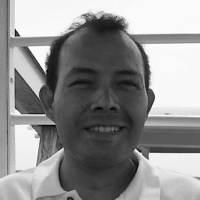
Exploring Memory, War, and Survival
Before I Knew the Name
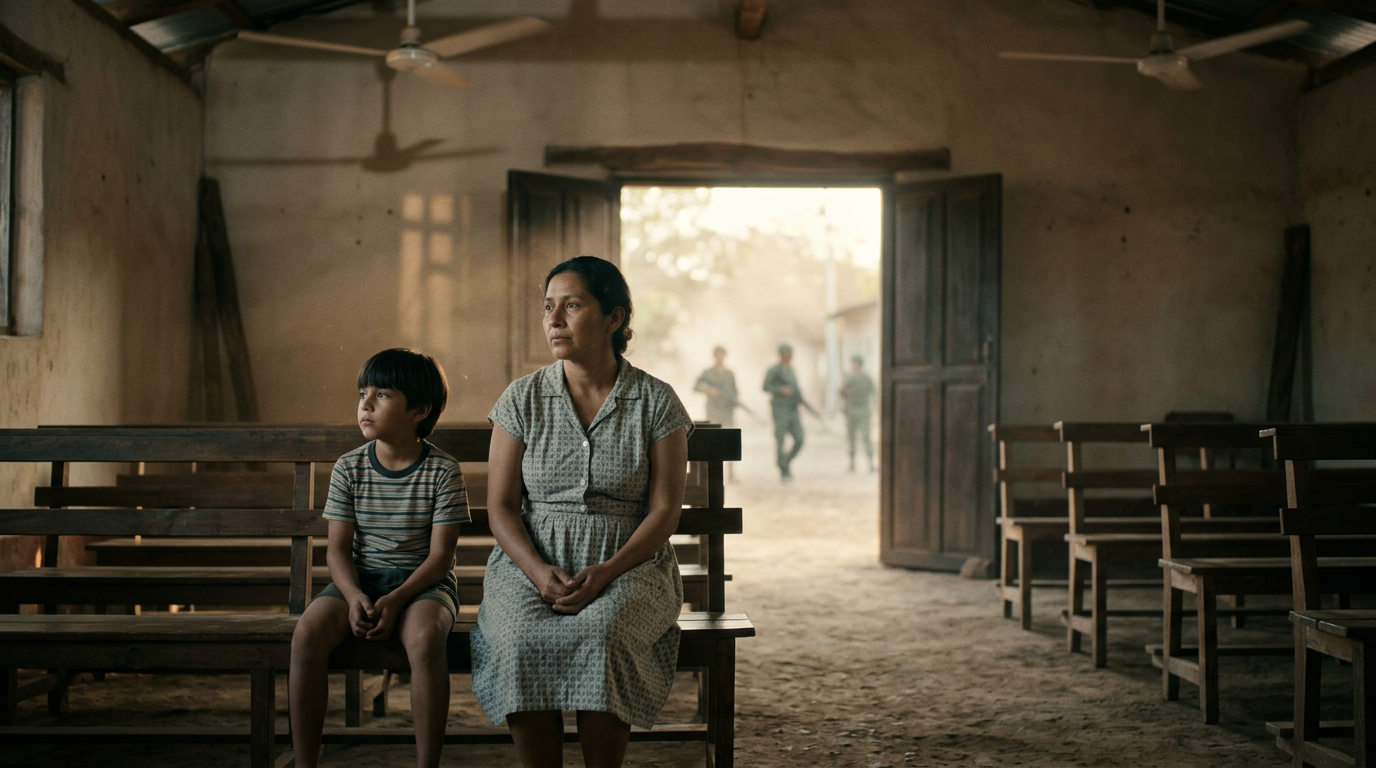
Childhood in El Salvador during the civil war.
There are things the body recognizes before the mind has a language for them.
When I was a child in El Salvador, I attended a small church with my mother. It was not a Jewish place. It did not call itself that. And yet, there were moments—small, unannounced—when something unfamiliar would enter the room and settle in the air as if it had always belonged there.
We sang songs I understood, at least on the surface. They were in Spanish. And yet, something in them felt distant—not foreign, but older, as if they carried a weight that did not belong entirely to the room we were in. One of those songs was “Hatikva” — “La Esperanza.” I did not know its name then. I did not know where it came from, or what it meant beyond the words I could follow.
But I knew it.
Not in the way one knows facts, but in the way one recognizes a face in a crowd without remembering where it was seen before.
I remember the feeling more than the sound. Something in me settled when the melody began, as if a question I did not know I had was being answered in a language deeper than comprehension. The adults around me sang with intention. I listened without knowing why it mattered.
Outside that church, the country was still at war. Helicopters crossed the sky often enough that children learned to recognize them by sound before they could explain fear in words. Adults lowered their voices when speaking about certain things. Some neighbors disappeared without explanation. Even at that age, I understood that survival depended partly on silence.
And yet, inside that small church, there were moments when another kind of memory entered the room—older, quieter, impossible for me to name at the time.
No one explained it to me.
No one said: this is part of something you belong to.
So I carried it without context, like a fragment of memory that had detached itself from its origin.
The war eventually ended—in documents, ceremonies, and official declarations. A few months later, I immigrated to the United States. But leaving a country is not the same as leaving everything it placed inside you. The song disappeared from my daily life for years, yet something about it remained beneath awareness, waiting without asking to be remembered.
I did not hear it again for a very long time. Then, years later, during my high school graduation in the United States, the school band began to play it.
I recognized the melody immediately.
And before I even had time to understand why, I realized something else:
I still remembered the words.
After all those years, they had remained somewhere inside me, intact.
It was not until much later, through a DNA test, that I learned there was Jewish ancestry in my family history.
What it unlocked was not a statistic, but a recognition.
Something that had been present without explanation now had a name.
I began to revisit things I had not questioned before. Memories that had seemed incidental started to align differently. That church. Those songs. That feeling I could never quite place.
I found “Hatikva” again, this time not as background, not as something half-heard in a room, but as itself. I listened carefully. I read about it. I understood, for the first time, what it meant.
And still, what struck me most was not what I learned in that moment, but what I had already felt years before.
The recognition had come first.
The knowledge came later.
There is something unsettling about discovering that a part of your identity existed in you long before you had the language to name it. It challenges the idea that identity is only what we are taught, only what is handed down clearly, with explanation and context.
Sometimes it is neither.
Sometimes it arrives quietly, without introduction, and waits.
I do not claim a religious life shaped by ritual. I do not pretend to have lived the traditions that define Jewish identity for so many others. But I cannot ignore the continuity between that child who listened without understanding and the adult who now recognizes what was present all along.
It would be easier to dismiss it—to say that recognition is something we project backward once we have new information.
But that is not what this feels like.
This feels like something that existed quietly long before I knew how to name it.
There is a concept in Jewish thought—zachor, to remember—not simply as an act of recalling the past, but as a way of bringing something into the present so that it can live again, differently.
I think about that now.
About what it means to remember something that was never fully explained to you.
About what it means to recognize a part of yourself that did not arrive through teaching, but through something quieter.
I still hear that song sometimes.
Not as it was sung in that small church, but as it exists now, fully known.
And each time, there is a brief moment—small, almost unnoticeable—when the past and the present align.
Not perfectly.
But enough.
Enough to understand that some things do not begin when we name them.
They begin much earlier.
We just don’t always know it yet.
Related Topics
Related Posts