The views expressed herein are solely mine.
Before Israel: Medieval Unions of East and West
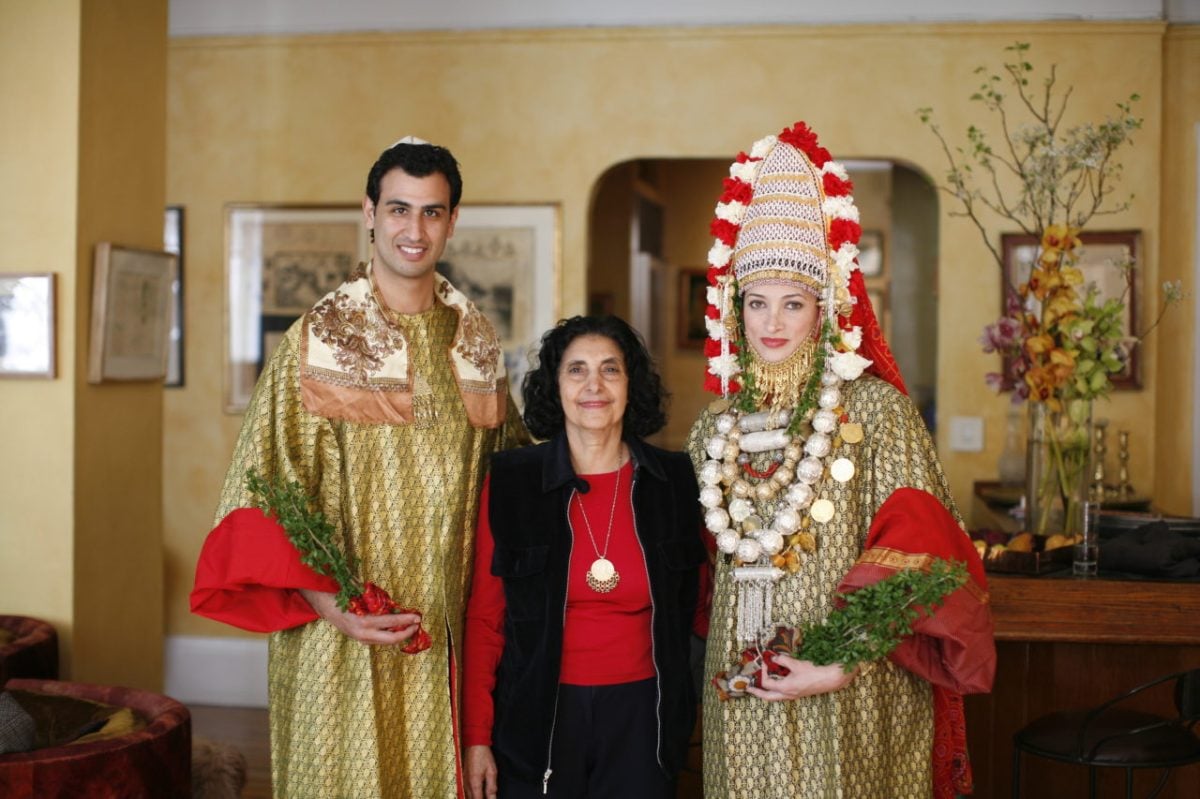
Preparing for a Yemenite Jewish wedding in the Bay Area. (Photo/Punam Bean)
Intermarriage between Middle Eastern and European Jews did occur before the 20th century — rare but historically verifiable, usually in port cities, diplomatic hubs, or scholarly networks. These marriages reveal how interconnected the Jewish world actually was, despite vast geographic separation.
One documented case is that of Rabbi Ḥayyim Joseph David Azulai (the Ḥida), the 18th-century Moroccan scholar whose extensive travels brought him into sustained contact with European Jewish communities; members of his extended family subsequently married into Italian and Ashkenazi rabbinic lines in Livorno and Amsterdam.
In Ottoman lands, Aleppine Jewish merchants formed marriage alliances with Sephardi-Ashkenazi families in Istanbul and Izmir, often linking Syrian Judeo-Arabic speakers with Ladino- or Yiddish-influenced households engaged in textile, coral, or spice trade. These unions appear in communal ketubbot, rabbinic approvals, and shared cemetery inscriptions.
Another verifiable pattern appears in Odessa and Kishinev, where Bukharan and Persian Jewish traders married into local Ashkenazi families involved in the Black Sea grain economy. Their descendants are traceable through Russian Empire census records (revizskie skazki) and ketubbot preserved in the St. Petersburg archives.
Thus, these marriages were not demographic trends, but cross-cultural bridges — micro-alliances that quietly stitched together the Mizrahi, Sephardi, and Ashkenazi worlds long before Zionism created a single Hebrew-speaking society.
Related Topics
Related Posts