
Before you embark on a journey of revenge, dig two graves
Following the October 7 Hamas attack, the families of hostages with dual American citizenship very quickly organized countless trips to the United States and elsewhere to campaign on behalf of our loved ones. Our “job” was to tell our stories. The more graphic, the more heart-rending, the better. We were expected to make an impression.
That was not my initial take on the situation. I come from a highly political background — the left-wing Hashomer Hatzair movement — and an ethos that believes the solution to almost every problem is political. I thought from the beginning that our efforts had to be directed at the people and institutions capable of changing the situation.
My family and I were stunned by the enormity of what happened in Nir Oz and in the other kibbutzim, moshavim and cities that day. We were terrified for Liat and Aviv, and devastated by what had happened to their community and to so many others.
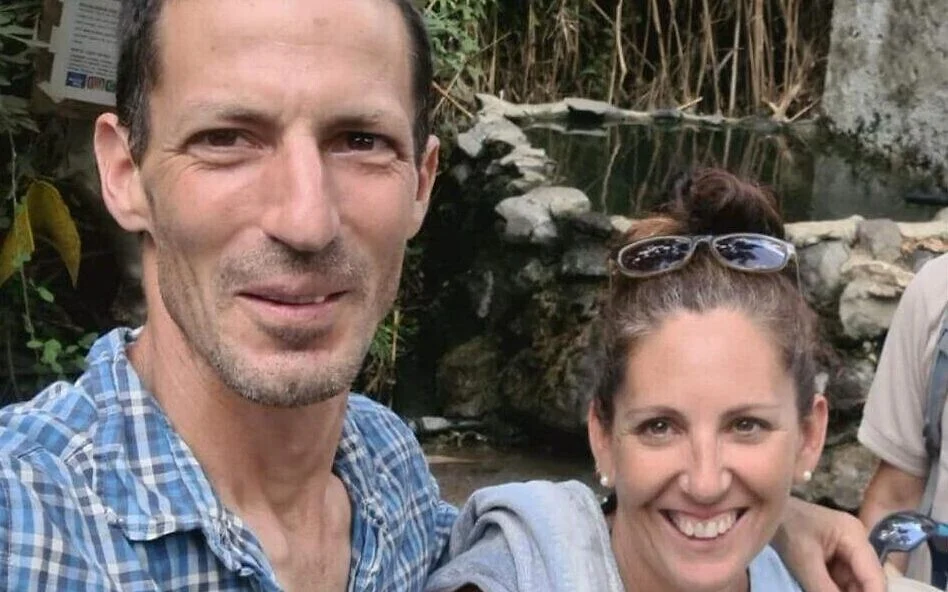
Our story is bittersweet. Liat, our daughter, a beloved educator and Holocaust scholar, was released from captivity on November 29. A few hours later, we learned that her husband, Aviv Atzili, had been killed on October 7 while defending his home, Kibbutz Nir Oz.
Atzili means noble, and as his name suggests, Aviv was a noble soul. He was a pillar of his community, a master mechanic and an artist with a remarkable ability to transfer the world around him onto canvases and old plow blades. He was a master craftsman and a mensch. He was the kind of person who knew how to fix things, make things and make people feel at home. And now he is a memory.
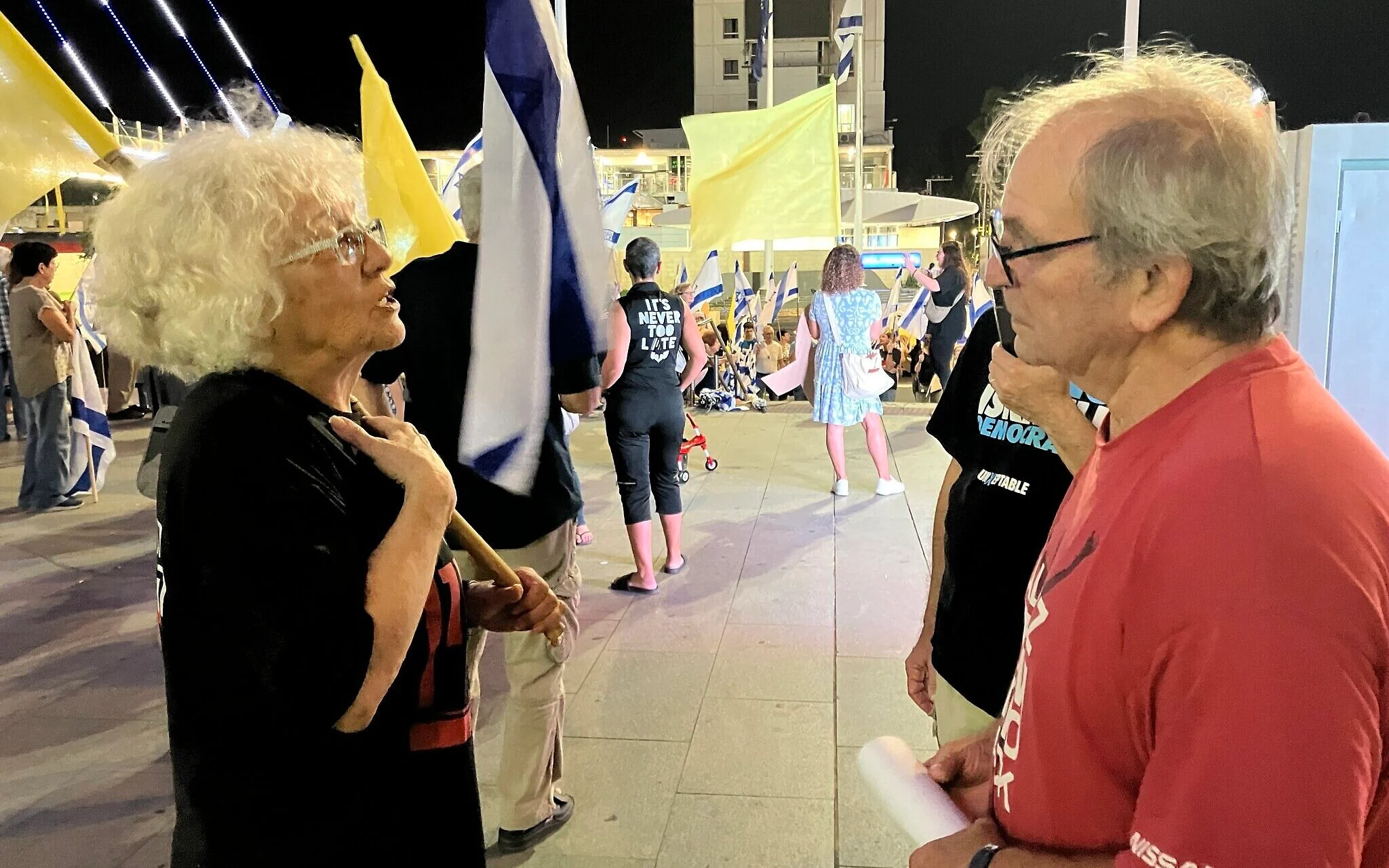
It became increasingly clear to me that the government’s response to October 7 was being shaped by a politics of revenge, deception, and crisis management, accompanied by an enormous effort to manage public opinion. Revenge is about making the other side pay for what it has done to us. But killing people who have nothing to do with the decisions that led to the attack does not undo the loss of those we have lost. It creates more people who have lost someone, more hatred, and more motivation for revenge. This is how a conflict becomes self-perpetuating. A military victory can leave the underlying conflict deeper than it was before.
The result has been a war in which the human cost is measured in tens of thousands of Palestinian dead and hundreds of thousands wounded, alongside the continuing loss of Israeli soldiers and civilians. At the same time, settler violence in the West Bank has increased while the authorities turn a blind eye.
What I see is a systematic dehumanization of an entire population, accompanied by the insistence that there is no Palestinian partner with whom reconciliation or dialogue is possible. That does not resolve the conflict. It makes it harder to imagine how the conflict can ever end.
I find the notion that there are no worthy Palestinian souls repugnant.
We mourn our dead. They mourn theirs. We grieve for our children, and they grieve for theirs. The experience of losing someone you love does not belong to one national or religious group.
I know what it means to lose someone you love. Nothing about my experience makes Palestinian grief less real. If anything, it makes it impossible for me to deny.
For me, this is also deeply rooted in Jewish values. Tikkun Olam, the obligation to repair the world; B’tzelem Elohim, the recognition of human beings as created in the image of God; Tzedakah, which encompasses both justice and righteous giving; Chesed, loving-kindness; and Pikuach Nefesh, the preservation of human life. These are part of the moral foundation of Jewish civilization and of the liberal, progressive tradition in which I was raised.
If we are unwilling to abandon those values — and I am not — we also have to confront a historical reality. Force can crush resistance. It can destroy armies, infrastructure, and institutions. It can impose control for a period of time. But force cannot make an entire population disappear, nor can it make its national aspirations disappear. History provides very little evidence that permanent domination of a distinct population with a strong national identity and collective aspirations can be maintained indefinitely by force alone.
When force becomes an instrument of revenge rather than part of a political strategy, it is ultimately self-defeating. The people who suffer it do not simply forget. Their grief becomes part of the next generation’s political identity. The child who loses a parent, the parent who loses a child, the family that loses its home — none of them experiences that loss as an abstraction. The loss becomes memory, and memory can become part of the reason for the next round of violence.
The same is true on both sides.
Hamas cannot build a Palestinian future through the destruction of Israel, and Israel cannot secure a permanent future through the destruction or permanent subjugation of Palestinian national aspirations.
The future is peace.
Every conflict eventually ends. It may take generations, or it may happen much more quickly than anyone expects. When that happens, the people who have continued to recognize the humanity of the other will have something to build on.
That is what the Parents Circle–Families Forum represents to me. Israelis and Palestinians who have suffered the most intimate consequence of this conflict and have nevertheless chosen not to turn their grief into hatred. We do not have to agree with one another about history, politics or the future. We have to recognize one another as human beings.
We are not simply people trying to reconcile ourselves to what has happened. We represent the day after. We are the future.
Our losses cannot be changed. What can be changed is what we do with them.
We can allow our losses to justify another generation of hatred and revenge, or we can refuse to pass that hatred on.
*“Before you embark on a journey of revenge, dig two graves” is commonly attributed to Confucius, although there is no reliable evidence that he said it. The sentiment, however, deserves to be taken seriously.