


Before You Run, Look Again – Va-yera 5787

Last November, I was privileged to lead a Temple Emunah group on a trip to Portugal, Spain, and Morocco. One of our stops was the grave and shrine of Rabbi Shlomo Bel Hench in Morocco’s Ourika Valley, in the Atlas Mountains.
He is sometimes called the “Snake Rabbi.” According to local legend, when thieves came to steal the village’s horses, he transformed himself into a snake to protect them.
I’m kinda picturing a…. cobra. Like with a tallis or something…
Well, in any case, they don’t teach snake magic anymore in rabbinical school.
Today, people still visit his grave seeking blessing and healing.
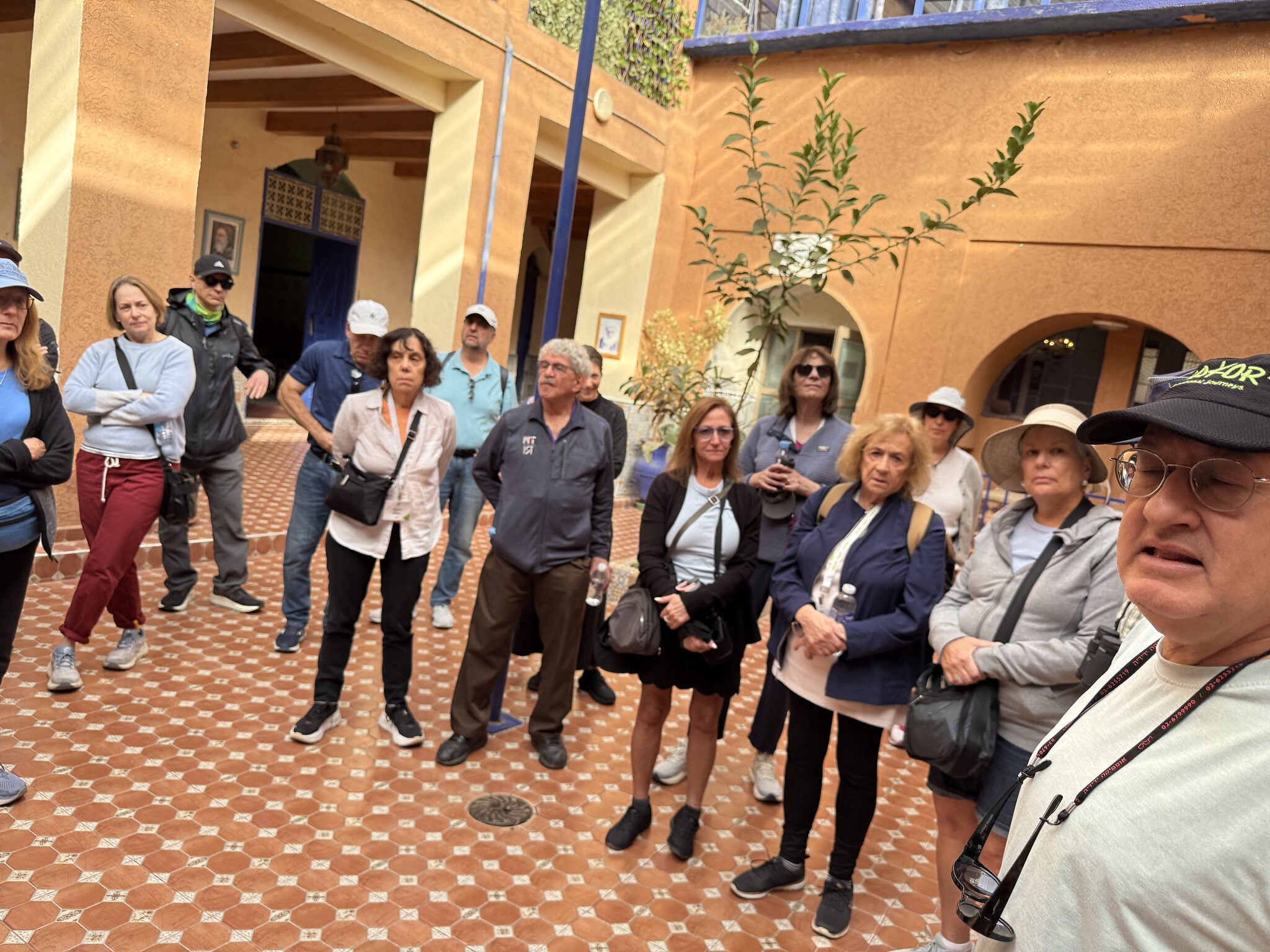
There is a synagogue at the site, and we davened there — we had a short service.
Afterward, I stepped out of the synagogue onto the staircase to leave.
And… ow.
I felt the lateral meniscus in my left knee tear.
The same feeling, in the same knee, as when I tore it playing basketball 25 years earlier.
Classic.
Visiting the grave of a rabbi associated with healing.
And I left injured.
The Snake Rabbi.
And I got… snakebit.
*****
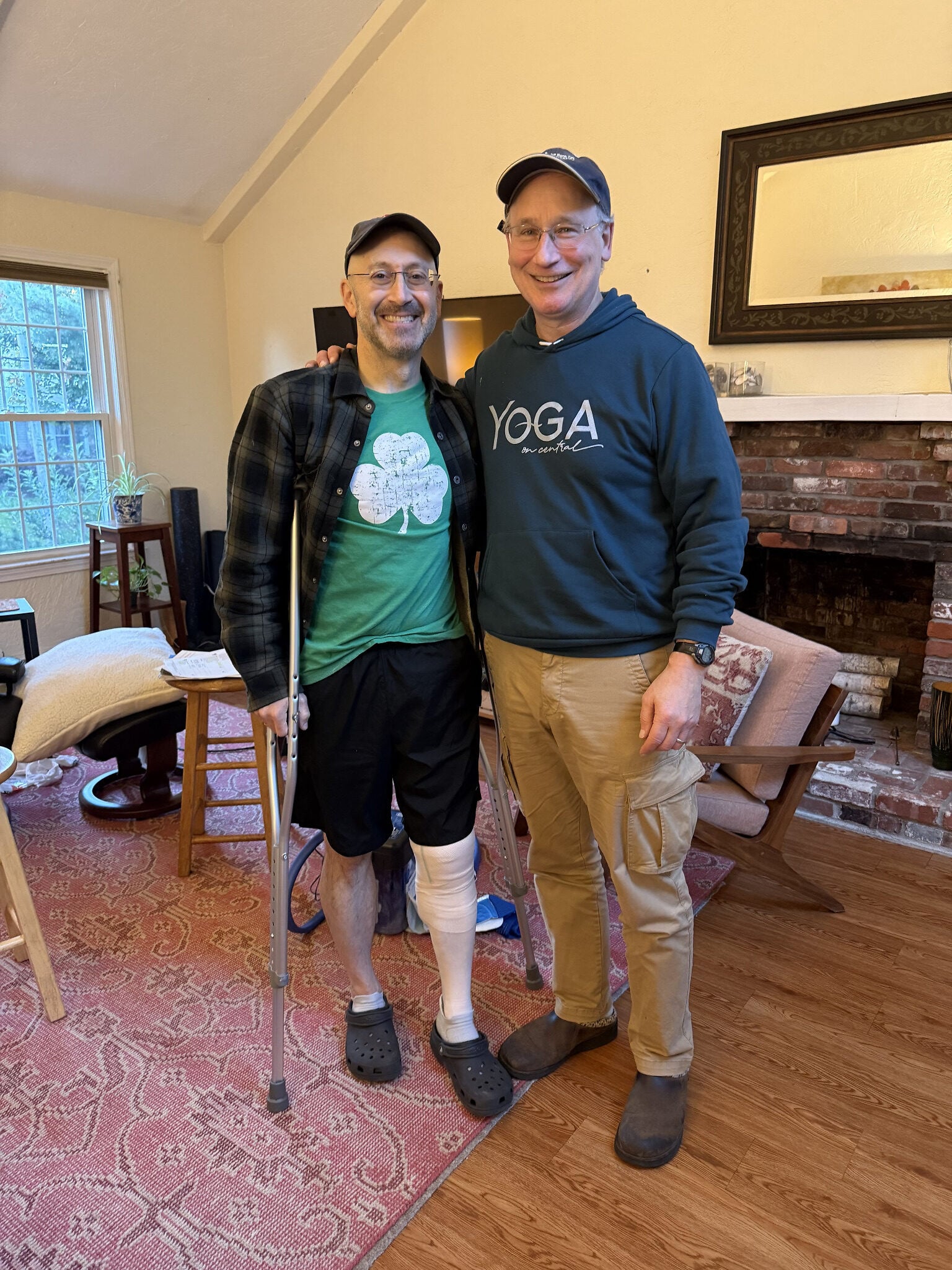
After PT, delays, indecision, and insurance company rejections, almost a year later, I finally had surgery.
And now I’m recovering. Getting around with a little help from my crutches. Figuring out what I can do myself and when I need some help.
So this year, I was reading the opening of this morning’s parashah with a little extra sympathy for Abraham.
Because he’s recovering, too.
Va-yera begins:
וַיֵּרָא אֵלָיו ה׳ בְּאֵלֹנֵי מַמְרֵא וְהוּא יֹשֵׁב פֶּתַח־הָאֹהֶל כְּחֹם הַיּוֹם׃
“Adonai appeared to him [to Abraham] by the oaks of Mamre, while he was sitting at the entrance of the tent in the heat of the day.” (Gen.18:1)
God appears to Abraham.
But why?
It’s kind of weird.
God doesn’t say anything to him.
Doesn’t tell him to go on another journey, no change of name.
No commandment. No instruction.
Rashi, our great 11th-century French commentator, offers a beautifully simple explanation:
לְבַקֵּר אֶת הַחוֹלֶה.
“To visit the sick.”
Drawing on the Talmud, Rashi explains:
יוֹם שְׁלִישִׁי לְמִילָתוֹ הָיָה, וּבָא הַקָּדוֹשׁ בָּרוּךְ הוּא וְשָׁאַל בִּשְׁלוֹמוֹ.
“It was the third day after his circumcision, and the Holy Blessed One came and inquired after his well-being.” (Rashi on Gen. 18:1; Bava Metzia 86b)

Abraham is recovering.
And God comes to see how he is doing.
It’s an extraordinary understanding of a divine encounter. Sometimes, the sacred act is simply to be present with someone who is hurting.
And the Talmud takes this encounter and makes it our responsibility.
Rabbi Ḥama bar Ḥanina asks how a human being can possibly walk after God.
What does it mean to follow the Divine?
His answer:
אֶלָּא לְהַלֵּךְ אַחַר מִדּוֹתָיו שֶׁל הַקָּדוֹשׁ בָּרוּךְ הוּא.
“Rather, follow the attributes of the Holy Blessed One.”
God clothes those who need clothing; we should, too. God comforts mourners; we should, too. God buries the dead; we should, too.
And, drawing directly on our opening verse:
הַקָּדוֹשׁ בָּרוּךְ הוּא בִּיקֵּר חוֹלִים, דִּכְתִיב: ״וַיֵּרָא אֵלָיו ה׳ בְּאֵלֹנֵי מַמְרֵא״ — אַף אַתָּה בַּקֵּר חוֹלִים.
“The Holy Blessed One visited the sick, as it is written: ‘Adonai appeared to him by the oaks of Mamre’ — you, too, should visit the sick.” (Sotah 14a)
We imitate God through acts of care.
A visit. A gesture of comfort. Showing up when someone needs us.
But Abraham does not remain seated for long.
***
Listen to the next verse; suddenly:
וַיִּשָּׂא עֵינָיו וַיַּרְא וְהִנֵּה שְׁלֹשָׁה אֲנָשִׁים נִצָּבִים עָלָיו וַיַּרְא וַיָּרָץ לִקְרָאתָם מִפֶּתַח הָאֹהֶל וַיִּשְׁתַּחוּ אָרְצָה׃
“He lifted his eyes and saw: there were three men standing near him. He saw, and he ran toward them from the entrance of the tent and bowed to the ground.” (18:2)
He ran.
He had just had surgery.
OK. Impressive.
Abe doesn’t need any crutches.
Admirable… but maybe disconcerting.
We can understand the impulse.
When you need help yourself, being able to help someone else can be deeply affirming. Illness can narrow our world. But an opportunity to support someone else can bring us back into the world. But maybe running after surgery is not always the best choice.
But the rabbis find something else happening here.
They ask: Who are these three visitors?
The Torah introduces them as anashim, men. But the Talmud identifies them as angels: Michael, Gabriel, and Raphael.
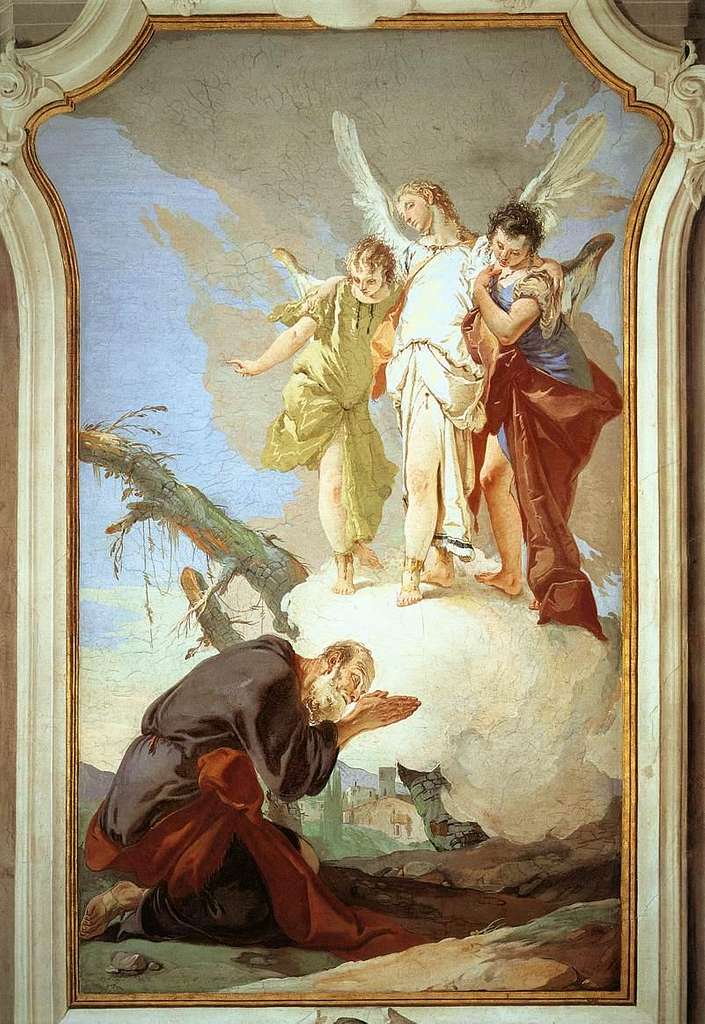
© public domain
Michael comes to announce that Sarah will have a son. Gabriel comes with the mission of overturning Sodom. Rashi says that Raphael has come לְרַפְּאוֹת אֶת אַבְרָהָם To heal Abraham.”
Even his name, Refa’el, speaks of God’s healing. Refa heal; El — God. God heals.
So Abraham runs to welcome a visitor who has come to care for him.
He offers hospitality.
And he receives healing.
Abraham is both the host and the patient.
Needing care does not erase our capacity to give.
Giving does not erase our need to receive.
Both can be true in the same person, in the same encounter.
Still, we should be careful with Abraham’s running.
Someone recovering from surgery or living with chronic illness should not hear this as one more demand to push harder.
We do not have to earn the care we receive by proving how much we can still do.
But how do we recognize both things in someone? The part that needs help and the part that still wants to give?
Maybe we have to look again.
*****
And that brings me back to something unusual in the verse. This is a portion that opens with sight. God appears — Va-yera.
And then it says: vayar — Abraham saw.
And then, just a few words later:
Vayar. He saw again.
Rashi asks: Why does the Torah tell us twice? “מַהוּ וַיַּרְא וַיַּרְא שְׁנֵי פְעָמִים – what is the meaning of ‘he saw,’ ‘he saw,’ twice? [And Rashi answers:] הָרִאשׁוֹן כְּמַשְׁמָעוֹ וְהַשֵּׁנִי לְשׁוֹן הֲבָנָה – the first means seeing in its ordinary sense; the second means understanding.”
Abraham first sees the visitors.
Then he understands something about their behavior; Rashi continues: נִסְתַּכֵּל שֶׁהָיוּ נִצָּבִים בְּמָקוֹם אֶחָד וְהֵבִין שֶׁלֹּא הָיוּ רוֹצִים לְהַטְרִיחוֹ
“He observed that they remained standing in one place and understood that they did not want to trouble him.” (Rashi on Gen. 18:2)
I love this answer. The visitors hesitate out of consideration for him.
He approaches because he wants to welcome them.
His running after them shows care.
Abraham runs after them because that’s what you do — you welcome guests.
You go out of your way to take care of them.
But they see that he also needs care, so they hold back. They don’t really want to bother him too much.
Our rabbis are describing a really wonderful, nuanced human encounter.
The visitors see that Abraham needs care. And he does. But he also wants to welcome them.
Both things are happening — at the same time.
How often do we notice one and miss the other?
*****
So much of caring for one another depends on that second look.
I often see this in our community. Someone is struggling, and we want to help. But our readiness to offer care may be different from their readiness to receive it.
A person might welcome dinner left at the door and have no energy for a visit.
We have to make room for that.
But we also have to make the first call.
Sometimes we don’t call because we’re afraid of intruding or don’t know what to say. Or we offered once, they said no, and now we’re hesitant to try again.
And the person making the call may have their own stuff going on. We may be struggling, too. We can need someone to check on us and still check on someone else.
But Abraham’s eagerness has something to teach us.
Make the offer. Let someone know they matter.
Then listen to the answer.
We can respect “not today” and leave the door open. We can care without requiring someone to receive our care in the form we imagined.
The first seeing notices that someone is there. The second tries to understand how to approach.
That second seeing takes attention.
*****
I keep coming back to Abraham at the entrance of that tent.
He needs care. And he wants to give it.
The visitors want to spare him the trouble.
But he wants them to stay.
So when do we get up and run toward someone? When do we hold back?
And when do we let someone do something for us — even when we would much rather be the one helping?
I don’t think there’s one answer.
Even with the same person, on a different day, the answer might change.
Maybe that’s why I’m drawn to that second seeing.
We look. We think we understand.
Can we look again?