
Middle East Affairs | Political Theology | Defending Judeo-Christian Values
Behind The Settlements in the West Bank
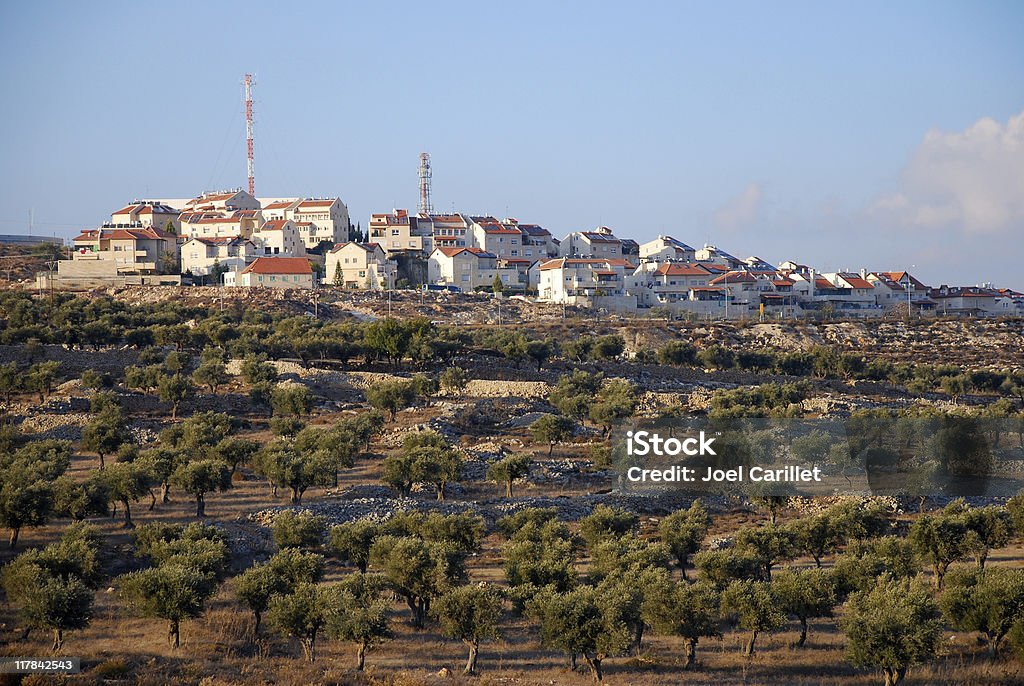
The Jewish settlement of Gilo, located in the West Bank south of Jerusalem
When Israel was established in 1948, it emerged as a modern, secular nation-state committed to international law and diplomacy. Unlike the religious voices urging the reclamation of biblical lands like Hebron, Nablus, or Jericho, Israel’s early leaders were concerned over the safety of the next generations. The 1947 UN Partition Plan, which proposed a two-state solution, was accepted by Israel despite its modest allocation of land. In its Declaration of Independence, Israel extended a hand to its Arab neighbors, inviting them to build a shared future with equal rights for all. This vision was met with immediate hostility. Arab states rejected the partition plan, launched a war to destroy the nascent Jewish state, and continued their aggression through the 1950s and 1960s. This unrelenting refusal to accept Israel’s existence set the stage for the 1967 Six-Day War, a pivotal moment that reshaped the region.
The Six-Day War and Its Aftermath
In June 1967, facing imminent attack from Egypt, Jordan, and Syria, Israel launched a preemptive strike, capturing the West Bank from Jordan, the Sinai Peninsula and Gaza Strip from Egypt, and the Golan Heights from Syria. The war was a defensive necessity, not an imperialist grab. Days after the victory, on June 19, 1967, Israel’s cabinet proposed a peace plan to the United States, offering to return nearly all captured territories, including the West Bank to Jordan, Sinai to Egypt, and the Golan Heights to Syria, in exchange for peace agreements ensuring secure borders. This offer, a bold gesture of reconciliation, was met with silence from Arab states until the Arab League’s Khartoum Resolution on September 1, 1967, declared “no peace, no recognition, no negotiations” with Israel. This categorical rejection left Israel to administer the West Bank, a territory it had not sought to occupy permanently.
The Rise of Settlements
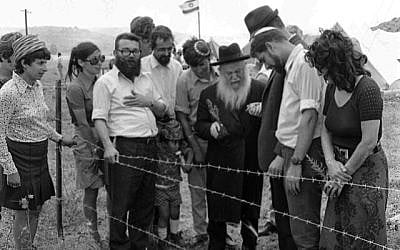
The occupation of the West Bank opened the door for religious settlers, inspired by figures like Rabbi Zvi Yehuda Kook, to advocate for reclaiming ancestral lands. In September 1967, Hanan Porat, a disciple of Kook, petitioned Prime Minister Levi Eshkol to resettle Kfar Etzion, a Jewish community destroyed in 1948. Eshkol, guided by legal advisor Theodor Meron’s unequivocal conclusion that civilian settlements in occupied territories violated the Fourth Geneva Convention, rejected the request. However, Deputy Prime Minister Yigal Allon proposed a compromise: “security settlements” designed not to fulfill religious or historical ambitions but to protect Israel’s vulnerable borders. Israel’s pre-1967 territory, at its narrowest point just nine miles wide, faced existential risks without strategic depth. These early settlements were thus a pragmatic response to a real threat, not a religious crusade.
Israel’s government adopted a “reconciliationist” stance, viewing the West Bank as a bargaining chip for peace rather than a permanent possession. This approach was formalized in Israel’s acceptance of UN Security Council Resolution 242 in 1968, which called for withdrawal from occupied territories in exchange for peace and secure borders. The resolution implicitly recognized Israel’s right to retain certain areas for defense, given the constant threat of Arab aggression. While religious settlers gained traction, Israel’s policies were driven by security imperatives and a willingness to negotiate, a willingness repeatedly rebuffed by Palestinian and Arab leaders.
The Palestinian leadership’s refusal to accept Israel’s existence has been the greatest barrier to peace. This rejectionism, rooted in an Islamic ideology that deems any Jewish sovereignty in the land illegitimate, transcends disputes over borders. The First Intifada (1987–1993) demonstrated that Palestinian unrest in the West Bank posed a direct threat to Israel’s survival, reinforcing the strategic need for settlements. Yet, Israel took bold risks for peace. Yitzhak Rabin, aware of the domestic cost, pursued the Oslo Accords and offered to dismantle settlements and withdraw from the West Bank. In a lesser-known gesture, Rabin, as testified by Egypt’s Hosni Mubarak, proposed returning the Golan Heights to Syria’s Hafez al-Assad for a peace agreement, recognizing Syria’s government as a credible partner capable of ensuring security. No such partner emerged among the Palestinians.
The 2000 Camp David Summit, where Ehud Barak offered a near-total West Bank withdrawal, and Ehud Olmert’s 2008 proposal, which included a Palestinian state with borders close to the 1967 lines, were both rejected by Palestinian leaders. These rejections expose a critical truth: the 1967 borders are not the goal. The Palestinian leadership’s demands, often framed as a return to pre-1967 lines, are a pretext for a broader aim: the elimination of Israel.
The 2005 unilateral withdrawal from Gaza, served as a test of Palestinian intentions, led to Hamas’s takeover, rocket barrages, and the atrocities of October 7, 2023. This catastrophic outcome underscores the peril of withdrawing from the West Bank without ironclad security guarantees.
The Gaza Lesson
Israel’s withdrawal from Gaza, dismantling every settlement and evacuating over 8,000 Israelis, was a painful concession for peace. Instead of fostering coexistence, it empowered Hamas. The October 7 attacks, which killed over 1,200 Israelis and took hundreds hostage, were a direct consequence of this withdrawal. The Gaza precedent looms large over the West Bank, where a similar withdrawal could invite even greater chaos given the territory’s proximity to Israel’s population centers. Settlements, however controversial under international law, remain a defensive bulwark against this existential threat. Israel’s willingness to withdraw from Sinai in 1979, when Egypt guaranteed peace, and Rabin’s offer to return the Golan Heights, when Syria appeared credible, prove that Israel is prepared to relinquish territory for genuine security. The Palestinian leadership has offered no such assurance.
Related Topics