French-Israeli Artist and Jewish Advocate
Featured Post
Being visibly Jewish is not a crime
Instill Jewish pride in your kids, so that if they're kicked off a plane for singing in Hebrew, they won't want to hide their identities
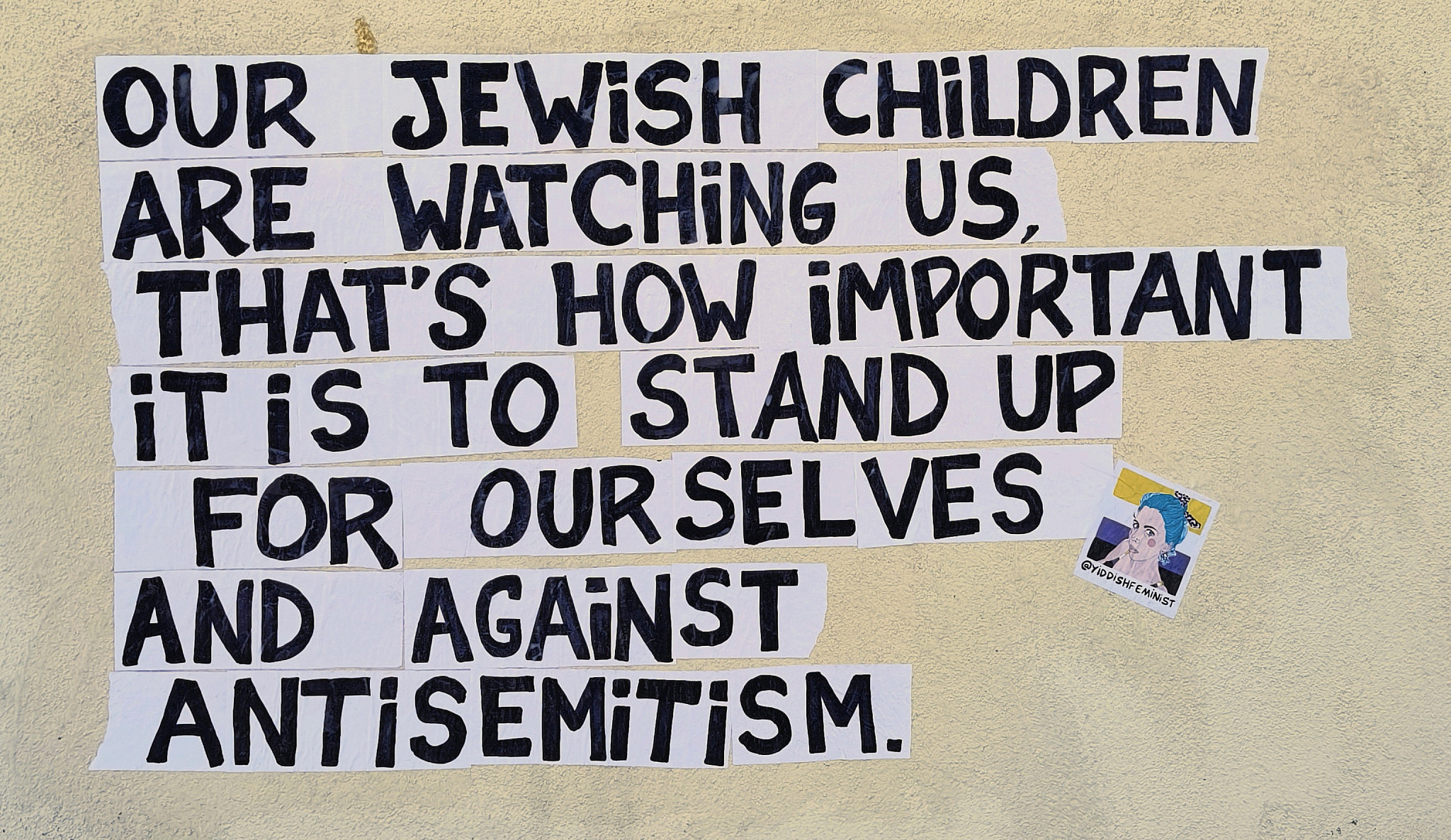
(YiddishFeminist, Morgane Koresh)
When Grief Isn’t Shared: From Toulouse to Today
I lost my faith in France’s ability to care about its Jewish citizens the day children were murdered in Toulouse. It wasn’t just the horror of the killings, it was what came after. Or rather, what didn’t.
In March 2012, Mohamed Merah walked into a Jewish school and murdered three children and a rabbi at point-blank range. Their names, Arié, Gabriel, Myriam, and Rabbi Jonathan Sandler, should have marked a national day of mourning. A reckoning. A turning point.
Instead, the shock and grief remained almost entirely within the French Jewish community. The outrage didn’t cross borders, not even the invisible ones separating the République’s supposed universalism from its Jewish citizens. No mass marches. No months of headlines. No outpouring of national solidarity like what followed the Bataclan attacks or the Charlie Hebdo massacre.
It was in that silence that I understood something terrifying and final: Our grief was not shared. The murder of Jewish children in a Jewish school was seen as a “Jewish issue,” not a French one.
And here we are again.
Targeting Jewish Childhood
Just days ago, around 50 French Jewish children were expelled from a Vueling flight in Spain after reportedly singing in Hebrew while returning from summer camp. The crew claimed they were “disruptive.” The children, aged roughly 10 to 15, were removed from the plane. Their camp counselor was handcuffed. Spanish police allegedly demanded their phones and pressured them to sign statements. The story is clouded by official denials and PR spin. But the pattern is familiar.
Jewish children were punished for being visibly, audibly Jewish. For singing in Hebrew. For existing too loudly in a world that only tolerates our quiet.
Just a few days before that, across the globe in Melbourne, students from a Jewish primary school were targeted at the Melbourne Museum. A group of teenagers from another school began shouting: “Free Palestine,” “Free Hezbollah,” and “Dirty Jews.” These were 10-year-old children, some proudly wearing their school uniforms. An adult staff member from the other school reportedly dismissed the incident by saying, “It’s just their beliefs.”
This is what Jewish children are up against in 2025. You can sing in Hebrew and be dragged off a plane. You can walk through a museum in your uniform and be called a dirty Jew. You can attend school in your home country and be shot dead, and no one beyond your community will march for you.
We’re watching Jewish childhood — its joy, its freedom, its visibility — become an openly accepted target of hate.
And let’s be clear: these are not isolated events. They form a pattern. A plane crew decides that Jewish song equals disorder. A teacher equates antisemitic harassment with “belief.” A country stays quiet when Jewish children are murdered. These moments aren’t just about what happened, they’re about who failed to care.
When Jewish kids are targeted and the wider public shrugs, what message does that send? That Jewish pain is inconvenient? That antisemitism is tolerable if it’s dressed up as opinion? That Jewish children are less deserving to be protected?
There’s something even deeper at stake. When you’re taught, as I was, to be cautious, to be small, to not “stand out too much” as a Jew, you internalize the idea that safety comes through silence. You inherit not just trauma, but strategy.
But today’s children are louder. Braver. They sing on planes. They wear uniforms with pride. And for that, they are being punished not just by their aggressors, but by the very institutions meant to protect them.
We Were Taught to Be Careful. Now We Choose to Be Seen
I paint Jewish visibility in public space because I know what erasure looks like. I was raised to remember, but memory alone isn’t enough. Not now. We need action. We need clarity. We need to build something that keeps our communities strong, our children proud, and our stories impossible to ignore.
Because this is not just about past violence. It’s about the kind of world we’re shaping for the next generation. And right now, that world is teaching Jewish children that their voices are too loud, their presence too disruptive, their joy too dangerous.
We are not asking anyone to care anymore. We’ve seen, too many times, what happens when we wait for outrage that never comes.
So we act.
We protect our children by strengthening Jewish visibility, not erasing it. We teach them pride in their language, their names, their traditions. We make sure they know that speaking Hebrew is something to be proud of. That being Jewish is something to carry with confidence
We document every incident. We challenge every silence. We build our own networks of safety — legal, psychological, and communal. We train educators to recognize when antisemitism is being excused as “just opinion.” We support Jewish schools, youth movements, summer camps, and cultural initiatives that center courage, not caution.
We tell our children:
You are not too loud.
You are not too much.
You are exactly who we’ve waited for.
Let the world catch up. We’re already building something stronger.
Related Topics
Related Posts